The CIA confirmed in early 2025 what many people already suspected: the virus likely escaped from a laboratory in Wuhan, China. For years, many intelligence agencies refused to comment on this possibility, but by now multiple agencies acknowledge that this scenario is plausible.
While the virus’s origins were being debated, millions of people died worldwide and economic damage accumulated to thousands of billions of euros.
An important aspect of this story is how various power structures – such as scientific institutions, governments, media, and Chinese authorities – worked together to suppress alternative explanations. People who brought up the laboratory origin were often dismissed as conspiracy theorists or worse.
The Wuhan laboratory
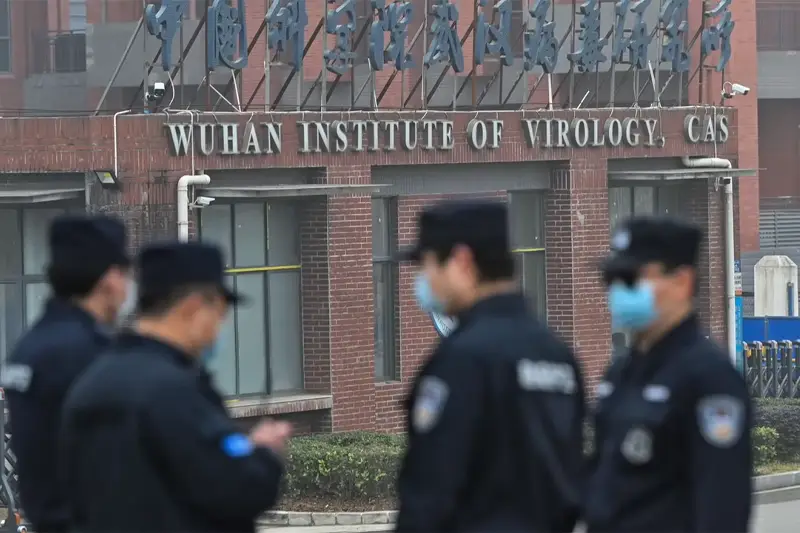
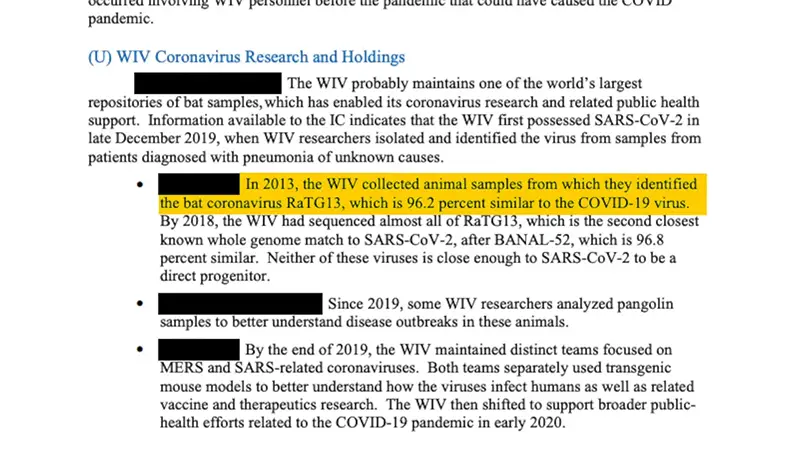
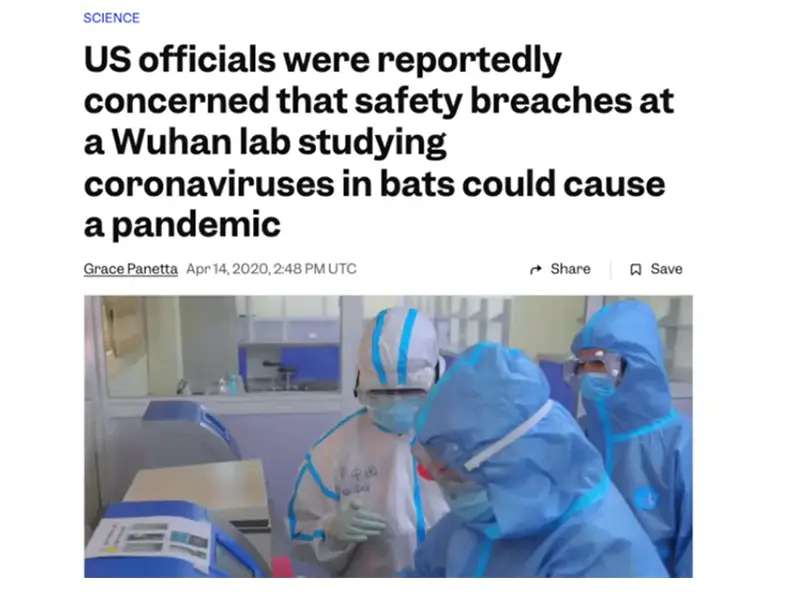
The Wuhan Institute of Virology is located near where the first infections were detected. It is a BSL-4 lab (the highest level of biosafety) and specializes in bat coronaviruses. In 2018, American diplomats already raised concerns about inadequate safety protocols in the lab. Warnings were also issued about the risk of a SARS-like outbreak.
One of the lab’s leading researchers, Shi Zhengli (nicknamed “the bat woman”), identified a virus called RaTG13 in 2013 that is 96.2% genetically identical to SARS-CoV-2. Yet she only made this public after the 2019 outbreak.
The lab conducted experiments using so-called gain-of-function techniques, where viruses are intentionally made more transmissible to study their risks to humans. These studies were partly funded by American and European grants.
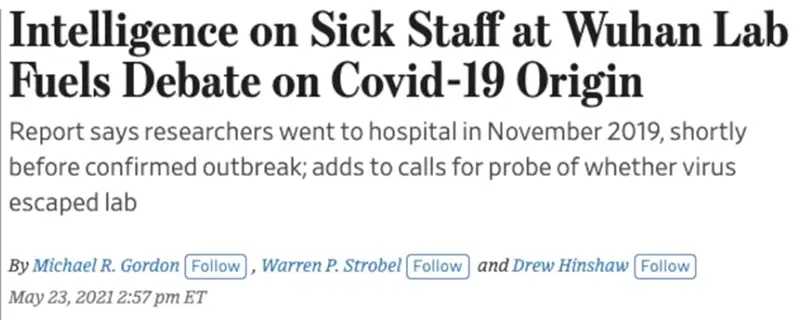
In the fall of 2019, shortly before the first known infections, the lab suddenly deleted its entire virus database (22,000 samples), which has not been recovered since. Satellite imagery pointed to increased hospital traffic, and according to US intelligence, three lab workers reportedly became ill with COVID-like symptoms in November 2019.
Scientific characteristics
The virus has a rare genetic feature: a furin cleavage site, which makes it easier to infect human cells. Such features are uncommon in natural viruses. In previous SARS and MERS outbreaks, an intermediate host was quickly found. In this case, despite intensive research, no missing link between bats and humans was ever discovered.
The scientific establishment
From the beginning, considerable effort was made to discredit the laboratory theory. In January 2020, a group of virologists warned in an email that the virus might have been genetically engineered. Yet these same scientists published an article in Nature shortly afterward claiming that a lab origin was “not plausible.” However, internal emails revealed they had serious doubts among themselves.
Another group of scientists published a statement in The Lancet labeling the lab theory as dangerous misinformation – without disclosing their own conflicts of interest.
The motivation behind these statements appears to be partly driven by financial interests: many scientists involved received research funding from the same institutions that financed the Wuhan lab.
The Chinese cover-up
China deleted virus data, censored doctors, arrested citizens, and imposed publication restrictions on academics. Journalists reporting on the situation disappeared or were prosecuted. The government initially denied that the virus was transmissible between humans, despite clear evidence to the contrary.
China’s official death toll remains severely underreported to this day. According to CDC estimates, the actual number may be around 1.4 million deaths, while China reports only 83,000.
The World Health Organization (WHO) initially allowed itself to be guided by Chinese authorities and limited its investigation into the virus’s origins. Independent access to data sources was refused, and laboratory inspections were not permitted.
Political dynamics in the US
When President Trump publicly suggested in April 2020 that the virus came from a lab, many media outlets immediately dismissed it. Major American newspapers and TV networks labeled the theory as a conspiracy without thorough investigation. Political divisions strongly influenced public debate and made objective assessment of the lab scenario more difficult.
Censorship on social media
Facebook, Twitter, and YouTube removed posts about the lab theory under government pressure and in cooperation with fact-checking organizations. Many platforms relied on early statements from WHO officials and scientists with conflicts of interest.
Shift after 2021
After new information was published, particularly by The Wall Street Journal and statements from former CDC director Robert Redfield, attitudes began to change. In 2023, the FBI and the US Department of Energy concluded – with “moderate confidence” – that the virus likely originated from a laboratory.
The WHO also eventually called for a renewed investigation. Documents released through Congress revealed contradictions between public statements and internal emails from scientists.
Conclusion
The combination of political interests, scientific funding, and international diplomacy led to years of resistance against open investigation into the virus’s origins. As a result, much evidence has since disappeared or become unusable. China has had little to account for, and most involved institutions have not changed their practices.
The lessons from this period are painfully clear: when it really mattered, the institutions we rely on to protect us failed – and so far without real consequences.
Verified Sources
- The Atlantic — Why the COVID Reckoning Is So One-Sided – Analysis of the one-sided aftermath of pandemic policy.
- The Atlantic — COVID Revisionism Has Gone Too Far – Criticism of attempts to rewrite pandemic history.
- Reason — The Media’s Lab Leak Debacle – About media handling of the lab-leak theory and the consequences of censorship.
- Reason — Don’t Make the Same COVID Mistakes Again – Reflection on pandemic policy errors and lessons for the future.
- Wall Street Journal — America Still Needs a Covid Reckoning – Call for accountability over institutional failures.
- Wall Street Journal — Covid Censorship Proved to Be Deadly – Government and social media censorship policies examined.
- The Free Press — Facebook’s Fact-Checkers Changed the Way I See Tech – Personal experience with fact-checkers and free speech.
- The Free Press — mRNA: Deliverance, Dud, or Danger? – Exploration of mRNA vaccines: success or risk?
- Tablet Magazine — The Faustian Bargain Between Scientists and Media – Criticism of collaboration between science and media during the pandemic.
- Tablet Magazine — The Media’s Hypocrisy on Vaccines – Analysis of media inconsistency regarding vaccines.
- The Atlantic — When Experts Fail – Discussion of expert failure during the pandemic.
- Reason — Jay Bhattacharya on COVID-19 – Interview with Bhattacharya on pandemic policy and scientific dissent.


Frequently Asked Questions
What did the CIA say in 2025 about the origins of COVID-19?
The CIA indicated in early 2025 that a laboratory-related origin is “more likely” than a natural one, but with low confidence. This means the conclusion is uncertain and could change if new information becomes available.
What is the lab leak theory of COVID-19?
The lab leak theory is the hypothesis that SARS-CoV-2 accidentally escaped from a laboratory, for example via an infected worker or an incident. This contrasts with the hypothesis of natural animal-to-human transmission; definitive evidence for either scenario is lacking.
What is the Wuhan Institute of Virology?
The Wuhan Institute of Virology is a research institute in Wuhan that studies various viruses, including coronaviruses. The institute has been mentioned in discussions about COVID-19’s origins because the outbreak began in the same city.
What is gain-of-function research?
Gain-of-function research is research in which properties of a virus or other microorganism are deliberately altered to understand how it behaves, such as transmissibility or host range. It is controversial because it can provide scientific insights but can also increase safety risks if something goes wrong.
What is a furin cleavage site and why is it relevant to SARS-CoV-2?
A furin cleavage site is a piece in a viral protein that can be cut by the human enzyme furin, which can facilitate entry into cells. In SARS-CoV-2, this feature is often mentioned in discussions about transmissibility and how the virus originated.