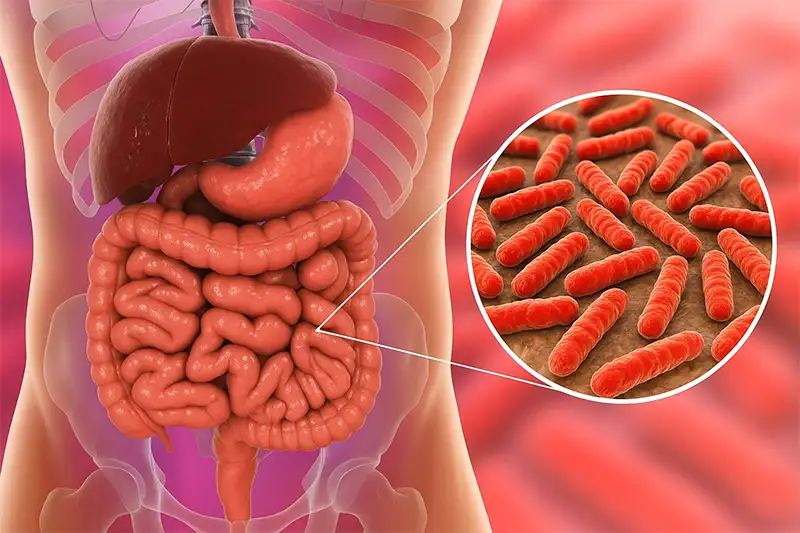
A healthy eating pattern proves to be more powerful than fecal transplantation when it comes to restoring and supporting the microbial community in your gut.
Trillions of microorganisms live in your body. Far from being dangerous, they form a dynamic ecosystem that plays an important role in digestion, strengthening your immune system, and warding off harmful invaders.
The 5 Key Takeaways
- Your diet plays a much larger role in restoring your gut microbiome than previously thought.
- Even a fecal transplant is not effective without proper nutrition.
- A Western diet makes your gut vulnerable to harmful bacteria.
- Restoring your microbiome takes longer with unhealthy eating habits.
- The principles of ecological restoration also apply to your gut.
The Basis of Microbial Recovery
When the microbial community in your gut becomes damaged or depleted — for example, due to chronic inflammatory disease, antibiotic use, or bone marrow transplantation — it becomes crucial to restore this balance.
A recent study, published in Nature, shows that the most effective way to rebuild the gut microbiome is surprisingly simple: maintain a healthy eating pattern.
Science in Practice
“There is currently a lot of attention on treating a disrupted microbial community with methods like fecal transplants, but our study shows that without a healthy diet, this has little effect,” says Joy Bergelson, executive vice president of the Life Sciences division at the Simons Foundation.
She continues: “In fact, a healthy eating pattern alone delivers better results than a transplant.” Eugene Chang from the University of Chicago, a co-researcher on the study, calls it “an example of how fundamental research can lead to practical insights.” According to him, it shows that you can restore gut microbes in a natural, accessible, and safe way.
Glossary
- Microbiome: The total community of microorganisms, such as bacteria, fungi, and viruses, that live in and on your body.
- Pathogens: Microorganisms that can cause disease.
- Fecal transplant: A medical procedure in which stool from a healthy donor is transferred to the gut of a patient to restore the microbial community.
- Opportunistic: An organism that normally causes no problems but can cause disease in a weakened immune system or disrupted microbial balance.
- Metabolic range: The range of substances an organism can process or break down for energy and growth.
How the Research Began
The idea for the research came about when Kennedy, the first author of the article, was working on a project about restoring gut bacteria after antibiotic use. While diving into the literature, she noticed that one crucial factor was often overlooked: eating patterns.
Many Americans follow an eating pattern that closely resembles the Western diet — low in fiber, high in fat. It is known that this type of food has a negative impact on the gut microbiome. Kennedy noted that there was surprisingly little research on how such a diet affects the recovery phase after a microbiome disruption.
How the Mouse Study Was Set Up
Under the guidance of Chang and Bergelson, Kennedy set up a simple but effective experiment. Mice were given a diet for several weeks that either mimicked the Western eating pattern or consisted of healthy, balanced food.
The researchers then deliberately shut down their microbial community to observe how well — and how quickly — it could recover.
What Mice Teach Us About Recovery
“In mice that received the healthy diet, the microbiome largely returned to its original state within a week after the antibiotic course,” Kennedy explains. “But in mice with the Western diet, the microbiome remained severely disrupted.”
In this latter group, only one type of bacteria remained dominant — and it stayed that way for weeks. The original balance never fully returned.
Why Diversity in Your Gut Matters
An eating pattern rich in simple sugars contributes little to a diverse microbiome. Normally, a healthy ecosystem in your gut develops through a building process: certain bacteria first break down complex carbohydrates.
This creates byproducts that serve as food for other microorganisms. This creates a chain of cooperation where different species support each other — a vibrant network that works together to maintain balance.
What the Western Diet Undermines
According to Bergelson, the Western diet disrupts this balance. “The sugars are so simple that hardly any cooperation is needed,” she explains. “One organism with a broad metabolic range can establish itself dominantly and absorb virtually all the food itself.”
The result is a less diverse community — and therefore also a less resilient one.
The Role of Nutrition in Transplants
The research team then wondered whether a fecal microbiota transplant (FMT) would be effective with an unhealthy diet. “The idea is that you introduce healthy microbes from a donor into a disrupted gut,” says Kennedy. “But we didn’t know if that would be enough when the diet doesn’t cooperate.”
The Limits of FMT
The answer was clear: it barely works. “Without a healthy eating pattern, the transplant simply doesn’t take,” Kennedy says. “With healthy food, you see recovery. But with a Western diet, improvement doesn’t happen.”
Why Effectiveness Differs So Much
This finding may explain why fecal transplants in practice produce such mixed results. “Sometimes they work well, sometimes barely at all,” says Chang. “And maybe that’s because we don’t sufficiently account for the patient’s eating pattern.”
Protection Against Invaders
In addition to their role in digestion and metabolism, microbial communities also have a defensive function. They protect your body against pathogens — including so-called opportunists, which strike when the system is weakened.
The researchers wanted to know whether a disrupted gut microbiome, combined with an unhealthy diet, is more susceptible to such pathogens. And especially: how long does that vulnerability persist?
Vulnerability From Unhealthy Food
In a follow-up experiment, mice again received either a Western or healthy diet. Two weeks after their gut microbes were shut down, they were exposed to salmonella — a known opportunistic pathogen.
“The mice that followed the Western eating pattern became significantly sicker,” Kennedy reports. “They lost a lot of weight and developed severe diarrhea. What is two weeks in mouse time translates to months of increased vulnerability in humans.”
A Lesson From Nature
According to Kennedy, the experiment clearly shows how long a gut microbiome can remain disrupted. “During that vulnerable period, simple choices like eating whole grains and vegetables can make a big difference.”
The results extend beyond gut health alone. The research emphasizes universal ecological principles — the same ones that also apply to recovery after disasters in nature.
Recovery After Disruption
“Just as with a forest fire or storm, the question arises: what characteristics make a system resilient?” Bergelson asks. “How can you intervene to promote recovery? Those are big themes that are difficult to study on a large scale.”
Yet she sees the value of studies like this. “Antibiotics may not be a volcanic eruption, but the recovery principles seem surprisingly similar.”
Verified Sources
- Diet outperforms microbial transplant to drive microbiome recovery in mice: by M. S. Kennedy, A. Freiburger, M. Cooper, K. Beilsmith, M. L. St George, M. Kalski, C. Cham, A. Guzzetta, S. C. Ng, F. K. Chan, O. DeLeon, D. Rubin, C. S. Henry, J. Bergelson and E. B. Chang, April 30, 2025, Nature. DOI: 10.1038/s41586-025-08937-9
- Thanks to SciTechDaily
Related Articles



Frequently Asked Questions
What is the difference between a healthy diet and a fecal microbiota transplant (FMT) in restoring the gut microbiome?
A healthy diet, rich in fiber and plant-based foods, supports the natural diversity and resilience of the gut microbiome. Research shows that this is more effective in restoring the microbiome after disruptions, such as antibiotic use, than an FMT without accompanying dietary changes.
Why is a Western diet harmful to the gut microbiome?
A Western diet, often high in fat and low in fiber, reduces the diversity of gut bacteria and hinders microbiome recovery after disruptions. This can lead to increased susceptibility to pathogens and reduced gut health.
Can an FMT be effective without a healthy diet?
Research suggests that an FMT is only effective when combined with a healthy diet. Without proper nutrients, transplanted bacteria cannot establish themselves well, limiting microbiome recovery.
Which foods support a healthy gut microbiome?
Foods rich in fiber, such as whole grains, legumes, vegetables, and fruits, promote the growth of beneficial gut bacteria. These foods support the diversity and stability of the microbiome.
How long does it take for the gut microbiome to recover after antibiotic use?
Recovery time varies, but with a healthy diet, the microbiome can recover significantly within a week. With a Western diet, recovery can take much longer and be less complete.