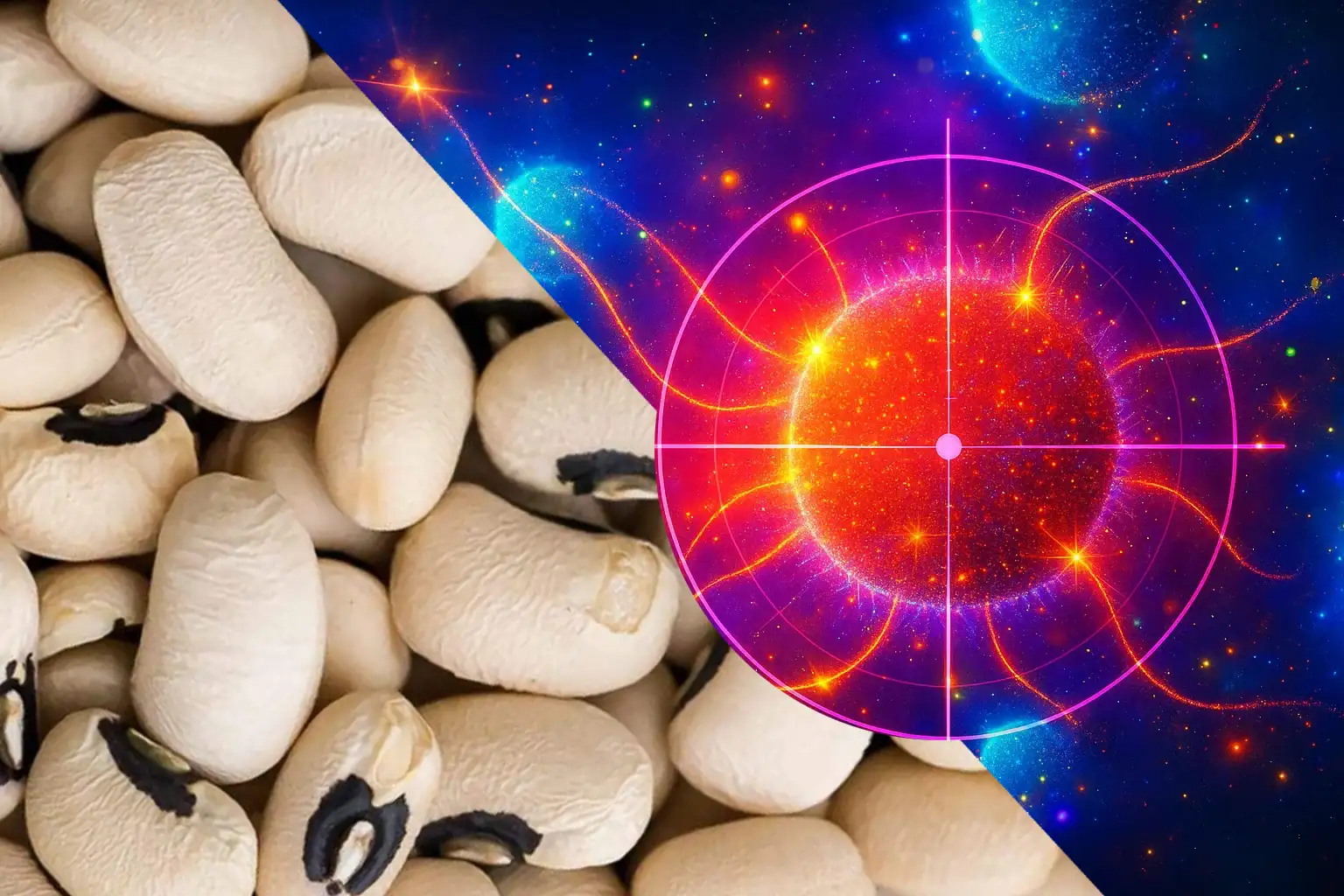
Researchers discovered that this plant virus — cowpea mosaic virus, or CPMV — doesn’t infect human cells, but it does wake up the immune system. The body learns to recognize and attack cancer cells as a result. What makes this approach remarkable: it activates both the innate and adaptive immune systems, with potentially long-lasting protective effects.
The 5 Key Takeaways
- A plant virus never intended for humans turns out to do exactly what modern therapies fall short of..
- The immune system responds to CPMV as if danger is looming, and that has unexpected consequences for tumors..
- Scientists saw effects not just in mice — even dogs with cancer responded remarkably well..
- What makes this virus different from similar plant viruses? The key is hidden deep within the cell..
- You could grow it in your garden, but the effect is anything but ordinary..
Plant Virus Shows Promise as Cancer Immunotherapy
A virus known for its presence in black-eyed peas suddenly emerges as a surprisingly powerful ally in cancer treatment. Scientists are now beginning to understand why.
Researchers at the University of California San Diego, led by a team of chemical and nano-engineers, recently published a study in Cell Biomaterials. It examines how cowpea mosaic virus (CPMV) stimulates the human immune system in a way that other plant viruses do not. Unlike its viral relatives, CPMV appears to activate immune cells in a unique way to detect and attack cancer cells.

Immune Response and Memory Against Tumors
In experiments with mice — and also with dogs with cancer — CPMV showed a powerful effect. After injection into the tumor, various cells arrived: neutrophils, macrophages, and natural killer cells. They began attacking immediately.
At the same time, the virus activates B cells and T cells. This creates a form of memory in the immune system. The cells remain alert even after the initial tumor is gone. This way, they can still detect and eliminate later metastases.
“It remains remarkable that CPMV triggers this response — other plant viruses don’t,” says Nicole Steinmetz, leader of the research team in San Diego.
Graduate student Anthony Omole adds: “What we found most striking is that human immune cells respond to the virus even though they don’t get infected. They become more active and learn how to recognize and destroy cancer cells.”
Glossary
- Neutrophils: White blood cells that respond first to infections or inflammation.
- Macrophages: Immune cells that clean up foreign substances and regulate inflammation.
- B cells: White blood cells that produce antibodies to neutralize pathogens.
- T cells: Immune cells that directly attack infected or abnormal cells and build immune memory.
Why Is CPMV Different From Other Viruses?
The big question in developing a therapy for humans: why does this virus work so well against cancer?
To find out, researchers conducted a direct comparison between CPMV and the related cowpea chlorotic mottle virus (CCMV). On paper, the two viruses look very similar: they’re the same size, are taken up just as quickly by human immune cells, and share a similar structure. But the result is fundamentally different.
How CPMV Triggers Immune Response Through RNA Processing
What makes CPMV so effective lies deep in the molecular communication with our immune system. The virus stimulates multiple types of interferons (I, II, and III) — proteins long known for their cancer-suppressing properties. “That’s remarkable,” Omole explains, “because some of the earliest forms of cancer immunotherapy consisted of recombinant interferon.”
Its viral counterpart, CCMV, instead triggers a series of inflammation-promoting interleukins that don’t result in effective tumor control. And that makes a big difference in clinical effect.
Another distinction lies in how viral RNA behaves within mammalian cells. CPMV’s RNA remains active longer and ends up in the endolysosome — a cellular structure where it activates Toll-like receptor 7 (TLR7). That receptor is a key player in triggering an antiviral, and especially antitumor, immune response.
CCMV’s RNA simply doesn’t reach that level; it doesn’t reach the activation threshold, and the body remains passive.
An Affordable Therapy That Grows From Sunlight
What also makes CPMV remarkable is how it can be produced. No sterile laboratories, no million-dollar reactors. The virus is simply grown in plants — with sunlight, water, and soil. “Molecular farming,” Omole calls it. And that makes the step toward large-scale production much more realistic than with other forms of immunotherapy.
The research team is now preparing for clinical trials. “We’re really gaining insight into how CPMV works,” says Steinmetz. “We’re taking the time to select the strongest candidate virus — one that is both effective and safe. We’re ready to make the leap from the laboratory to the clinic.”
Verified Sources
- “Comparative analyses for plant virus-based cancer immunotherapy drug development” by Anthony O. Omole, Hannah S. Newton, Edward Cedrone, Kimia Nematpour, Shaojun Xie, Yongmei Zhao, Bao Tran, Marina A. Dobrovolskaia, and Nicole F. Steinmetz, May 22, 2025, published in Cell Biomaterials.
DOI: 10.1016/j.celbio.2025.100095 - Supported by: National Institutes of Health (NIH), American Cancer Society, F.M. Kirby Foundation, Mission Boost Grant, Shaughnessy Family Fund for Nano-ImmunoEngineering, San Diego Fellowship Fund, Alfred P. Sloan Foundation, and the Frederick National Laboratory for Cancer Research.
- With thanks to SciTechDaily
Related Articles


Frequently Asked Questions
What is cowpea mosaic virus (CPMV)?
CPMV is a virus found in black-eyed peas. It doesn’t infect humans, but it does trigger a strong immune response that proves useful in cancer research.
How does CPMV help with cancer?
When the virus is injected directly into a tumor, it attracts immune cells that attack cancer cells. At the same time, B cells and T cells learn to recognize cancer cells, even in other parts of the body.
Why is CPMV different from other viruses?
Although other plant viruses resemble CPMV in shape and behavior, they fail to trigger the same response. The difference lies in how the RNA is processed and how long it remains active in cells.
Is CPMV already available for humans?
Not yet. The research team is preparing the first clinical trials. So far, results have only been tested in mice and dogs.
Why is it interesting that the virus grows in plants?
Because the virus is grown in plants, expensive production methods aren’t needed. It grows with sunlight, water, and soil — making it affordable and scalable.
Continue reading
- This Is How Gut Bacteria Tell Your Brain Which Emotions You’re Feeling in Real Time
- These Are The Critical Flaws In Evolution Theory: A Much-Needed Review Inspired By Dr. James Tour Ph.D.
- Google Maps for the Human Body? How the HCA Is Changing Our View of Biology
- Queuosine: The Hidden Nutrient That Influences Our Brains and Genes