According to philosopher Alan Watts, only 5% of humanity possesses a rare personality with what he called ‘differentiated consciousness.’ These people experience life with a depth that most will never reach.
However, these very special qualities often make them feel broken. Watts discovered that this psychological rarity is not a flaw, but an evolutionary advantage. These eight characteristics show whether you belong to this exceptional group.
The 5 Key Takeaways
- Your emotions are so intense they become almost mystical experiences
- Superficial answers never suffice — you keep questioning until you reach the core
- Being alone feels like coming home, not loneliness
- You sense what others think before they speak it
- Meaning always stands above material success or social expectations
Emotional Depth That Borders on the Mystical
Watts discovered something remarkable about emotional intensity. Some people don’t just feel emotions — they experience them as complex resonances that vibrate through their entire being. This is definitely not emotional instability, but refinement.
This emotional intelligence operates on an advanced level. You sense the tension in a room before words are spoken, because your consciousness is tuned to depth rather than superficiality.
Sacred Curiosity That Never Rests
While most people drift through life unconsciously, you cannot help but dig deeper. Watts would have recognized you as someone with an active questioning mind that refuses to be satisfied with surface-level explanations.
About Alan Watts
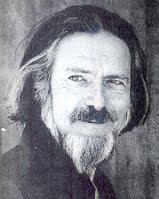
Alan Watts (1915–1973) was a British philosopher, writer, and speaker, best known for making Eastern philosophy understandable to the modern West. With humor, clarity — and often a glass of whisky in hand — he brought Zen, Taoism, and Vedanta down to something you could simply discuss at the kitchen table. He showed that life is not a puzzle to solve, but an experience to feel — like music: playful, attentive, and full of surrender.
Conscious Independence as a Survival Mechanism
Watts noted that the most frightening thing for a human is to fully accept themselves. You are forced to do this — not by choice, but by necessity. This independence is not a shield, but an achievement.
Through experience, you discovered that seeking validation from others is psychological quicksand. That’s why you built yourself from within. For you, solitude is not isolation but a sanctuary — the space where you return to your truest self.
Hyperactive Consciousness That Perceives Everything
Watts transformed modern thinking by arguing that intuition is a real form of perception. You don’t just observe people — you read them on subtle levels that others miss.
When someone says everything is fine, but their entire being whispers something else, you feel it immediately. This is not paranoia, but heightened sensitivity that operates on a level most never reach. However, without boundaries, this quality can exhaust you.
Glossary
- Differentiated Consciousness: A refined way of perceiving reality with more depth than average
- Transcendent Consciousness: The ability to see beyond current limitations and recognize possibilities
- Individuation: The lifelong process of psychological development toward a complete, integrated individual
- Shadow Integration: Accepting and integrating parts of yourself that society taught you to deny
Hunger for Meaning Above All Else
Watts saw that some personalities are simply unsuited for an inauthentic life. It’s not a matter of choice — it’s written in their psychological code. You’ve probably tried living for external approval, but the emptiness remained.
Watts understood that when someone lives against their own nature, the psyche doesn’t just feel discomfort — it revolts. You cannot find superficial goals important or maintain relationships based on comfort rather than connection. Your psychological design won’t allow it.
Continually Outgrowing People and Environments
Watts discovered something profound about real growth: it’s often a lonely path. You’ve probably experienced the painful realization that people who once knew you no longer recognize you. Not because you’ve become difficult, but because you’ve shed the conditioning that no longer served you.
Watts called this a cycle of psychological death and rebirth. Friends who knew you when you made yourself small remember only that version. Sometimes they wish it would return because it felt safer. But you can’t go back — consciousness development is irreversible.
Conclusion
If you recognize yourself in these eight characteristics, then you belong to what Watts considered the next evolutionary step of humanity. Your psychological rarity is not a flaw but a gift to the world.
Watts believed that people like you are essential to the evolution of human consciousness. Your intensity is not too much — it’s exactly what the world needs. Your sensitivity is not weakness but strength that perceives what others overlook.
Related Articles



![The Illusion of Self: What If Your ‘I’ Doesn’t Exist? [Free E-Book].](https://liberteque.com/wp-content/uploads/2025/09/GoodFeeling.nl-xxx-7-300x200.webp "What Alan Watts Meant by Differentiated Consciousness and Do You Have This Rare Personality? 5")

Frequently Asked Questions
What did Alan Watts mean by ‘differentiated consciousness’?
Watts described differentiated consciousness as a refined way of perceiving reality that only 5% of people develop. It means you can process complexity and depth that others miss.
How do you know if you have a rare personality?
According to Watts, you recognize a rare personality by intense emotions, inexhaustible curiosity, conscious independence, and a constant hunger for meaning. You also often feel different from others and regularly outgrow people and situations.
Is it normal to feel lonely with a rare personality?
Yes, loneliness is a common consequence of psychological rarity. However, Watts emphasized that this is not a flaw but a natural result of being different. The key lies in finding like-minded souls.
Can rare personalities have normal relationships?
Absolutely, but they require more awareness and intention. Watts warned against people who want to dim your light or consume you. True connection arises with others who have done their own inner work.
Is a rare personality born or developed?
According to Watts, it’s a combination of innate sensitivity and conscious development. Often these qualities develop through challenges that force you into deeper self-knowledge and independence.
Continue reading
- What is Hermeticism? Discover the Hidden Forces of Consciousness, Aether, and Inner Guidance
- The Universal Codex: 10 Timeless Life Lessons for Inner Balance
- How to Get Her Attention Back — Without Losing Yourself | 5 Essential Tips
- We Might Be Living in a Simulation — and Descartes Already Figured That Out