Smoking doubles the risk of depression through direct influence on biological processes in your brain. This link runs via complex inflammatory reactions that actually weaken the barrier between your bloodstream and your brain.
Research shows that smokers have a significantly higher risk of mental health issues due to chronic changes in their immune system. The core of this problem lies with specific proteins that disrupt communication between brain cells. [Download PDF]
5 Key Takeaways
- Why nicotine disrupts your brain chemistry more often than you think
- The crucial role of the blood-brain barrier with every cigarette smoked
- What the fluid in your spinal cord reveals about the state of your brain
- How quitting smoking biologically improves your mental health
- Why depression caused by smoking is not psychological coincidence but physiology
The biochemical hijacking of the brain
Smoking is an assault on the integrity of the blood-brain barrier. The intake of harmful substances causes minor damage to the vessel wall that normally protects your brain from toxic influences.
This weakening allows inflammatory substances from the rest of the body to more easily penetrate brain tissue. According to a large-scale analysis in Psychological Medicine, this process increases the likelihood of clinical depression by almost one hundred percent.
Inflammatory values and mental damage
In the brain fluid of active smokers, elevated concentrations of the protein TNF-α are often found. This indicates an active state of neuroinflammation, where the brain’s immune system is in an overactive state.
The body reacts to tobacco smoke by increasing the production of cytokines such as IL-6. Research into genetic markers in Scientific Reports suggests that this specific IL-6 pathway is the driving force behind feelings of sadness in smokers.
Pros and cons of quitting smoking
Pros
- Restoration of the natural balance in brain fluid
- Reduction of chronic low-grade inflammation
- Improvement of blood-brain barrier integrity
- Significant decrease in the risk of depressive symptoms
Cons
- Temporary increase in withdrawal symptoms in the nervous system
- Brief fluctuations in dopamine levels
- Increased stress sensitivity during the first weeks of recovery
- Slight delay in the decrease of inflammatory markers in blood
The myth of the calming cigarette
Many people use tobacco to reduce stress, but biologically, the opposite happens. Nicotine provides a short peak, followed by a deep drop that actually exhausts the brain’s stress system.
Animal studies on oxidative stress from smoke show that brain cells physically change due to this constant cycle. The brain tries to repair the damage but eventually becomes overwhelmed by the continuous flow of toxic substances.
Glossary of terms
- Cytokines: Proteins that function as messengers of the immune system and drive inflammation.
- Neuroinflammation: An inflammatory response within the central nervous system that can disrupt brain functions.
- Blood-brain barrier: A protective layer of cells that prevents harmful substances from the blood from entering the brain.
- IL-6: A specific inflammatory marker closely linked to the onset of depressive feelings.
Restoration of mental resilience
Quitting smoking leads to a healthier mental state in the long term. Although the first few weeks can be tough, the immunological balance in the brain normalizes over time.
A systematic review in the BMJ shows that quitting smoking is associated with a reduction in depression and anxiety. This effect is actually comparable to taking medication for depression.
These data highlight the need for action:
| Phase | Biological effect | Mental outcome |
|---|---|---|
| Active smoking | High TNF-α values | Increased chance of sadness |
| Withdrawal | Fluctuating dopamine | Temporary irritability |
| Recovery | Stable IL-6 values | Improved emotional stability |
Nicotine and brain structure
The structural changes in the brain due to nicotine should not be underestimated. It hijacks receptors that are actually intended for natural calming substances, causing the brain to require more and more nicotine to function normally.
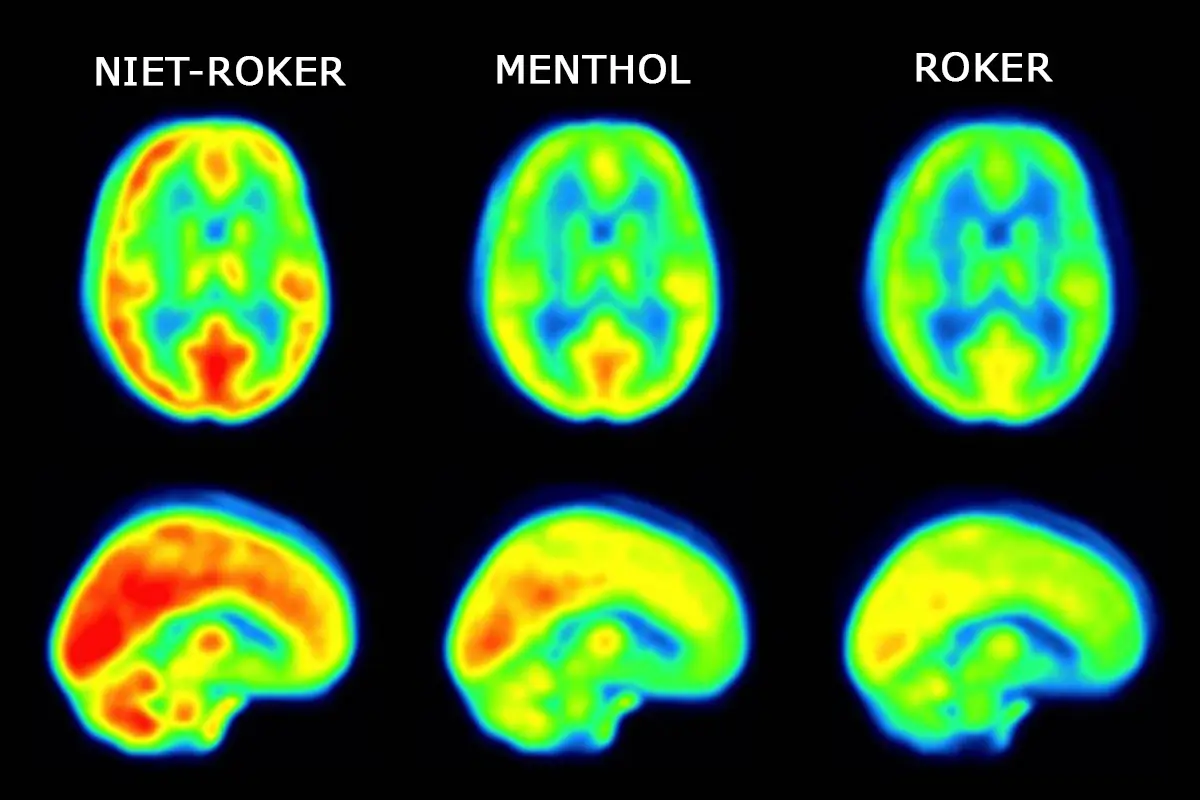
Research with advanced PET scans shows that the state of the brain in smokers fundamentally differs from non-smokers. These scans make the chronic burden on the brain’s immune system visible.

The biological eye-opener
Smoking is not an innocent habit, but an active physiological hijacking of your immune system. It creates a vicious cycle where the IL-6 signaling pathway and the disruption of the blood-brain barrier constantly put pressure on your brain chemistry. This chronic state of low-grade inflammation in the brain is the direct, biological link to a doubled risk of depression.
Conclusion
Smoking is a major driver for the development of depressive symptoms due to persistent inflammation in the brain. The physiological damage to the blood-brain barrier makes the brain vulnerable to chronic stress signals.
Breaking the dependence on nicotine is likely the most effective way to halt this biological downward spiral. Those who choose recovery, after all, give their brains the chance to fully regain immunological balance.
Verified Sources
- Wootton et al. (2020): Research on the causal relationship between smoking and the risk of depression.
- Galan et al. (2022): Analysis of the role of IL-6 signaling in smoking and mental health.
- Khanna et al. (2012): Study on oxidative stress and inflammation in the brain due to tobacco smoke.
- Taylor et al. (2014): Review on the improvement of mental health after quitting smoking.
- Brody et al. (2017): PET scan research on markers of brain inflammation in smokers.
- Smoking, Neuroinflammation Markers, and Depression – Research on the effects of smoking on the brain
Related Articles





Frequently Asked Questions
Why do I feel less sad when I smoke a cigarette?
That’s due to the direct release of dopamine, which is actually a temporary patch on a deeper wound. While you experience a momentary feeling of happiness, the underlying damage to your blood-brain barrier and the rise in inflammatory values continue.
How long does it take for the brain to recover after quitting?
The first positive changes in brain chemistry are often noticeable within a few weeks. However, the complete decrease in chronic inflammatory markers like CRP often takes months to reach a stable, lower level.
Are nicotine patches also harmful for brain inflammation?
Nicotine itself affects the immune cells in your brain, but the combustion products in tobacco smoke are actually responsible for the greatest damage to the blood-brain barrier. Patches are therefore always a safer step in the right direction for your brain.
Is there a direct link between smoking and anxiety disorders?
Indeed, the biological dysregulation caused by smoking is not limited to depression alone. The constant state of inflammation in the brain also makes your nervous system more sensitive to stimuli, significantly increasing the likelihood of anxiety symptoms.
Does my memory also improve if I quit smoking?
That is very likely, as inflammation in brain areas like the hippocampus decreases. When neuroinflammation stops, your brain cells can communicate better again, which directly benefits your concentration and memory.