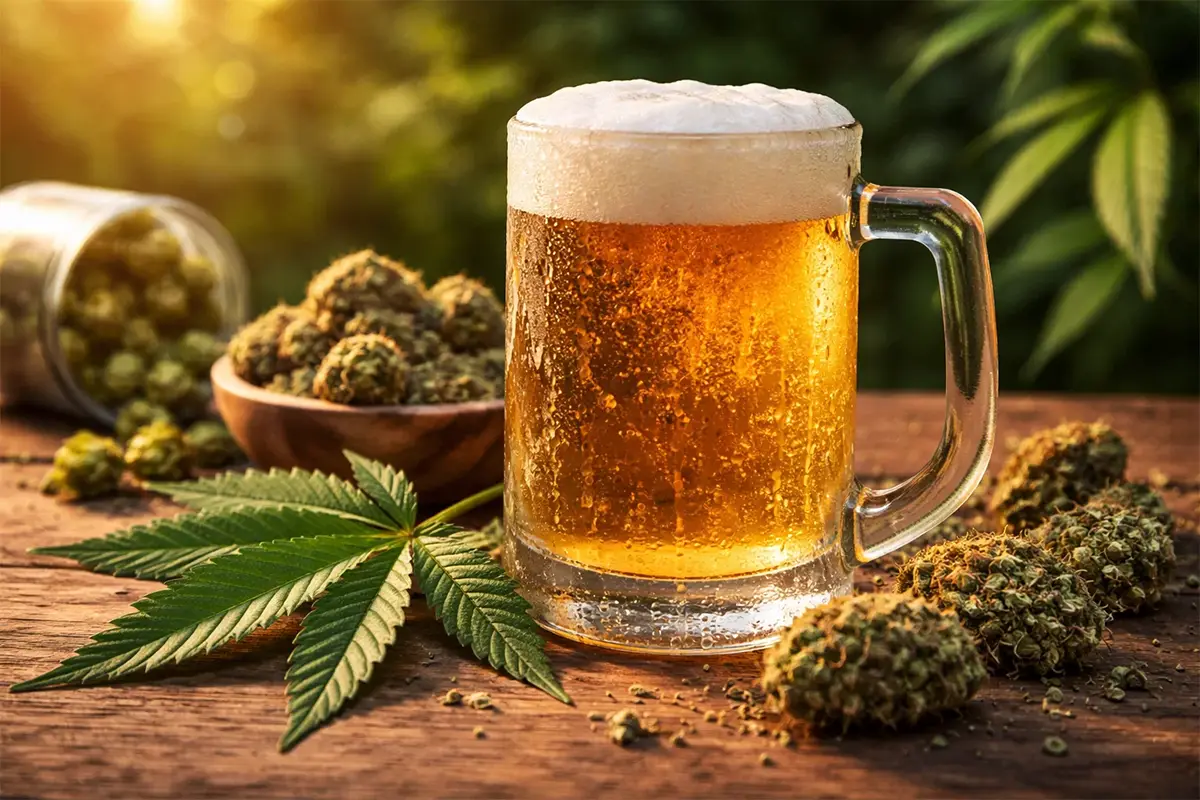
New research from the University at Buffalo suggests that choosing beverages with added cannabis instead of alcoholic drinks could offer a new way to reduce alcohol-related harm.
Cannabis beverages could be a new way for some people to reduce their alcohol consumption, according to results from a small-scale study conducted by public health researchers at the University at Buffalo.
Alcohol use is associated with a wide range of health and social harms. Research has linked alcohol consumption to at least seven forms of cancer and nearly 200 diseases and medical conditions. Cannabis generally carries fewer risks, particularly compared to heavy alcohol use, which has sparked interest in its potential role as an alternative.
The study, published in the Journal of Psychoactive Drugs, is the first to specifically examine cannabis beverages in the context of reducing alcohol-related harm, according to the researchers. The publication coincided with “Dry January,” a period when many people try to lower their alcohol intake or quit drinking altogether.
Harm reduction is a public health approach aimed at limiting the negative consequences of substance use. This approach assumes that abstinence is not the only acceptable goal and recognizes that many people continue to use legal substances, such as alcohol, tobacco, or cannabis.
Read also: What happens when you stop drinking alcohol completely?
Cannabis beverages as a new harm reduction tool
“In this first study of its kind, we introduce the idea of cannabis as harm reduction for alcohol use. Cannabis has already been proposed as harm reduction for other substances, such as opioids, but is less often discussed in relation to legal substances like alcohol,” says lead study author Jessica Kruger, PhD, clinical associate professor of community health and health behavior at UB’s School of Public Health and Health Professions.
She also notes that broader acceptance may take time. “I think we still have a long way to go before this is seen as mainstream, because cannabis beverages are a new form of use.”
Interest in cannabis beverages is growing rapidly. Market research firm Euromonitor estimates that sales could exceed $4 billion by 2028. At the same time, many Americans are trying to reduce their alcohol consumption — and not just during the so-called “Dry January.”
The researchers surveyed 438 anonymous adults who reported using cannabis in the previous year. Nearly 56% of respondents also said they consumed alcohol.
Approximately one-third reported using cannabis beverages, mostly limiting themselves to one drink per occasion. Users of cannabis beverages were more likely to report using cannabis as a replacement for alcohol (58.6%) than those who did not use cannabis beverages (47.2%).
Among cannabis beverage users, the majority reported consuming products with relatively low levels of cannabidiol. Specifically, 89.5% drank beverages with 10 mg cannabidiol (CBD) or less, while 10.4% reported using beverages with more than 10 mg. Nearly half of respondents (48%) did not know how much CBD their drink contained.
Changes in drinking behavior
Additionally, they reported lower alcohol consumption after using cannabis beverages — averaging 3.35 alcoholic drinks per week, compared to 7.02 before they started using cannabis beverages. They also reported engaging in binge drinking less frequently than before using cannabis beverages.
The findings suggest that cannabis beverages can support alcohol substitution and reduce alcohol-related harm, offering a promising alternative for people looking to cut back on alcohol use.
Also read: Quitting Alcohol: What Happens to Your Body?
Why beverages may be extra effective
“Various previous studies, including ours, have shown that people have reduced their alcohol consumption by switching to cannabis,” says Daniel Kruger, PhD, co-author and research associate professor at UB’s School of Public Health and Health Professions.
“It is notable that people who use cannabis beverages report an even greater decrease in alcohol consumption than people who use other forms of cannabis. We believe this is related to the similarity in manner of use and context — at parties or in bars, people often have a drink in hand, in this case a cannabis beverage instead of an alcoholic one,” he adds.
Cannabis beverages — often packaged in cans that resemble common alcoholic beverages like beer and hard seltzer — are becoming increasingly available as more states legalize cannabis for adults. The first cannabis beverage legally sold in the state of New York appeared in January 2023, one month after the state began licensed sales of cannabis products.
The survey found that nearly 82% of respondents who used cannabis beverages more often purchased their cannabis products from dispensaries licensed for medical and recreational use.
Based on the survey results, the research team plans to further investigate the effect of cannabis beverages over time and compare different forms of cannabis use.
Reference: “The Exploration of Cannabis Beverage Substitution for Alcohol: A Novel Harm Reduction Strategy” by Jessica S. Kruger, Nicholas Felicione and Daniel J. Kruger, January 14, 2026, Journal of Psychoactive Drugs.
DOI: 10.1080/02791072.2026.2614506
Verified Sources
- University at Buffalo – press release on cannabis beverage study and alcohol substitution – Summary and figures from the underlying research.
- PubMed – Journal of Psychoactive Drugs publication – Abstract with methods and key findings of the study.
- Jellinek – combination of alcohol and cannabis – Explanation of effects and risks of combining.
- Dutch Government – drugs and traffic – Rules and limits for driving under the influence of drugs (including cannabis).
- Discover Magazine – background on rise of THC beverages – Context on market trend and reference to recent studies.
- Cannabis Drinks May Offer a New Path to Drinking Less Alcohol – Thanks to SciTechDaily.com
Related Articles


Frequently Asked Questions
Do cannabis beverages help people drink less alcohol?
A recent survey study links cannabis beverage use to lower alcohol intake among some users, suggesting possible alcohol substitution, but it does not prove cause and effect, and individual results vary.
What happens when you combine alcohol and cannabis?
Combining them can lead to nausea, dizziness, panic, and impaired driving; additionally, the mix makes dosing and assessing effects more difficult, increasing the risk of overdose.
Can you drive after using a cannabis beverage?
No, driving under the influence of drugs is illegal above legal limits; THC can remain detectable and impairing longer than expected, so do not drive after consumption.
Is alcohol more harmful than cannabis?
Excessive alcohol use is very harmful (including increased cancer risk); cannabis also carries risks, but harmfulness and patterns differ by substance and use.
How many milligrams of THC are typically in a cannabis beverage?
That varies by product and market; many consumer variants use low dosages per serving (several milligrams), emphasizing “start low, go slow,” and always follow the label.