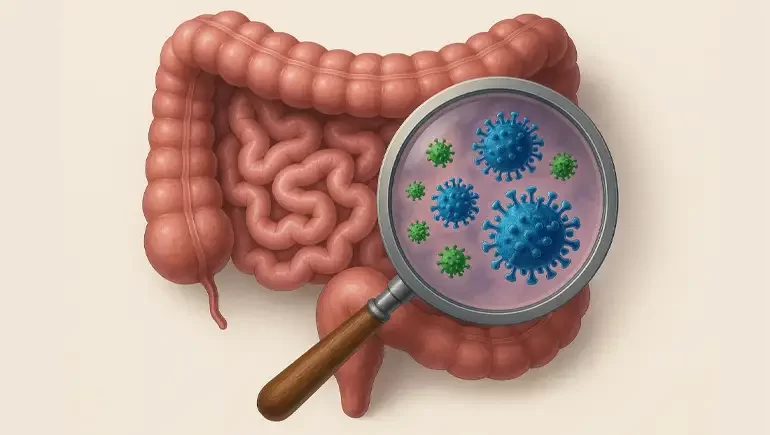
Your skin tells more than you think. It’s not just a protective layer, but a fascinating mirror that reflects your inner health. Did you know that many skin problems originate from how healthy your gut is?
Are you curious about what your skin is trying to tell you? Want to discover how a healthy digestive system can contribute to new, fresh, radiant skin? Read on and be surprised by this special and unexpected connection!
The 5 Key Takeaways
- A disrupted balance of bacteria can lead to skin problems, but what exactly happens..
- SIBO, an often unknown condition, can affect your skin, but how does that relationship work..
- Intestinal inflammation can block the absorption of essential nutrients, but which ones are crucial for your skin..
- Your gallbladder plays a surprising role in healthy skin, but what is that connection..
- Probiotics can transform your skin, but which types give the best results..
The Foundation of Radiant Skin
Healthy skin doesn’t start with creams or serums, but deep within your body. Your gut plays a key role in your overall wellness, including your skin condition. An imbalance in your digestive system can cause various skin problems. It’s therefore essential to keep your gut in optimal condition.
Nutrition as Natural Skincare
What you eat has a direct impact on your skin’s appearance. A balanced diet can reduce skin problems and make your skin glow. Try to avoid heavily processed products and focus on fresh, natural ingredients. This way, you give your skin the best care from within.
Glossary
- Microbiome: The collection of all micro-organisms (bacteria, viruses, fungi) in your gut.
- SIBO: Small Intestinal Bacterial Overgrowth, an overgrowth of bacteria in the small intestine.
- Intestinal villi: Small projections in the intestinal wall that help with nutrient absorption.
- Probiotic: Living micro-organisms that have a positive effect on your health.
- Carnivore diet: A diet consisting exclusively of animal products.
1. An altered microbiome means your gut contains more harmful bacteria than healthy gut microbes. This can be caused by diet or antibiotics. A disrupted gut microbiome can cause inflammation that spreads throughout your body. This can ultimately lead to skin conditions like rosacea.
SIBO: When Bacteria Are in the Wrong Place
2. SIBO is a condition where the microbes in your gut are not in the right place. Most microbes belong in the large intestine, not the small intestine. This unwanted bacterial growth can lead to nutrient deficiencies, inflammation, joint problems, and skin issues like rosacea.
Intestinal Inflammation and the Importance of Zinc
3. Signs of intestinal inflammation include pain, tension, or a bloated feeling in your belly. These inflammations are often caused by food, with gluten being one of the most common culprits.
The more inflammation in your gut, the harder it becomes to absorb zinc. A zinc deficiency is one of the most common causes of skin rashes. A diet rich in animal products can be very beneficial for people with intestinal inflammation.
Chronic Inflammation and Vitamin D
4. With chronic inflammation, you can gradually lose your intestinal villi over time. This reduces your ability to absorb nutrients.
This particularly limits vitamin D absorption. Many autoimmune skin conditions are directly linked to low vitamin D levels. You can increase your vitamin D through supplements, regular sun exposure, and certain forms of light therapy.
The Hidden Role of Your Gallbladder
5. If your gallbladder has been removed or you have low bile levels, you may develop skin problems. Without sufficient bile, you can’t properly process and absorb fat-soluble vitamins.
This is especially true for vitamin A. To increase your vitamin A, you can eat beef liver or take cod liver oil. Bile supplements like ox bile, purified bile salts, or TUDCA can provide support if your gallbladder is sluggish or has been removed.
The Power of Probiotics and Fermented Foods
To improve your gut and skin health, a good probiotic can be of great value. Supplement this with fermented foods.
Think of sauerkraut, kimchi, raw milk cheese, yogurt, and fresh salad from your own garden. A diet rich in animal products can significantly improve your gut condition. It can also reduce skin problems and ease complaints related to autoimmune diseases.
If you have SIBO, try periodic fasting and eating once a day (OMAD, one meal a day). Try to acidify your stomach with betaine hydrochloride or apple cider vinegar. You can make your own probiotic mixture with L. reuteri. This can significantly improve your gut and skin health. L. reuteri can live in both the small and large intestine. It has various benefits: it improves your digestion and reduces skin problems like acne.
Five Signals Your Skin Gives About Your Gut Health
Five surprising ways your skin communicates about the condition of your digestive system. It’s remarkable how many people treat their skin with external products like lotions, creams, and medications.
They overlook the deeper cause that lies in the gut. Let me tell you how you can address these problems after I’ve discussed all five signals. First, a brief introduction to each signal, starting with:
The Importance of a Balanced Microbiome
A disrupted microbiome may mean you have too few beneficial bacteria and too many harmful ones.
This can result from your eating pattern or antibiotic use. One of the most common consequences of a disrupted gut balance is rosacea. Interestingly, medical treatment of rosacea often consists of antibiotics.
The goal is to reduce the excess of harmful bacteria. This works temporarily, but the problem often returns stronger. This microbiome imbalance causes inflammation that can spread throughout your body and become visible on your cheeks. There are certainly other challenges.
SIBO: Bacteria in the Wrong Place
The second signal is SIBO. This acronym stands for bacterial overgrowth in the small intestine. In this condition, the microbes are not where they belong.
Most microbes should live in the large intestine. When they end up in the small intestine, nutrient deficiencies occur because these microbes compete for your food. This inevitably leads to inflammation, sometimes to joint problems, and often to rosacea. If you truly want beautiful skin, improving your gut is the key. The result will be radiant skin.
The Impact of Inflamed Gut
The third signal is inflammation in the gut. You feel pain, tension, or a bloated feeling in your belly.
Usually this is the result of certain foods. Gluten, found in wheat and other grains, is one of the biggest culprits. An important fact about inflammation: the more inflammation you have in your gut, the harder it becomes to absorb zinc. A zinc deficiency can cause skin rashes and lead to red, flaky skin around your nose and mouth. The underlying cause lies in the intestinal inflammation that prevents zinc absorption.
The Relationship Between Gut and Nutrition
The worse your digestive system functions, the fewer different types of food you should combine in one meal. This explains why an all-animal product diet works so well for many.
You eliminate many different elements that can irritate your gut. As for zinc: it’s a wonderful supporter in healing. It helps repair wounds, ulcers, and increased intestinal permeability. An additional note: there are a few other factors that can cause flaky, dry skin. Think of high levels of omega-6 fatty acids from seed oils, or a deficiency of omega-3 fatty acids from fish and cod liver oil. This all relates to inflammation.
The Consequences of Chronic Inflammation
But suppose this inflammation becomes chronic and persists for a long time. Then you can gradually lose your intestinal villi. These are the small, root-like projections on the inside of your large intestine.
These intestinal villi are meant to increase surface area for better nutrient absorption. When lost, it becomes harder to absorb nutrients, especially vitamin D. Many autoimmune skin conditions are directly linked to low vitamin D levels. Your immune system becomes more vulnerable with a vitamin D deficiency. A solution can be to increase intake so it still reaches the areas that need it. Regular sun exposure or certain light therapies can also help.
Your Gallbladder and Your Skin
The fifth signal concerns your gallbladder. Perhaps it has been removed or you’re not producing enough bile salts.
With a lack of bile, you can’t properly process and absorb fat-soluble vitamins. This is especially true for vitamin A. A deficiency in this can lead to small goosebumps on your arms or legs. In that case, it’s advisable to consume foods rich in vitamin A.
Verified Sources
Why Does Your Skin Itch?
A common symptom is itchy skin. What are the possible causes? It could be your eating pattern, stress, the use of hormone therapy like birth control pills or hormone replacement therapy. Or perhaps you have elevated insulin levels from a high-carb diet, which can affect your bile. A good probiotic can be very helpful.
Nutrition Tips for Healthy Skin
It’s also very beneficial to eat fermented foods. Think of sauerkraut, kimchi, yogurt, raw milk cheese, and fresh salad from your own garden.
These products contain microbes that can function as a natural probiotic. If you have SIBO, often experience a bloated feeling, and notice it gets worse after eating fiber, it can help to temporarily switch to an all-animal product diet. This explains why many people see improvement in autoimmune diseases and skin problems when following this diet. They avoid many substances that can irritate the gut. Moreover, meat contains a lot of glutamine, a substance that can help repair the gut.
Homemade Probiotics for Radiant Skin
You can also make your own probiotic, which can be particularly valuable if you’ve used antibiotics in the past or have dealt with SIBO.
L. reuteri can live in both the small and large intestine and has multiple positive effects. It creates an acidic environment where harmful bacteria struggle to survive. It offers many benefits for your digestion. Many people who previously had acne problems notice these complaints disappear.
Why?
Because it can help repair your gut. You no longer suffer from that widespread inflammation that manifests on your skin. The more damage in your gut, the stricter your diet must be with certain foods. Ultimately, the most effective way to repair your gut is to clean up your eating pattern. I hope you now understand the fascinating connection between your skin and your gut, and what you can do to support both.
Related Articles


Frequently Asked Questions
What is the link between gut and skin?
An imbalance in the gut can lead to inflammation that manifests in skin problems.
How can I improve my gut health?
Eat fermented foods, take probiotics, and avoid processed foods.
What is SIBO and how does it affect my skin?
SIBO is bacterial overgrowth in the small intestine, which can lead to inflammation and skin problems like rosacea.
What foods should I avoid for healthier skin?
Avoid gluten, processed foods, and sugar to reduce inflammation.
Can stress affect my gut health and skin?
Yes, stress can disrupt your gut flora and worsen skin problems.