Probiotics can play a valuable role in supporting your gut health. They consist of live bacteria or yeasts that naturally occur in your body.
Your digestive system always contains a mix of good and bad bacteria. Sometimes this balance is disrupted, for example by illness or medication use. Then it can help to add extra good bacteria through food or supplements.
Probiotic supplements contribute to restoring a healthy gut flora. A balanced gut flora supports not only your digestion, but also affects your immunity and overall well-being.
They are not a cure-all, but can contribute to more stable health when combined with a varied and fiber-rich eating pattern.
This article is a deep dive (2200 words) into the topic of probiotics. A condensed version (600 words) of this article can be found here: Probiotics 101: everything you need to know about the good bacteria in your body in 2023 – Liberteque.com Editorial
Probiotics:
- Are a combination of live beneficial bacteria and/or yeasts that naturally live in your body. Bacteria are usually viewed negatively as something that makes you sick. However, you constantly have two types of bacteria in and on your body – good and bad bacteria.
- Consist of good bacteria that help keep your body healthy and functioning well. These good bacteria help you in many ways, including fighting bad bacteria if you have too much of them, making you feel better.
- Are part of a larger whole concerning bacteria and your body – your microbiome. Think of a microbiome as a diverse community of organisms, like a forest, that work together to keep your body healthy. This community consists of things called microbes. You have trillions of microbes on and in your body.
These microbes are a combination of:
- Bacteria.
- Fungi (including yeasts).
- Viruses.
- Protozoa.
A microbiome is always unique. No two people have the same microbial cells – even in twins they are different.
A microbe can only be called a probiotic if it can be isolated from humans, survives in the gut after ingestion, provides a proven health benefit, and is safe to use.
Where do beneficial probiotics (microbes) live in my body?
Although the most common place associated with beneficial microbes is your gut (usually the large intestine), you have different places in and on your body that harbor good microbes.
These places are in contact with the “outside world” and include your:
- Gut.
- Mouth.
- Vagina.
- Feces.
- Skin.
- Lungs.
How do probiotics work?
The main job of these beneficial microbes, or good bacteria, is to maintain a healthy balance in your body. Think of it as keeping your body in neutral. When you’re sick, bad bacteria enter your body and increase in number. This throws your body out of balance. Good bacteria work to fight the bad bacteria and restore balance in your body, making you feel better.
Good bacteria keep you healthy by supporting your immune function and keeping inflammation under control. Certain types of good bacteria can also:
- Help your body digest food.
- Prevent bad bacteria from getting out of hand and making you sick.
- Make vitamins.
- Help support the cells in your gut to prevent bad bacteria that you’ve ingested (through food or drink) from entering your bloodstream.
- Break down and absorb medications.
This balancing act happens naturally and continuously in your body. You don’t actually need to take probiotic supplements to make this happen. Good bacteria are simply a natural part of your body. Eating a balanced diet rich in fiber every day helps keep the number of good bacteria at healthy levels.
What are the most common types of probiotic bacteria?
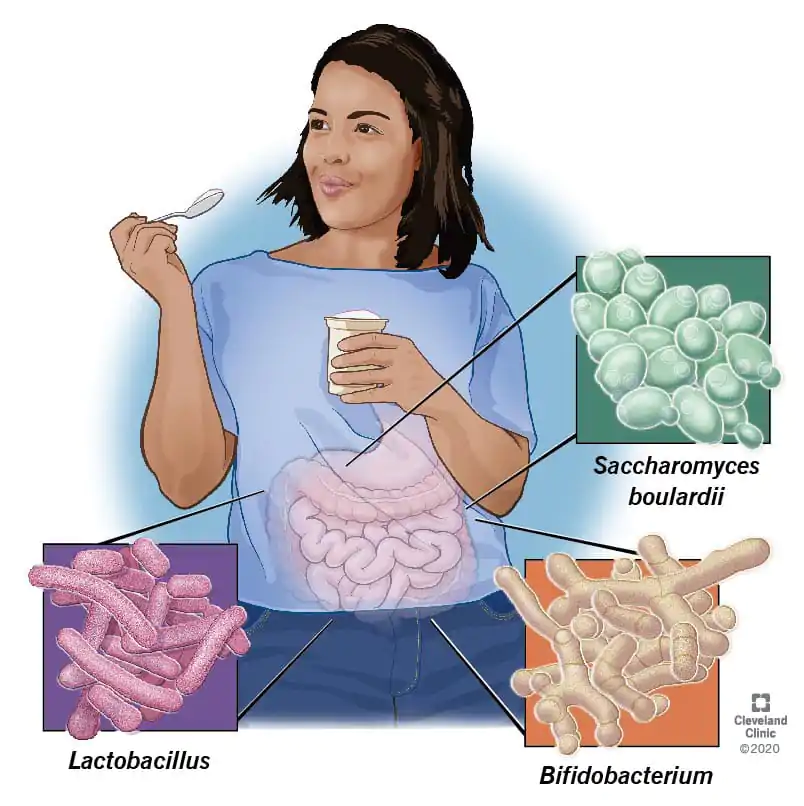
Although there are many types of bacteria that can be considered probiotics, there are two specific types of bacteria that are common as beneficial microbes in stores. These include:
- Lactobacillus.
- Bifidobacterium.
Probiotics also consist of good yeast. The most common type of yeast found in probiotics is:
- Saccharomyces boulardii.
Can I use these beneficial microbes to help with medical conditions?
A lot of research is currently being done on what probiotics can do for your body. While there are many potentially positive outcomes, researchers are still working to find definitive answers about how these beneficial microbes can help with various conditions.
However, there are some medical conditions where these beneficial microbes can help. This can vary from person to person, meaning what works for one person may not work for another. These can also vary based on the specific probiotic being taken.
Some of the conditions that can be helped by increasing the amount of probiotics in your body (through food or supplements) are:
- Diarrhea (both antibiotic-caused diarrhea and Clostridioides difficile (C. diff) infection).
- Constipation.
- Inflammatory bowel disease (IBD).
- Irritable bowel syndrome (IBS).
- Yeast infections.
- Urinary tract infections.
- Gum disease.
- Lactose intolerance.
- Eczema (atopic dermatitis).
- Upper respiratory tract infections (ear infection, cold, sinusitis).
- Sepsis (especially in infants).
Can I take or eat something to increase these beneficial microbes in my body?
You can increase the amount of good microbes in your body through various foods, drinks, and supplements. You may already have certain foods in your daily diet that contain probiotics.
Fermented foods in particular (such as yogurt and pickles) harbor a large number of good bacteria that benefit your body. There are also fermented drinks like kombucha (fermented tea) or kefir (fermented dairy drink) that introduce extra beneficial microbes into your diet.
Apart from food, you can also choose to incorporate good bacteria into your diet.
In addition to food, you can add probiotics to your diet through nutritional supplements. These are not medicines, so they don’t need to be approved.
Can I get probiotics from food?
You can absolutely increase the beneficial microbes in your body from the food you eat. Certain foods contain probiotics (good bacteria) and can benefit the health of your microbiome.
You can introduce these foods into your diet at any time of day. You may even be eating them regularly now and not realize they contain probiotics. You’ll want to check the food label for “live and active cultures.” Some suggestions for just a few probiotic-rich foods you can add to your diet and some times to try them are:
For breakfast:
- Yogurt.
- Buttermilk.
- Sourdough bread.
For lunch:
- Cottage cheese.
- Kombucha.
- Tempeh.
For a snack:
- Fermented pickles.
For dinner:
- Fermented sauerkraut.
- Kimchi.
- Miso soup.
Make sure that each time you eat you still make a balanced and healthy meal. While adding probiotic-rich foods to your diet can’t hurt, balance is still key. If you add too much of one food, your body won’t be able to benefit from the benefits of other food groups.
How do I take a probiotic supplement?
There are different ways you can take a probiotic supplement. They come in different forms, including:
- Foods.
- Drinks.
- Capsules or pills.
- Powders.
- Liquids.
Probiotic supplements can be combined with a prebiotic. Prebiotics are complex carbohydrates that feed the microorganisms in your gut. Essentially, prebiotics are the “food source” for good bacteria. They help feed and keep good bacteria healthy. Prebiotics include inulin, pectin, and resistant starch. When you have a supplement that combines a probiotic and prebiotic, it’s called a synbiotic.
How effective are these beneficial microbes?
Researchers are currently unsure how effective probiotic supplements are for treating conditions. There is ongoing research on this topic. While many studies have shown positive results about the effects of probiotic supplements, more research is still needed.
It’s also important to keep in mind that dietary supplements, unlike medicines, don’t need to be approved. This means manufacturers can simply sell the supplements with “claims” that it’s a safe and effective remedy.
Always talk to your doctor (or pediatrician) before taking a supplement or giving it to your child. Supplements can affect medications you’re taking. If you’re pregnant or breastfeeding, consult with your healthcare provider before taking a supplement.
Are there storage instructions for probiotics?
Some probiotic strains are very fragile and must be protected from heat, oxygen, light, and moisture. The beneficial microbes can break down or die if exposed to these elements. Therefore, you may need to refrigerate your probiotics or store them in a specific location.
Refrigerating certain probiotic strains ensures they remain viable when you use them and still provide the full benefit of the probiotic. Always read the labels on any probiotic product you buy to ensure you store it properly and use it before the expiration date.
How safe are probiotics?
Because the microbes used as beneficial microbes already naturally occur in your body, probiotic foods and supplements are generally considered safe. They can cause allergic reactions, and can also cause mild stomach upset, diarrhea, or gas and bloating for the first few days after you start taking them.
There are certain people who should exercise caution when using probiotic supplements. Some people are at risk of infection. These people include those who:
- Have a weakened immune system (people undergoing chemotherapy, for example).
- Have a life-threatening illness.
- Have recently had surgery.
Caution should also be exercised when giving probiotics to seriously ill children.
Always talk to your healthcare provider before starting a probiotic supplement.
Can probiotics hurt me?
For most healthy people, probiotics can’t hurt. They are generally considered safe and are often “tried” to see if they could help with various medical conditions. There is much research around the topic of probiotics. Scientists are trying to determine when and how they should be used, and how effective they are. Talk to your healthcare provider before starting a probiotic supplement, as there are sometimes situations where you shouldn’t take them. It’s always best to have the conversation with a doctor first before starting a new supplement.
Are there any risks associated with beneficial microbes?
Probiotics are generally considered safe. However, there are some risks associated with the supplements. These risks increase if you have a medical condition that weakens your immune system, have recently had surgery, or have other serious medical conditions.
Unlikely, but possible, risks may include:
- Developing an infection.
- Developing antibiotic resistance.
- Developing harmful substances from the probiotic supplement.
Should I give probiotics to my kids?
Probiotics can be beneficial for both adults and children. If your child has an illness that requires antibiotics for treatment, taking a probiotic can help shorten symptoms. Probiotics can also be used to help relieve constipation, acid reflux, diarrhea, gas, and eczema in children.
Introducing beneficial microbes into your child’s diet through food is usually a safe way to give them probiotics. Foods like yogurt and cottage cheese are often part of a balanced diet and can add good bacteria with minimal risk.
There are commercially available beneficial microbe supplements specifically designed for infants and children. However, it’s important to talk to your child’s pediatrician before giving them a probiotic supplement or changing your child’s diet to include beneficial microbe-rich foods.
Do I need to take probiotics after I take antibiotics?
Antibiotics are often necessary to fight an infection. But while antibiotics kill bad bacteria, they also wipe out the good bacteria in your body. Some people develop conditions like diarrhea after taking an antibiotic. In others, this can allow really bad bacteria to take over and populate the gut. Some studies have shown that there is a positive relationship between taking beneficial microbes after an antibiotic and relief from diarrhea. This has not been proven and it doesn’t work for everyone either.
The thinking behind adding probiotics to your body after taking an antibiotic is that it can replenish the good bacteria that were destroyed by the antibiotic and restart your system. The extra good bacteria help strengthen your gut and fight off any remaining bad bacteria. Many people find that adding beneficial microbes can’t hurt and might help you feel better faster and prevent diarrhea.
Should I try probiotics?
If you’re interested in adding probiotics to your diet, it’s worth having a conversation with your healthcare provider. Many healthcare providers can suggest trying them to see if they help with your overall health. It’s important to remember that not all beneficial microbes behave the same way and have the same effects. They each have their own individual benefits. In general, they cause no harm. An easy way to get started might be to simply add probiotic-rich foods to your diet, such as yogurt.
Before you start taking supplements, make sure you talk to your doctor. Your doctor can point you in the right direction and help you figure out which probiotic is best for you to take, how much to take, and when. A conversation is always worth having when it comes to your health.