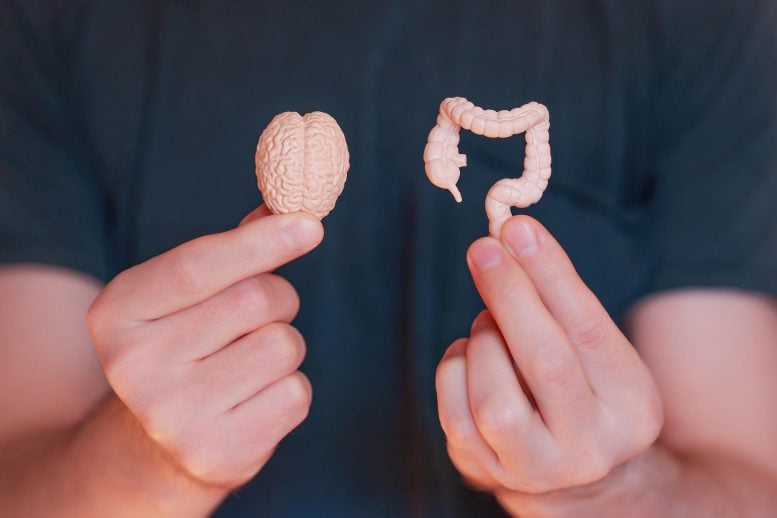
In a series of experiments, scientists stumbled upon an unknown communication system in the body. It turns out that bacteria in the gut can transmit information to the brain at lightning speed through nerve pathways. This appears to be an extra sense — not a mystical phenomenon, but a biological link between what we digest and how we feel.
The 5 Key Takeaways
- There appears to be a nerve channel that transmits gut activity directly to your brain.
- The speed of this transmission is much faster than previously thought.
- Not all gut bacteria participate — some species appear remarkably active.
- The influence extends beyond just hunger: behavior also seems to shift, but how?
- This discovery raises questions about how lifestyle choices can shape your mood, but how exactly?
The research appeared in Nature and was conducted by neurobiologists Diego Bohórquez and M. Maya Kaelberer at Duke University School of Medicine. Their focus was on so-called neuropod cells — tiny sensors in the wall of the large intestine. These cells are able to recognize a protein that is common in certain gut bacteria. Once that signal is detected, the cells send a message directly to the brain. The result: reduced appetite.
According to the researchers, this is likely just the beginning. They suspect this communication system has broader reach than just food. It could also influence mood, or even the reverse: that the brain actively controls the bacterial population in the gut.
“We wondered whether the body can sense microbes while they’re active — not just through an immune response, but immediately through the nervous system,” says Bohórquez, professor of medicine and neurobiology and lead investigator of the study.
Flagellin and the Signaling Mechanism
At the center is flagellin, an ancient protein in the ‘tail’ of some bacteria. When eating, certain gut bacteria release this protein. Neuropod cells recognize flagellin thanks to a specific receptor (TLR5) and send a signal via the vagus nerve — an important nerve pathway between the gut and brain.
The team, supported by the National Institutes of Health, suggests that flagellin in the large intestine may put a brake on our appetite. This would mean behavior is directly influenced by bacterial activity.
Glossary
- Neuropod cell: A specialized cell in the intestinal wall that recognizes signals from bacteria and transmits them to the brain via nerves.
- Flagellin: A protein found in the moving tail of bacteria that can send signals to the body.
- TLR5: A receptor that recognizes flagellin and activates the nerve signal toward the brain.
- Vagus nerve: A long nerve that connects the brain with organs such as the heart and intestines, and is involved in autonomic body functions.
Microbes Send a Stop Message
To test their theory, the researchers had mice fast overnight. Then they were given a small amount of flagellin, directly into the large intestine. The mice ate less.
In mice without the TLR5 receptor, this effect didn’t work. They just kept eating and gained weight. This suggests that flagellin normally sends a signal via TLR5: that’s enough. Without the right receptor, that message simply doesn’t get through.
The experiments were conducted under the direction of Winston Liu, Emily Alway, and Naama Reicher. Their work shows that when this signaling pathway is disrupted, eating behavior also changes. This makes the connection between gut microbes and behavior even more concrete.
“This discovery helps us better understand how behavior can be influenced by bacteria in the gut,” says Bohórquez. “A logical next step is to look at what different types of food do to that microbial landscape. That could explain a lot in conditions like obesity or certain mental health issues.”
Verified Sources
- “A gut sense for a microbial pattern regulates feeding” – Winston W. Liu et al., published July 23, 2025 in Nature. DOI: 10.1038/s41586-025-09301-7
- Thanks to SciTechDaily for original reporting
Gerelateerde artikelen


Frequently Asked Questions
What is the role of flagellin in communication between the gut and brain?
Flagellin is a protein released from certain gut bacteria. It is detected by special sensors in the intestinal wall, which then send a signal to the brain to reduce appetite.
What are neuropod cells?
Neuropod cells are small sensory cells in the intestinal wall that recognize signals from bacteria and transmit them directly to the nervous system.
What is the vagus nerve?
The vagus nerve is an important nerve that connects the brain with organs such as the heart, lungs, and intestines. In this research, it functions as an ‘information line’ from gut to brain.
Can diet and lifestyle influence these signals?
Yes, researchers suspect that the microbial landscape in the gut responds strongly to diet. What you eat can therefore influence your mood and appetite through this pathway.
What does this mean for people with obesity or eating disorders?
While the research has so far been conducted on mice, it does open the door to new ways of understanding and potentially influencing eating behavior through gut bacteria and nerve pathways.