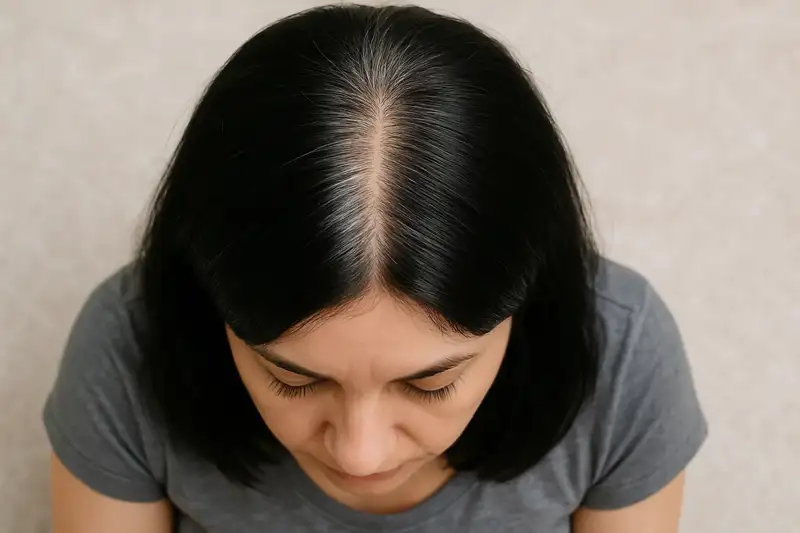
The pursuit of a youthful appearance and inner vitality remains a recognizable driving force. Gray hair is often experienced as a visual signal of aging.
Yet this process often arises from deficiencies in building blocks like biotin and melanin, or from internal damage — for example, from free radicals. There are ways to slow this process or partially reverse it.
In this article, you’ll read which strategies are realistically applicable to reduce the chance of premature gray hair, or even reverse it.
A Natural Approach: The Black Sesame Seed Blend
A well-known method among practitioners is a daily homemade blend that targets nutritional deficiencies affecting pigment loss. This is not a miracle cure, but rather nourishing internal support.
The ingredients of this blend:
Black sesame seeds: Two tablespoons, lightly roasted over low heat until you hear a crispy sound. Be careful not to burn them. These seeds contain powerful antioxidants that help neutralize free radicals — substances that contribute to cell aging, hair loss, and pigment loss.
Apple cider vinegar: One tablespoon, added once the seeds have cooled. A healthy gut flora plays a key role in the absorption of nutrients like iron and vitamins. Apple cider vinegar supports digestive function and stimulates the production of beneficial bacteria.
Blackstrap molasses: Two tablespoons of this thick byproduct from sugarcane. It is rich in iron and copper — two elements that contribute to hair color and structure. Copper in particular plays a role in melanin production, the pigment that gives hair its color.
Amla powder (Indian gooseberry): One teaspoon. Amla contains plenty of vitamin C and antioxidants that enhance nutrient absorption and help the body heal.
These ingredients are mixed into a paste or porridge and preferably taken in the morning on an empty stomach, about 30 minutes before breakfast. At that time, the body is most receptive to nourishment with a restorative effect.
These ingredients can be taken daily, ideally thirty minutes before breakfast. At that time, the body is still in a fasted state, which makes nutrient absorption more efficient.
The Physiology Behind Gray Hair: Causes and Influenceable Factors
Those who want to slow hair graying do well to look beyond superficial solutions. While aging is inevitable, lifestyle also plays a role in how quickly pigment loss occurs in many people. Genetics is a factor, but the interaction between nutrition, stress, oxidative load, and enzyme function proves decisive. More on these mechanisms can be found via haarstichting.nl and huidziekten.nl.
Various causes play a role here:
- Copper deficiency: Melanin — the pigment that determines hair color — is produced with the help of enzymes like tyrosinase. These enzymes depend on copper. A deficiency in this trace element can disrupt melanin production and cause premature gray hair. See also ahealthylife.nl and vitamines.com.
- Stress and elevated cortisol: Chronic stress increases cortisol production. This stress hormone increases the demand for copper, reducing its availability for pigment formation. The combination of increased stress and reduced absorption eventually leads to exhaustion of the system that maintains hair color. See e.g. gazetaexpress.com and mooiverouderen.com.
- Hydrogen peroxide accumulation: As the body ages, hydrogen peroxide can accumulate in the hair shaft. This oxidative process has a bleaching effect on hair. See also hairgivers.nl.
- Catalase deficiency: Catalase is an enzyme that converts hydrogen peroxide into water and oxygen. A single catalase molecule can break down millions of hydrogen peroxide molecules per second. If this conversion doesn’t work efficiently, the peroxide remains active and damages the pigment structure of the hair. See again hairgivers.nl.
- Deficiency in vitamins and minerals: Not just copper, but also B12, iron, folate, and biotin play a role in pigment formation. A deficiency in these nutrients can accelerate premature graying. Sources on this can be found at haarstichting.nl, haarspullen.nl, lifeplus.com, and bestbeauty-tips.com.
✅ Examples Available in the Netherlands

Saitaku Black Sesame Seeds
€ 3.79 – Albert Heijn

Bragg Apple Cider Vinegar
€ 9.99 – Holland & Barrett

Meridian Blackstrap Molasses
€ 9.95 – Unlimited Health

It’s Pure Amla Powder
€ 8.20 – Greenbeautyshop.nl

Mattisson Apple Cider Vinegar
€ 4.56 – Koopjesdrogisterij.nl

Organic Black Sesame Seeds (1.5kg)
€ 12.50 – KoRo Netherlands
Diet and Lifestyle: What Really Helps?
Those who want to address premature gray hair can start with two approaches: reducing stress and adopting a more targeted eating pattern.
- Reduce stress: Chronic tension is an underestimated factor. It not only increases the need for antioxidants and trace elements but also affects hormonal processes that suppress pigment formation.
- Copper-rich foods: By eating foods more often such as oysters, mushrooms, grass-fed liver, or spirulina, hair follicles get more building blocks for color. See also ahealthylife.nl, vitamines.com, and bonusan.com. Copper as a supplement can be worthwhile, but preferably in combination with zinc in a ratio of approximately 1:10 to maintain good balance.
- Catalase-rich foods: Vegetables like broccoli, Brussels sprouts, and other cruciferous vegetables, as well as grass-fed beef liver and young microgreens, contribute to the natural breakdown of hydrogen peroxide in the body. Cook these vegetables briefly so the enzymes are preserved. See also bonusan.com and hairgivers.nl.
- Support for the immune system: White blood cells use hydrogen peroxide to eliminate pathogens. When the immune system is under stress, its production can increase, with unintended damage to pigment structures as a result.
- Avoid harmful habits: Smoking, excessive alcohol consumption, sugary foods, and heavily processed carbohydrates accelerate aging processes. This also applies to hair graying. See, among others, haarspullen.nl and wikihow.com.
- Higher fat intake: Some research suggests that a higher-fat diet — for example, ketogenic — can stimulate catalase production. This can help the body address oxidative damage before it affects hair.
Effective Supplements for Hair Color Restoration
Those who have already optimized diet and lifestyle can seek additional support in supplements that directly contribute to pigment formation or oxidative protection.
- Copper: Essential for melanin production and for good iron absorption. A deficiency increases oxidative stress in hair follicles. For those who don’t get enough copper through food, a supplement of 1.5 to 2.5 mg per day can be a valuable addition. Blackstrap molasses remains a natural source of copper. See e.g. ahealthylife.nl, vitamines.com, ivg-info.nl, and davitamon.nl.
- NAC (N-acetylcysteine): This compound stimulates the production of glutathione, one of the body’s most powerful antioxidants. Glutathione helps neutralize hydrogen peroxide in hair follicles and thus protects against pigment loss. Additionally, NAC can reduce DHT and reactive oxygen species, which is also beneficial for hair loss. A dosage between 600 and 800 mg per day is often used.
- Moringa: This plant is known as the ‘tree of life’ and contains high concentrations of essential proteins, antioxidants, iron, calcium, potassium, and vitamins. Moringa can contribute to thicker, stronger hair, a well-hydrated scalp, and improved hair structure. The vitamin C and E present help slow oxidative damage. See also spiruella.nl, superfoodsonline.nl, nourished.nl, yuaiahaircare.com, and berivita.com.
Conclusion
Gray hair often results from a combination of nutritional deficiencies, oxidative load, and aging processes. By combining natural foods, stress reduction, and targeted supplements such as copper, NAC, and moringa, you increase your chances of maintaining or restoring your natural hair color. The key lies in perseverance — and in understanding what your body truly needs in the long term.
Verified Sources
- https://www.haarstichting.nl
- https://www.ahealthylife.nl
- https://www.vitamines.com
- https://www.haarspullen.nl
- https://www.hairgivers.nl
- https://www.spiruella.nl
- https://www.superfoodsonline.nl
Gerelateerde artikelen


Frequently Asked Questions
What causes gray hair in the first place?
Gray hair usually occurs because melanin production in hair follicles decreases. This process is influenced by age, but also by deficiencies in copper, vitamin B12, and antioxidants like glutathione.
Can diet help prevent gray hair?
Yes, diet plays an important role. Foods rich in copper, vitamin C, iron, and catalase can help maintain hair color. Cruciferous vegetables, liver, spirulina, and blackstrap molasses are good examples.
Is gray hair reversible?
In some cases, yes. In younger people with clear nutritional deficiencies or oxidative stress, a combination of lifestyle changes, diet, and supplements can have an effect. With genetic predisposition, it’s more difficult.
Which supplements are often mentioned for gray hair?
Copper, NAC (N-acetylcysteine), moringa, blackstrap molasses, and amla are commonly used supplements. They support, among other things, the antioxidant balance and melanin production.
What does stress do to hair color?
Prolonged stress increases the stress hormone cortisol, which reduces the availability of copper. This decreases the activity of enzymes needed for pigment formation in hair.
Continue reading
- Moringa oleifera: Support Your Back Pain Recovery — Without Pills
- Moringa oleifera and Why It Only Works When Your Body Needs It 🌿
- GlyNAC As A Life-Extending Supplement Sounds Appealing, But What’s True About It?
- NAC and Glutathione – Why The Medical World Has Used This Substance In Hospitals and Elite Sports For Decades