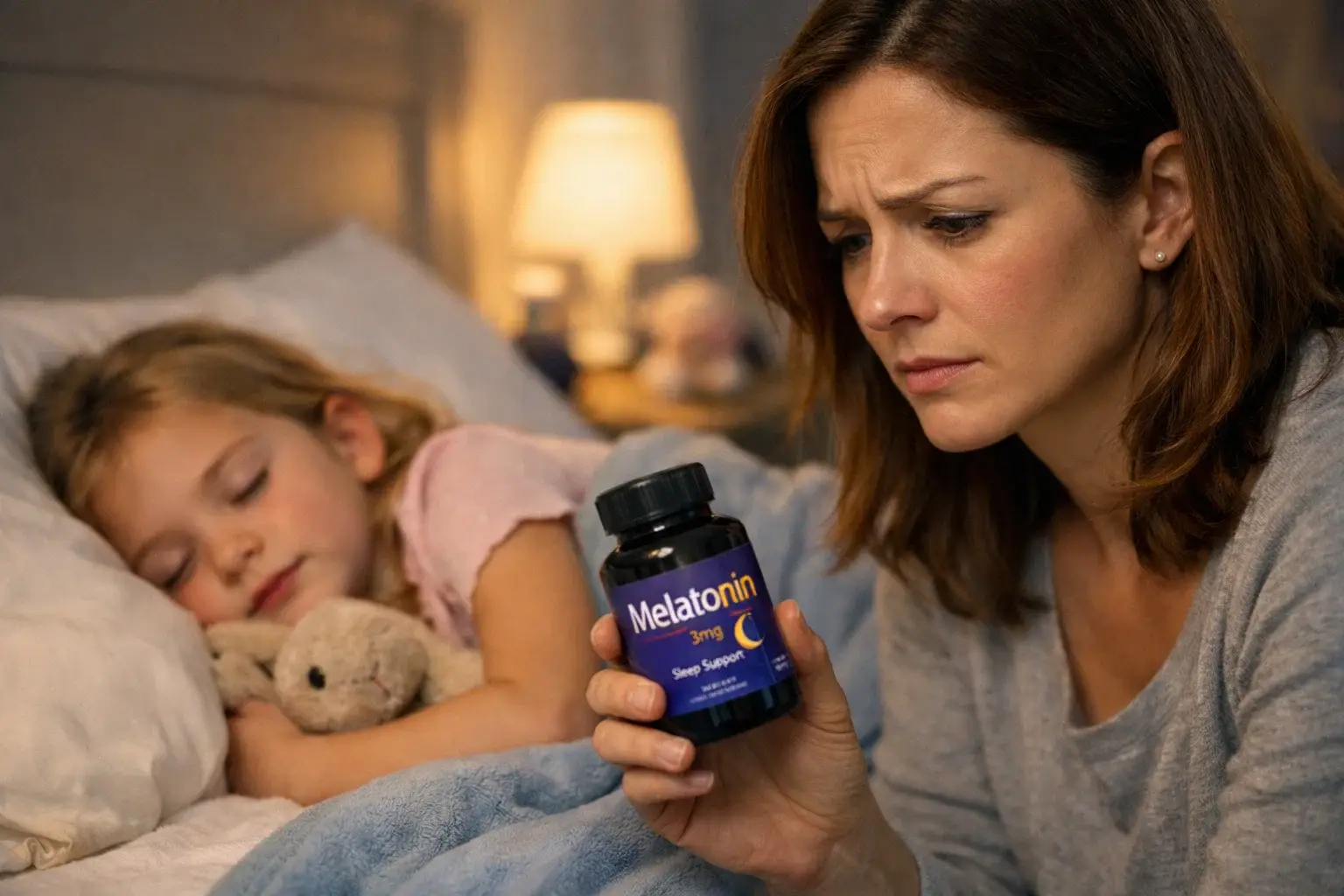
It seems like a simple solution for sleepless nights, but more and more doctors are raising alarms about melatonin use in children. Its popularity is growing even faster than research can keep up.
Parents search for answers when their child lies awake for hours. Melatonin is often seen as natural, safe, and freely available. Yet the risks turn out to be more complicated than expected, especially since long-term effects on development are barely studied.
The 5 Key Takeaways
- Melatonin is a hormone that reaches far beyond sleep alone — and that may be the problem
- Gummies sometimes contain five times more melatonin than the label states
- Emergency room visits for melatonin accidents are rising, especially among toddlers
- For healthy children, solid evidence of long-term safety is lacking
- Sleep habits usually work better — and last longer
Melatonin in children: key facts and context
Melatonin is produced by the brain and controls the circadian rhythm. In the evening, production rises; in the morning, it drops again. That signal helps the body determine when it’s time to sleep. Supplements mimic that process, but they also affect other systems — such as immunity, metabolism, and hormone balance.
Especially in children with ADHD or autism, the short-term effect seems clear. They fall asleep faster and sleep longer. For children without these conditions, however, the evidence is thin. The JGZ Guideline on Melatonin recommends trying behavioral approaches first before turning to supplements.
Guidelines and advice: when to use and when not to
The NHG Standard on Sleep Problems states that melatonin is not a first choice for ordinary insomnia. The focus is on addressing underlying causes, such as inconsistent bedtimes, too much screen time, or stimulation shortly before bed. Only when behavioral therapy isn’t sufficient and medical supervision is available should a doctor consider prescribing melatonin.
Even then, caution is warranted. The American Academy of Sleep Medicine warns against unsupervised use and emphasizes the importance of safe storage — especially for gummies, which look like candy. Age also matters: the younger the child, the less is known about possible effects on growth and hormonal development.
Dosage, timing, and available forms (drops, gummies, tablets)
There is no universal dosage for children. Doctors often use 0.5 to 3 mg, depending on age and situation. The problem: many OTC supplements don’t contain a consistent amount of melatonin. One analysis found that some products contained up to 478% of the stated dosage. Unexpected substances like serotonin were also detected.
Gummies are particularly popular, precisely because they appeal to children. That also makes them risky. Verywell Health points out that children easily consume too much when they treat them as candy. Drops offer more control over dosage, but quality control is often missing there too.
Side effects, interactions, and signs to stop
The most common side effects are dizziness, headaches, and daytime drowsiness. Less known is that melatonin can affect the production of other hormones. Research suggests it may influence pubertal development, although concrete long-term data is lacking. The EClinicalMedicine review particularly emphasizes the knowledge gaps: what happens after months or years of use?
Drug interactions also occur. Melatonin can affect the effectiveness of blood pressure medication, antidepressants, or blood thinners. Signs to stop: if the child remains drowsy during the day, sleep problems actually worsen, or unexplained mood swings occur. In those cases, follow-up with your family doctor is necessary.
Pros and cons of melatonin in children
Pros
- Often helps children with ADHD or autism fall asleep faster.
- Freely available and easy to administer in various forms
- No heavy medication needed with short-term and supervised use
- Can temporarily ease the burden on parents when sleep deprivation disrupts the home
Cons
- Long-term effects on puberty and hormonal development are unknown
- Products often contain more or less melatonin than stated on the label
- Risk of unintended ingestion, especially with gummies that look like candy
- Does not replace a structured approach to underlying sleep problems
Safer sleep without supplements: proven sleep habits
A good bedtime routine is often more effective than a supplement. Fixed times, a dark bedroom, limited screen time, and quiet time before bed help the body produce its own melatonin. That process strengthens the natural rhythm and continues to work even after the supplement is stopped.
Behavioral interventions require more patience, but offer lasting results. For some families, guidance from a sleep coach or child psychologist can help. It seems more complicated than a pill, but the results are often more solid. The goal is to teach the body to trust its own signals again, rather than becoming dependent on external impulses.
Glossary
- Melatonin: Hormone that regulates the sleep-wake cycle and is produced by the brain in the evening
- Circadian rhythm: The body’s natural 24-hour clock, which controls sleep, appetite, and other processes
- OTC supplement: Over-the-counter product available without a prescription, such as freely available melatonin
- Pharmacokinetics: The way a substance is absorbed, distributed, broken down, and excreted by the body
What the latest studies show
A review article in World Journal of Pediatrics compiles recent findings and signals a gap between popularity and evidence. In children with autism or ADHD, the short-term effect has been demonstrated: they fall asleep about faster on average and sleep longer. In healthy children, sufficient research is lacking, especially for long-term use.
The article also highlights the rise in unintended ingestion. Emergency visits due to melatonin have increased significantly, especially among young children who find gummies. The packaging often resembles candy, and storage doesn’t always happen carefully. This makes education about safe storage extra important, especially in households with multiple children.
| Age group | Recommended approach | Risk with unsupervised use |
|---|---|---|
| 0–3 years | Only under strict medical supervision | High: hormone balance development is still fragile |
| 4–11 years | Behavioral intervention first, supplement only after consultation | Moderate to high: long-term effects unknown |
| 12–17 years | Short-term use possible for severe insomnia | Moderate: puberty may be affected |
Why regulation and quality control are needed
The lack of oversight on melatonin products is a real problem. Manufacturers don’t need to perform strict quality controls, so composition can vary from batch to batch. Some supplements contain barely any active ingredient, others far too much. This makes dosing unreliable and increases the risk of side effects or ineffectiveness.
Experts call for clear labeling, mandatory laboratory testing, and age-based warnings on packaging. Additionally, melatonin for children should only be available by prescription, as is already the case in some European countries. Such measures can help parents make better-informed decisions and raise the bar for careless use.
There are alternatives!
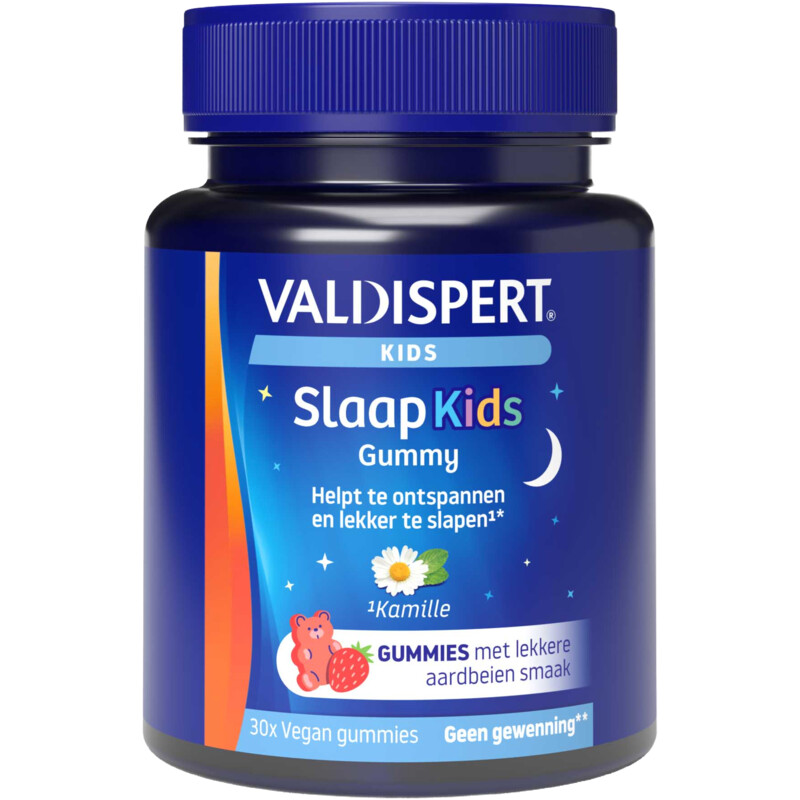
Valdispert Sleep Kids gummy (chamomile + micronutrients)
Nordic Naturals Kids Calm gummies (magnesium + L-theanine)
 When you notice your child has trouble winding down in the evening, this type of supplement can help make the transition to bedtime smoother. As a parent, you stay in control: a clear dosage, a recognizable gummy, and ingredients aimed at relaxation. Think of it as temporary support while you continue investing in stimulation-free evenings and predictable sleep times.
Numsy Calm white noise machine (environment and stimulus control)
 For many parents, the real benefit lies in the sleep environment. With white noise, you create a steady and recognizable sound that dampens sudden stimuli. This helps your child fall asleep more easily and sleep longer through the night. You use no supplements and don’t need to administer anything, while still actively contributing to a calmer bedtime routine.
Conclusion
Melatonin can help, but deserves more respect than it currently gets. It’s not an innocent remedy, but a hormone with effects on multiple body systems. For some children it offers temporary relief, but structural sleep problems won’t disappear with it.
Parents and doctors do well to remain critical and prioritize alternatives. A good sleep environment, consistent routines, and patience usually deliver more than a bottle of gummies. And if melatonin is considered nonetheless, do so under guidance, with realistic expectations and an eye toward any signs that it may not be right.
Verified Sources
- JGZ Guideline on Melatonin (NL) – Advises caution and behavioral approach first for children’s sleep problems.
- NHG Standard on Sleep Problems (NL) – Family doctor framework for policy on insomnia and sleep disorders, emphasizing non-pharmacological approaches.
- American Academy of Sleep Medicine – Health Advisory – Warns against unsupervised use, emphasizes safe storage and behavioral approach first.
- EClinicalMedicine (The Lancet): adverse effects of melatonin in children – Review of (mostly) non-serious side effects and knowledge gaps regarding long-term use.
- Verywell Health – Melatonin for babies and toddlers – Summary of expert advice on age limits, dosage, and timing.
Related Articles


Frequently asked questions
Is melatonin safe for children?
Doctors and sleep organizations advise caution: short-term use may be appropriate in some situations, but always start with sleep habits and have decisions guided by a pediatrician or sleep specialist. Side effects are usually mild, but long-term safety is insufficiently known.
From what age can a child take melatonin?
Experts generally advise against melatonin for babies and toddlers, unless a doctor explicitly decides otherwise. In older children, it may sometimes be used for specific indications under medical supervision.
What is a safe dosage for children?
Start as low as possible and as briefly as possible; many clinical guidelines begin around 0.5–1 mg, 30–60 minutes before bedtime, only on prescription or advice of a healthcare professional. Dosage depends on age, indication, and form, and requires evaluation of effect and side effects.
Can melatonin affect puberty or hormones?
Because melatonin is a hormone and long-term data are limited, guidelines advise caution. Possible effects on hormonal axes and puberty are insufficiently studied; this is a reason to limit use and monitor it.
Are gummies reliable?
OTC supplements have variable content and labeling; unintended ingestion by children occurs. Choose medicinal preparations where available, store out of reach, and discuss quality and origin with the pharmacy or doctor.