Deep in the subtropical forests of East Asia grows an organism that continues to surprise biologists. This rare specimen looks like a fungus, yet genetically speaking it is a flowering plant.
Without sunlight or its own roots, this organism survives through an ingenious, parasitic lifestyle. Scientists are now unraveling how this species lost almost all of its essential genes and yet remained vital.
The 5 Key Takeaways
- The plant has no chlorophyll and obtains all nutrients from the roots of specific host trees.
- Despite losing photosynthesis, the cell structure retains remnants of plastids for other vital functions.
- Some populations reproduce purely asexually, which is extremely rare for non-microscopic plants.
- Genetic diversity in island populations like Okinawa is limited by this specific reproductive strategy.
- Human activity and deforestation pose a direct threat to this evolutionary exception.
Balanophora explained: not a fungus but a parasitic plant
In the dark understory of mossy forests, you sometimes encounter an organism that deceptively resembles a mushroom. This organism belongs to the genus Balanophora, a plant species that has lost its green color and leaves over the course of evolution. The plant draws no energy from sunlight; it lives entirely on the reserves of other organisms.
The anatomy of this species is drastically simplified to focus entirely on parasitism. Normal plants use hundreds of genes for their cell structure. This species retains only a fraction of them. Researchers at OIST showed that the remaining genes remain essential for protein synthesis.
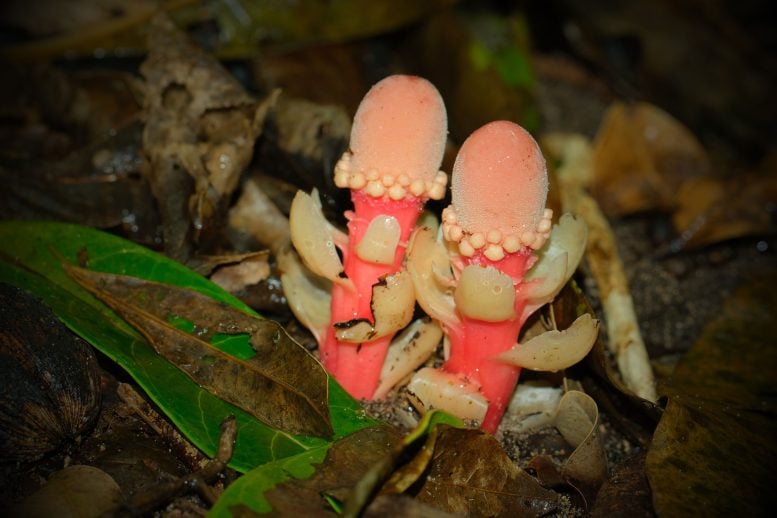
Mycoheterotrophy: nutrition via fungi and tree roots
This plant’s survival mechanism relies on a direct physical connection with the roots of a host. The term mycoheterotrophy often suggests a role for fungi, but this species connects directly to trees. This makes the Balanophoraceae a strictly parasitic family that taps water and nutrients.
This process requires a specific match between the parasite and tree species, making the plant selective about its habitat. A completely parasitic family like this has developed complex mechanisms to evade the host’s immune system. The dependence on the host is total; without tree roots, the plant dies.
Pros and cons of: Agamospermy (asexual reproduction)
Pros
- A single female plant can establish a new population.
- Colonization of remote islands occurs faster.
- No dependence on pollinators or male plants.
- Energy savings since fertilization is unnecessary.
Cons
- Lack of genetic variation makes the species vulnerable.
- Harmful mutations accumulate faster in the DNA.
- Adaptation to changing environmental factors is more difficult.
- Higher risk of local extinction from disease.
Habitat and distribution: islands, mist forests, and forest floors
The plant thrives particularly well in moist, shaded environments where there is little competition from other ground plants. You find them mainly in the mountainous regions of Taiwan, Japan, and the subtropical forests of Okinawa. Preference is for dark spots at the base of mossy trees.
Islands play a crucial role in the evolution of this species, since isolated populations develop their own characteristics here. Distribution is limited to locations where specific host trees are present. Human disturbance of these habitats therefore poses a direct major risk.
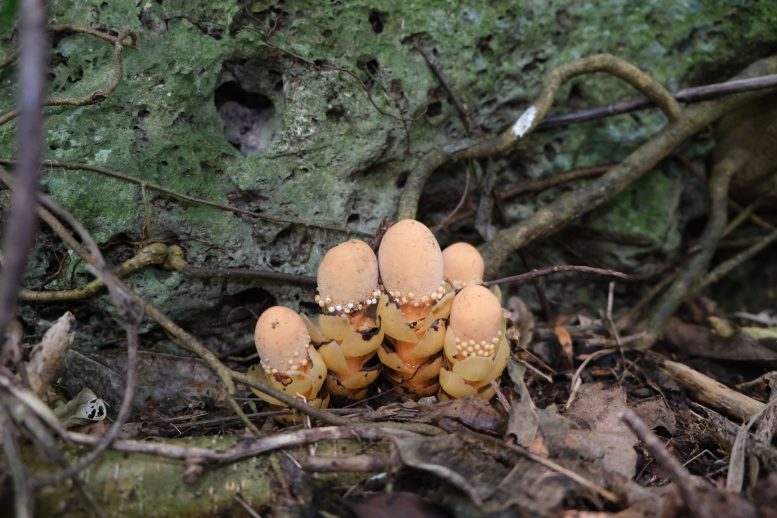
Reproductive strategy: from tiny seeds to agamospermy
The reproduction of Balanophora shows variations that biologists rarely see within a single plant genus. Some populations use the standard method of fertilization to produce seeds. Other groups on islands have developed the ability to form seeds without any fertilization.
This strategy, known as obligate agamospermy, is rare in the plant kingdom due to long-term genetic Cons. It does give the plant the ability to spread as a clone in isolated areas. This creates populations that consist entirely of female specimens.
Glossary
- Chlorophyll: The green pigment with which plants convert sunlight into energy (photosynthesis).
- Plastids: Cell structures that in normal plants have various functions, including photosynthesis.
- Agamospermy: A form of reproduction in which seeds form without fertilization (asexual).
- Parasite: An organism that lives at the expense of another organism (the host).
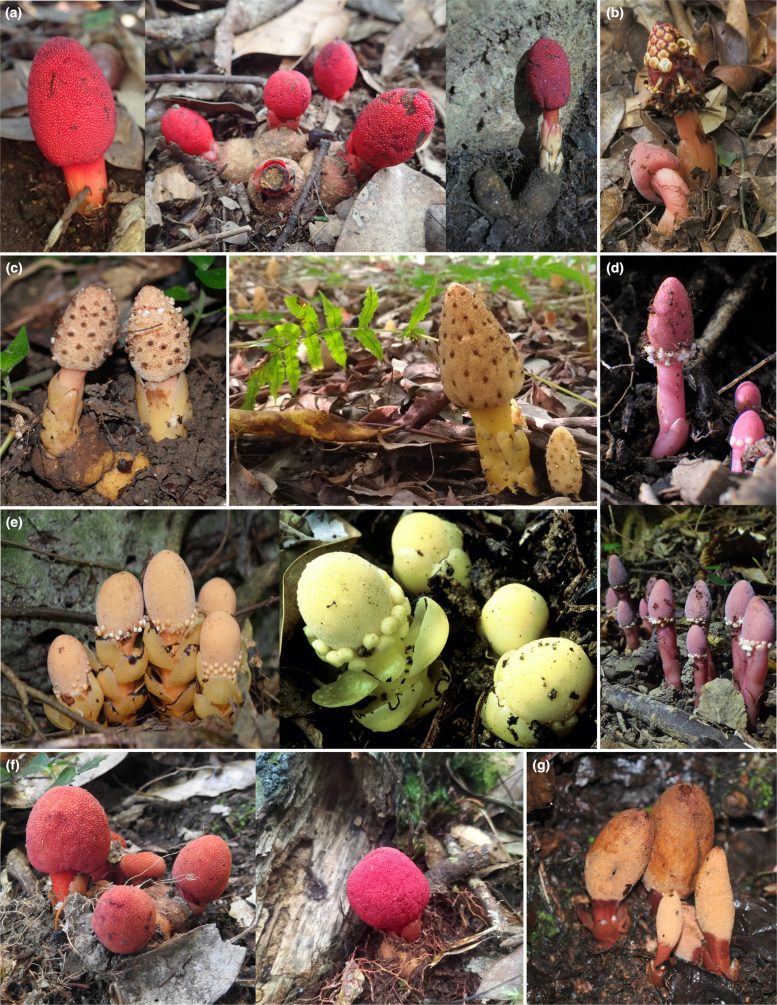
Safety and protection: rarity, poaching, and regulation
The extreme specialization of this plant makes it very sensitive to changes in its environment. Deforestation and illegal collection pose real threats to the survival of various local species. Most known locations in Okinawa now enjoy protected status.
Authorities and scientists work together to map and protect remaining populations. The preservation of this parasitic plant is important for understanding the evolutionary history of the plant kingdom. Without active protection, these unique botanical puzzle pieces threaten to disappear.
| Feature | Normal plant | Balanophora |
|---|---|---|
| Energy source | Sunlight (Photosynthesis) | Host tree (Parasitism) |
| Plastid genes | Approximately 200 genes | Only 20 genes |
| Root system | Independent network | Fused with host |
Conclusion
The Balanophora proves that plants can adapt radically to survive in dark niches. By abandoning essential plant characteristics like photosynthesis, this species demonstrates the flexibility of evolution.
Protecting their specific habitats on islands like Okinawa is necessary for their survival. Only by leaving the host trees and forest floor undisturbed will this unique life form be preserved.
Verified Sources
-
- Okinawa Institute of Science and Technology – Recent research on Balanophora and evolution/reproduction – Primary press release with core findings on plastid reduction and agamospermy.
- Wikipedia – Balanophora – Overview of genus, distribution, and seed size.
- NIH/PMC – Parasitic plant, from inside out – Scientific context on Balanophoraceae as an extremely parasitic clade.
- Liberteque – Mycoheterotrophy in orchids – Accessible explanation of mycoheterotrophy.
- Wikipedia – Balanophoraceae – Family framework: completely parasitic plants without chlorophyll.
- With thanks to SciTechDaily
Related Articles


Frequently Asked Questions
Is Balanophora a fungus or a plant?
Biologically speaking, it is a flowering plant, despite its appearance strongly resembling a mushroom. The species belongs to the family Balanophoraceae and produces flowers and seeds.
How does this plant get food without sunlight?
The plant lives as a parasite by attaching itself to tree roots. Through this connection, it extracts water and nutrients directly from the host.
Where is this plant species found?
You find these plants mainly in subtropical forests in East Asia, including Taiwan, Japan, and the Okinawa islands. They grow in dark, moist understory.
What makes the reproduction of this plant so special?
Some populations can reproduce without fertilization, a process called agamospermy. This allows female plants to clone themselves and colonize new areas.
Is Balanophora dangerous to humans?
The plant is harmless to humans. For host trees, it is harmful by draining nutrients. However, the ecological impact usually remains locally limited.