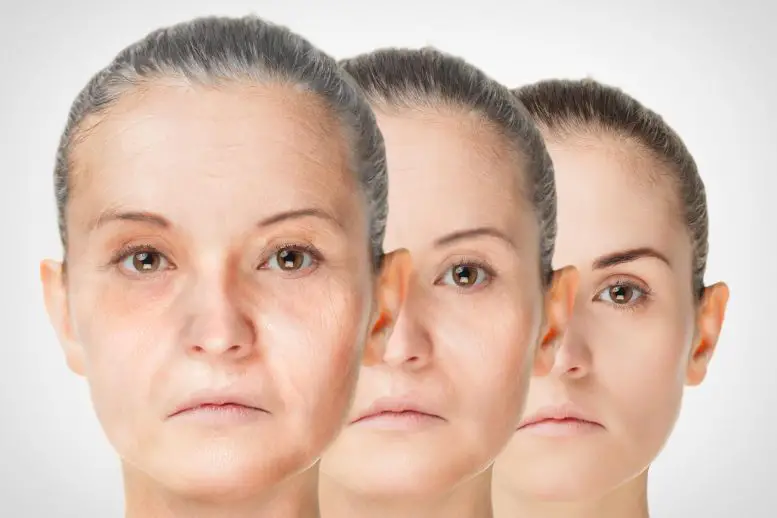
Vitamins are often underestimated in the fight against aging. Compared to the endless stream of creams and serums, they seem less exciting at first glance. Yet increasingly more research suggests that vitamins in aging have a more fundamental effect than what you apply to your skin.
Creams can influence certain visible signs of aging locally. But the deeper processes — oxidative stress, cell damage, inflammation — happen on the inside. And that’s exactly where vitamins do their work.
Certain active ingredients barely reach the deeper skin layers through topical applications. Vitamins, on the other hand, influence processes at the cellular level, which can slow both internal and external aging.
That doesn’t mean you should skip creams. The most powerful approaches combine supplements and topical care into a broad defense mechanism against aging.
Especially in cases of deficiencies, supplements can help fill essential nutrient gaps. And these deficiencies are more common than you’d think. Many adults don’t get enough vitamin D or B12 — which can contribute to complaints wrongly seen as ‘normal’ aging.
Not all vitamins have the same effect on the aging process. Some play a much larger role in cell renewal and skin repair than others. That’s why we discuss the three most powerful vitamins below for those who want to age healthily and vitally.
Biological repair begins with lifestyle — not age.
1. Collagen
If you could only choose one supplement, collagen might be the most logical choice. Collagen is a protein your body produces that keeps skin firm. As we age, its production decreases. And that loss is one of the first visible signs of aging.
By supplementing collagen, you can partially reverse this process. Early studies suggest that supplementation improves skin elasticity and reduces wrinkle depth.
In a study with 72 women, daily intake of 2.5 grams of collagen for 12 weeks made skin visibly more supple. For many people, that’s a concrete step toward more confidence in their skin.
So collagen isn’t a miracle cure, but it is a realistic foundational step. And the good news? It’s rarely ‘either-or’. You can combine multiple substances for a synergistic effect.
2. Vitamin A
Vitamin A — known from the active ingredient retinol — has been at the center of anti-aging skincare for years. But it also works from within. And that combination makes it particularly powerful.
Our body doesn’t produce this vitamin itself. We must get it from food or supplements. And there’s good reason for that. Because besides better vision, a strong immune system, and healthy organs, vitamin A also supports collagen production.
The synthetic form tretinoin — a derivative of vitamin A — is one of the few substances proven to slow collagen breakdown and stimulate production.
This makes vitamin A relevant not only for your skin but also for your overall cell health. It subtly slows the internal aging process you don’t see in the mirror but do feel.
3. Vitamin D
Vitamin D is the vitamin you literally get from: sunlight. But it does much more than just support your bones.
There’s evidence that vitamin D contributes to longer lifespan and may protect against age-related diseases. It seems like a silent guardian angel in the aging process.
A 2016 study found that vitamin D supplementation could increase median life expectancy by up to 33%. While these are preliminary findings, the effect is remarkable.
Additionally, vitamin D offers protection against sun damage to the skin, helping prevent wrinkles and age spots. A striking dual role: both internally and externally protective.
You can only sustainably change what you first become consciously aware of. ~ Andrew Huberman
4. Vitamin E
As we age, our body needs more vitamin E to stay healthy. No wonder — vitamin E plays a key role in regulating our immune system.
Although the body contains vitamin E naturally, those reserves deplete quickly under sunlight exposure. And that’s a shame — vitamin E is a powerful antioxidant that neutralizes free radicals. These unstable molecules damage cells and are linked to the aging process.
Vitamin E not only protects the skin against wrinkles and fine lines but can also stimulate collagen production. This contributes to cell renewal and skin repair. Studies show that vitamin E supplementation can effectively slow collagen breakdown.
Beyond the skin, the body also benefits from this antioxidant. There’s evidence that vitamin E reduces the risk of heart disease and may protect against cognitive decline.
5. Resveratrol
Resveratrol is less known to many than collagen or vitamin A. Yet this antioxidant deserves attention. Because its effects are surprisingly broad.
Resveratrol is the substance that gives grapes, raspberries, and blueberries their characteristic color. But it does more than that: resveratrol helps skin fight wrinkles and fine lines.
While you can get this substance through food, the dosage in supplements is often more effective. And that’s relevant: sun exposure — a major cause of skin aging — is difficult to avoid completely.
Resveratrol offers protection against the harmful effects of UV radiation. Additionally, it’s been linked in some studies to life extension. A powerful addition, despite its modest reputation.
6. Zinc
Zinc is a trace element essential for protein synthesis, wound healing, and immune function. But the body doesn’t produce it itself — we must get it from food or supplements.
Zinc is also an important player in the aging process. Zinc deficiencies are linked to accelerated cell aging and increased risk of age-related diseases.
Additionally, zinc plays a role in protecting against hair loss, something many people recognize as a visible consequence of aging. Supplementation supports hair tissue growth and repair.
With such a broad spectrum of effects, zinc is a practical choice for those wanting to support their vitality.
7. Curcumine
Curcumine — the active substance in turmeric — has been used for centuries but is now receiving scientific attention. And that proves justified.
Curcumine is being researched for its potential effects on cognitive decline and memory. There are even studies on its possible use in Alzheimer’s disease.
In animal models, curcumine has been linked to longer lifespan. This fuels hope that it may have similar effects in humans. Additionally, it influences oxidative stress, telomere shortening, and cell damage — all factors involved in aging.
The bioavailability of curcumine in the body remains a challenge, but ongoing research may change that. Until then, it’s a promising, though cautious, part of an anti-aging approach.
8. Selenium
Selenium is another trace element that helps protect against aging. It supports the function of antioxidants like vitamin E and can be obtained through food or supplements.
There’s evidence that selenium protects against age-related diseases like tumors and heart problems. It’s also linked to longer telomeres — structures that determine how long cells remain active.
In older adults with low selenium levels, higher mortality risk has been measured compared to age-matched peers with higher levels. While research is still early, the potential is certainly there.
Whether selenium will ultimately become a leading player in extending health remains uncertain. But as part of a broader strategy, it has already earned its place.
Vitamins Are Just Tools
While food remains the foundation, supplements can help fill nutrient gaps — especially with aging. And it’s often in these gaps that the difference lies between ‘just getting older’ and aging vitally.
Not every vitamin or substance works equally well, and far from everything is equally well researched. But those who delve into available knowledge can make targeted choices.
That’s where the power lies: in well-informed, evidence-based choices. No hype, but clarity. No miracle cures, but tools — for those willing to invest in health long-term.
Related Articles


Frequently Asked Questions
Which vitamins are best for anti-aging?
Collagen, vitamin A, vitamin D, vitamin E, resveratrol, zinc, curcumine, and selenium are the most effective vitamins for anti-aging.
How does collagen work against aging?
Collagen improves skin elasticity and reduces wrinkles by stimulating new collagen production.
Why is vitamin D important for anti-aging?
Vitamin D protects skin against UV radiation and is linked to longer lifespan and reduced age-related diseases.
What does resveratrol do for the skin?
Resveratrol protects skin against aging from UV light and is linked to longer lifespan.
How does zinc help fight aging?
Zinc plays a role in protein synthesis, immune system function, wound healing, and can help prevent hair loss.