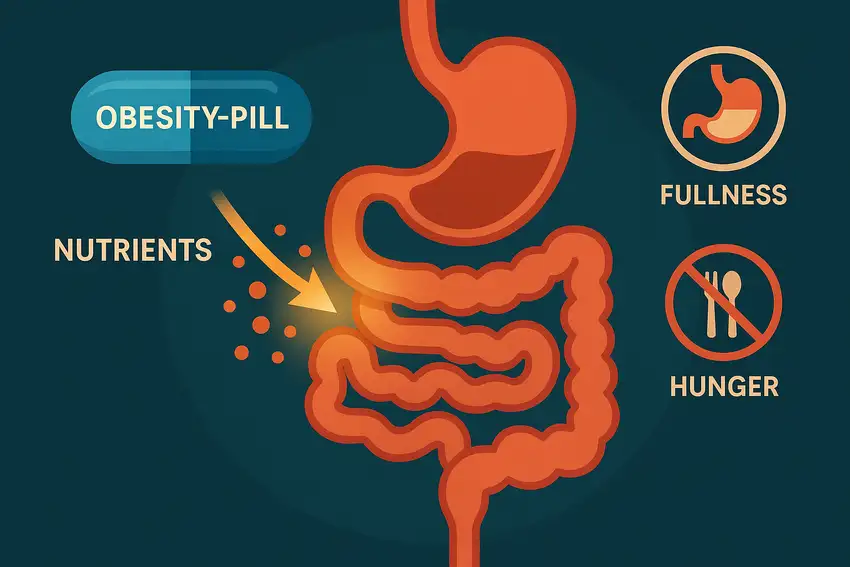
A new daily obesity pill shows promising results. SYNT-101 imitates the effect of gastric bypass surgery, but without surgical intervention. The mechanism works by shifting nutrient absorption to a lower part of the intestine, which affects satiety and metabolism.
With a temporary coating in the small intestine, SYNT-101 offers an innovative approach to weight loss without muscle loss.
At the European Congress on Obesity (ECO2025) in Málaga, researchers presented the first results from a pilot study of SYNT-101. This oral treatment, developed by American company Syntis Bio, demonstrates that it’s possible to replicate the metabolic benefits of gastric reduction without cutting or recovery time.
The pill doesn’t work by suppressing appetite through the brain, but by changing the digestive process itself — at the source, in the intestines.
How Does SYNT-101 Work?
SYNT-101 forms a temporary polydopamine coating in the first part of the small intestine (the duodenum). This causes nutrients to be absorbed further down in the intestine. This mechanism promotes natural satiety, supports metabolism, and appears to preserve muscle mass better than existing medications like GLP-1 agonists.
The coating remains present for a maximum of 24 hours and is then naturally broken down by the body. In preclinical studies, this approach led to an average weight loss of 1% per week over six weeks, without muscle loss.
First Results in Humans
In the first human trial, nine healthy volunteers (ages 24–53, BMI 19–29) received a liquid dose of SYNT-101. The group was divided across three dosages: 25%, 50%, and 100% of the intended daily dose.
Endoscopic examination confirmed that the coating formed correctly in the upper part of the intestine. Within 24 hours, it had completely disappeared. None of the participants reported side effects or discomfort.
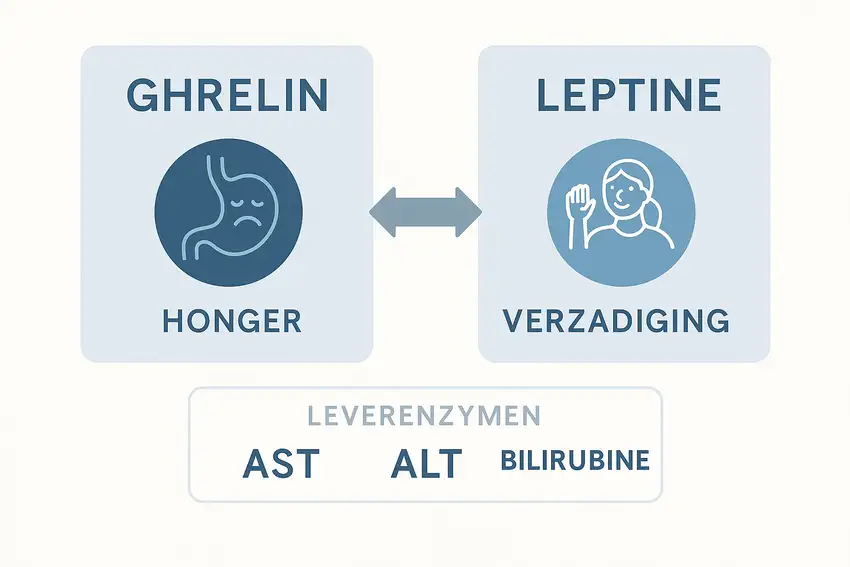
Over ten days, liver values such as AST, ALT, and bilirubin remained stable. The Gastrointestinal Symptom Rating Scale also remained unchanged. The average pain score among participants was 0.
Delayed Absorption, Favorable Hormones
After taking SYNT-101, glucose tolerance tests showed that glucose absorption into the bloodstream occurred significantly more slowly — 35% lower after 30 minutes and 21% lower after 60 minutes compared to the control group.
This suggests that glucose absorption indeed occurs in the lower part of the intestine, which is beneficial for satiety and blood sugar regulation. Additionally, blood tests showed elevated levels of leptin (satiety hormone) and lower levels of ghrelin (hunger hormone).
What Makes SYNT-101 Different?
SYNT-101 could become an important alternative for people dealing with obesity or insulin resistance who don’t want or can’t undergo surgery. Unlike GLP-1 medication, it appears more effective at preserving muscle mass, and so far shows minimal side effects or accessibility issues due to cost.
Still, it’s too early to draw firm conclusions — larger studies are needed to confirm long-term effectiveness and safety.
Syntis Bio expects to submit a formal application to the U.S. FDA in the second half of 2025 to begin clinical Phase 1 studies.
Verified Sources
Related Articles



Frequently Asked Questions
How Does SYNT-101 Differ From Gastric Bypass?
Surgical gastric bypass permanently changes anatomy. SYNT-101 doesn’t do that, but imitates the effect temporarily through a coating that shifts nutrient absorption to a lower part of the intestine. The goal is similar: less appetite, better satiety, and healthier metabolism.
Is SYNT-101 a Replacement for GLP-1 Medication?
SYNT-101 could potentially serve as an alternative or complement. It works differently: not through hormone injections, but through direct influence on the intestines. Unlike GLP-1, it appears better able to preserve muscle mass.
When Will SYNT-101 Be Available?
The pill is still in early testing stages. Large-scale studies still need to take place. If everything goes according to plan, a clinical trial will begin in 2025.