The foundation of yoga begins with a number of poses that are accessible to everyone. Fifteen of them form a solid base. You can practice them at home on a yoga mat, without needing any extra props.
In the rest of this article, you’ll find a clear explanation and practical guidance for each pose, and later in this guide a section on common alignment mistakes. This allows you to grow step by step in your yoga practice and build confidence in what your body can handle on the mat in your own living room.
1. Tadasana (Mountain Pose)
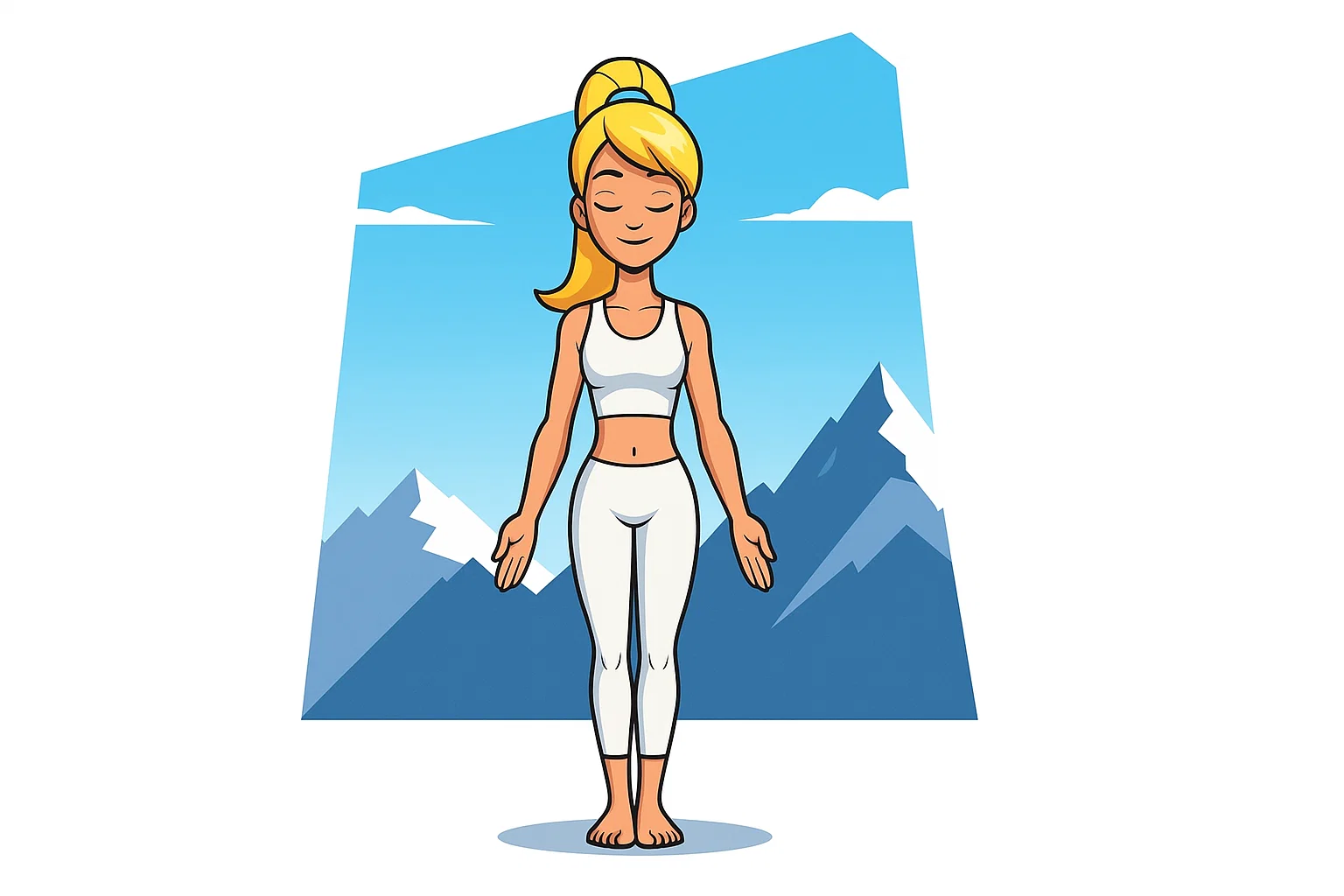
In the world of yoga, Tadasana, also known as Mountain Pose, forms the foundation for many other postures. Mastering Tadasana provides a strong base for your entire yoga practice.
Begin by standing with your feet hip-width apart and distribute your weight evenly across both feet. Engage your thighs and lift your kneecaps without locking your knees. Gently draw your tailbone downward, which activates your core for balance and alignment.
Keep your spine long and your chest open by rolling your shoulders back and down. Let your arms hang naturally alongside your body, with your palms facing forward. Imagine a string lifting the crown of your head upward, lengthening your neck.
Pay attention to your breathing. Inhale deeply as your body expands, and exhale as you release tension.
2. Vrikshasana (Tree Pose)

Balance is the essence of Vrikshasana, also known as Tree Pose. This posture helps you develop stability and focus.
Start by standing upright with your feet together. Shift your weight onto your left foot, making sure it is firmly grounded. Slowly lift your right foot and place it against your left inner thigh or calf, avoiding the knee. Keep your toes pointing downward as you find your balance.
Bring your hands together at your heart in a prayer position or extend them overhead toward the sky. Engage your abdominal muscles and fix your gaze on a steady point in front of you to maintain your balance. Breathe deeply and feel the extension from your foot to your fingertips.
If you wobble, that is part of the process. Gently lower your foot and try again.
Tree Pose strengthens your legs and back and improves your concentration. It also increases body awareness.
To come out of the pose, carefully lower your right foot and return to a standing position. Repeat on the other side so both legs receive equal attention.
Practicing Vrikshasana regularly enhances both your physical balance and your inner focus.
3. Adho Mukha Svanasana (Downward-Facing Dog)

In yoga practice, this pose appears as an essential posture for both beginners and experienced yogis. It functions as a transition and resting point while promoting strength and flexibility throughout the body.
Begin on your hands and knees, with your wrists directly under your shoulders and your knees under your hips. Press into your palms, tuck your toes, and lift your hips toward the ceiling, forming an inverted V shape.
Spread your fingers wide for stability and distribute your weight evenly between your hands and feet. Engage your core to support your lower back and aim to straighten your legs without locking your knees. If your hamstrings feel tight, keep a slight bend in your knees.
Focus on lengthening your spine and drawing your shoulders away from your ears.
Adho Mukha Svanasana improves circulation, stretches your calves and hamstrings, and strengthens your arms and shoulders. It may also help release tension and improve posture.
By practicing this pose regularly, you strengthen your connection to your breath and support your overall physical and mental well-being.
4. Bhujangasana (Cobra Pose)
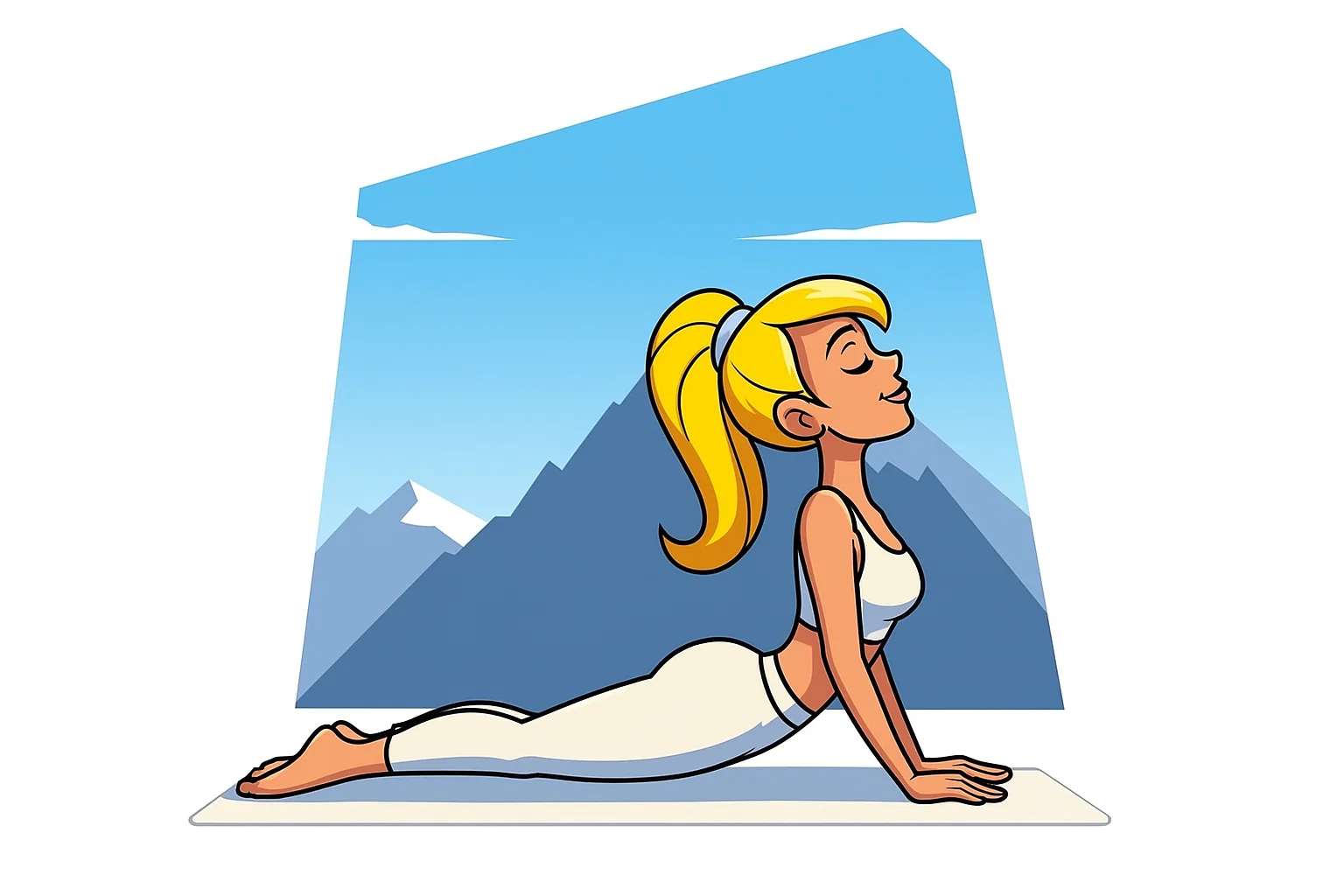
Transitioning from Downward-Facing Dog into Bhujangasana, also known as Cobra Pose, gives you the opportunity to open and activate your upper body while gently stretching your back.
Begin lying flat on your stomach on the mat, with your legs extended and the tops of your feet pressing into the floor. Place your hands under your shoulders and keep your elbows close to your body. Inhale and press your palms into the floor as you slowly lift your chest, keeping a slight bend in your elbows.
In Bhujangasana, use your lower back muscles rather than pushing strongly with your arms. This encourages a natural and safe curve in your spine. Keep your shoulders relaxed and away from your ears, and maintain a neutral neck position to prevent strain.
This posture strengthens the spine and increases flexibility in the chest, shoulders, and abdomen. Breathe deeply and hold the pose for 15–30 seconds, focusing on the expansion in your chest and the gentle stretch in your back.
Exhale and slowly lower yourself back down with control. Regular practice of Bhujangasana can improve posture, reduce stress, and energize your body, making it a valuable addition to your yoga routine.
5. Utkatasana (Chair Pose)

After the gentle backbend of Bhujangasana, continue with Utkatasana, better known as Chair Pose, which focuses on building strength and endurance in your lower body.
Start by standing with your feet together, ensuring your weight is evenly distributed. Inhale and raise your arms overhead, palms facing each other. Exhale and bend your knees, lowering your hips as if sitting back into an invisible chair.
Keep your chest lifted and your spine long, avoiding rounding your back. Make sure your knees stay behind your toes to protect your joints, and engage your core to stabilize your upper body.
Your gaze should be forward so your neck stays aligned with your spine. Hold the pose for several breaths and feel the engagement in your thighs and glutes.
Chair Pose strengthens the lower body and sharpens focus and concentration. It is common to feel your muscles working intensely, so continue to breathe steadily.
With consistent practice, your balance and endurance will improve. Focus on steady progress rather than perfection.
If you experience discomfort, adjust your position or reduce the depth of the bend. Stay attentive to your body’s signals.
6. Virabhadrasana I (Warrior I)

Virabhadrasana I, known as Warrior I, is a powerful posture that can build strength and confidence. This pose strengthens your legs, opens your chest, and stretches your shoulders, supporting both physical and mental resilience.
Begin at the top of your mat in Tadasana. Step your left foot back about 4 feet (approximately 1.2 meters), aligning your right knee over your ankle. Turn your left foot slightly outward so the outer edge presses firmly into the floor.
Lift your arms overhead with your palms facing each other and focus on lengthening your spine. As you settle deeper into the pose, engage your core and activate your thigh muscles. This alignment helps protect your lower back and maintain stability.
Inhale deeply, allow your chest to expand, and relax your shoulders away from your ears. Warrior I challenges your physical balance and strengthens your mental focus.
With regular practice, your endurance increases and you may experience a sense of inner steadiness. Approach each session with patience and allow your confidence to grow in this strong and grounded pose.
7. Virabhadrasana II (Warrior II)
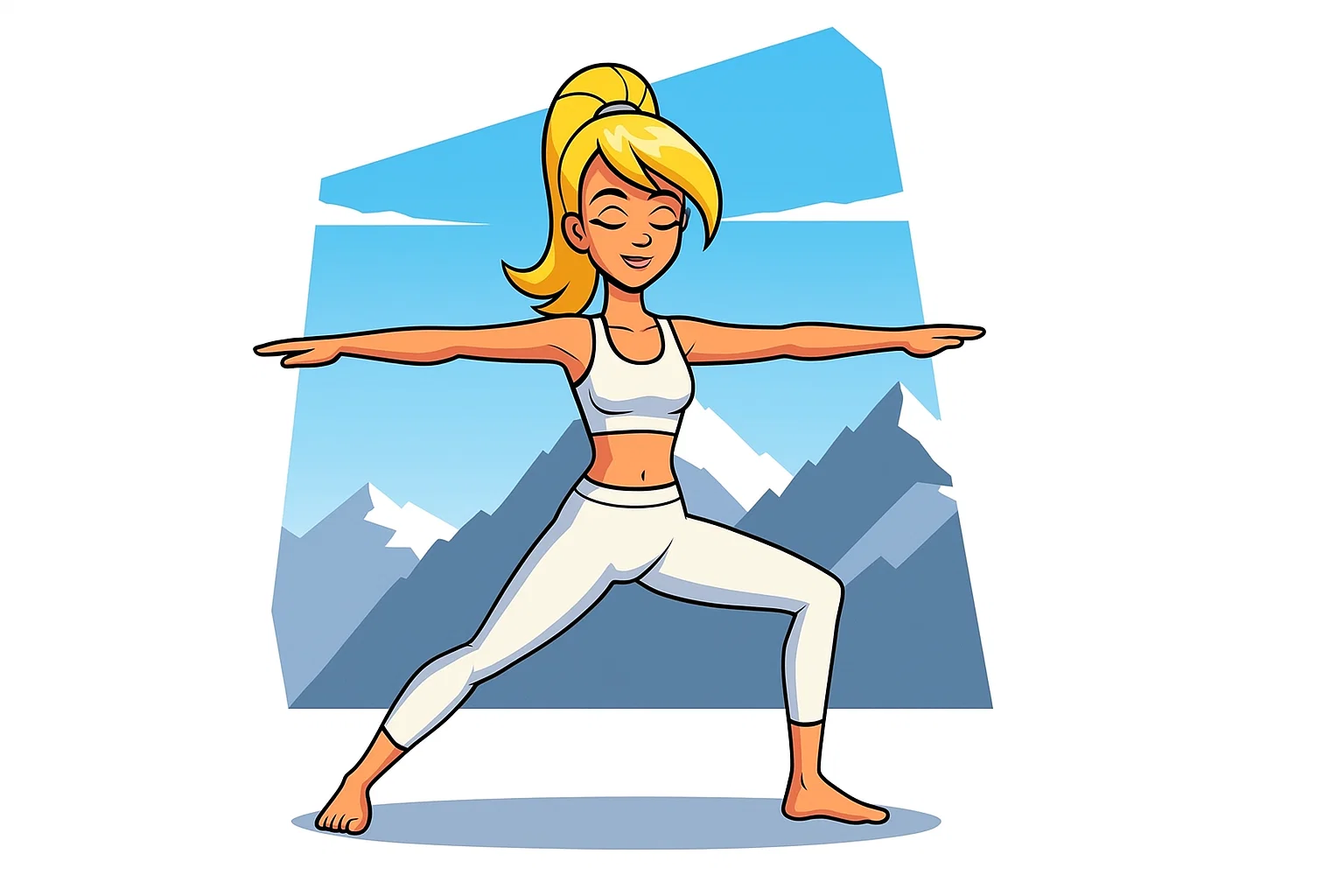
Warrior II, also known as Virabhadrasana II, symbolizes strength and grace. This yoga posture supports both endurance and flexibility.
Begin by placing your feet wide apart, aligning your heels. Turn your right foot outward to a 90-degree angle and rotate your left foot slightly inward. Bend your right knee so it stays directly above your ankle, with your thigh moving toward parallel with the floor. This alignment supports stability and helps protect your joints.
Extend your arms out to the sides, parallel to the floor, reaching through your fingertips. Keep your shoulders relaxed and away from your ears, and maintain a long spine. Engage your core for additional support and direct your gaze over your right hand to stay present and grounded.
Inhale deeply as you settle into the pose and notice the stretch in your legs, hips, and shoulders. This posture strengthens your legs and core while sharpening focus and balance.
With consistent practice, Warrior II cultivates a sense of steadiness and calm. Make adjustments as needed and listen to your body to maintain comfort and safety.
Virabhadrasana II invites you to connect with your inner strength.
8. Trikonasana (Triangle Pose)
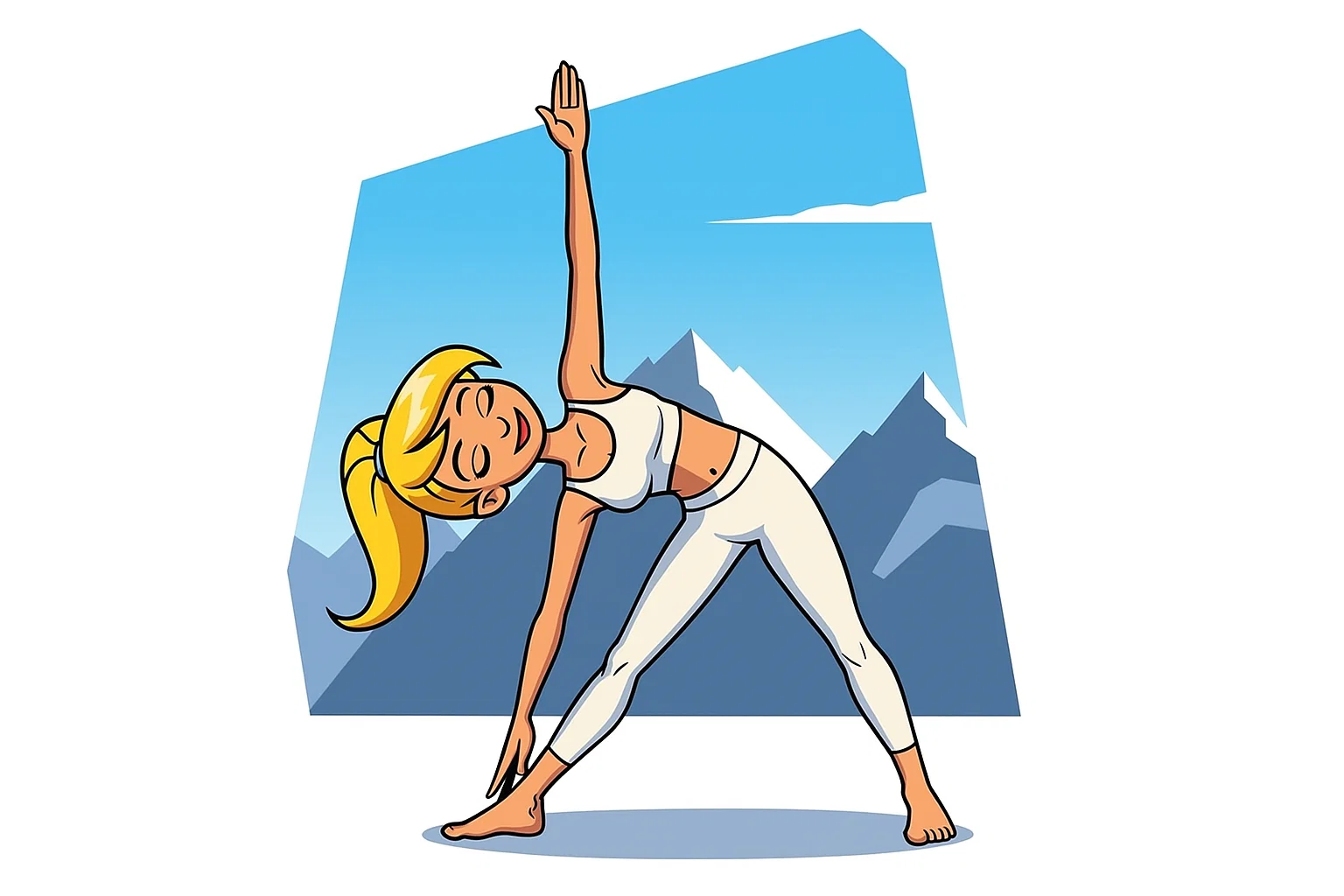
As you build strength in Warrior II, you can carry that energy into Trikonasana, or Triangle Pose. This posture emphasizes balance, alignment, and openness.
Stand with your feet wide apart. Turn your right foot forward and your left foot slightly inward. Extend your arms parallel to the floor with your palms facing down. Exhale as you reach your right hand forward to lengthen your torso. Then gently lower your right hand to your shin, ankle, or the floor outside your right foot while your left arm extends upward. This creates a straight line from your left hand to your left foot.
Focus on opening your chest and maintaining a straight line from the crown of your head to your tailbone. Engage your thigh muscles for stability and keep your knees aligned with your toes. Breathe steadily and allow your body to settle into the extended shape.
With regular practice, you may notice improved flexibility in your hips and hamstrings, along with greater core strength and stability.
Trikonasana stretches and strengthens while also supporting mental clarity. Attention to alignment encourages mindfulness and a sense of harmony in both body and mind.
Precision and patience help you refine this pose over time.
9. Setu Bandhasana (Bridge Pose)
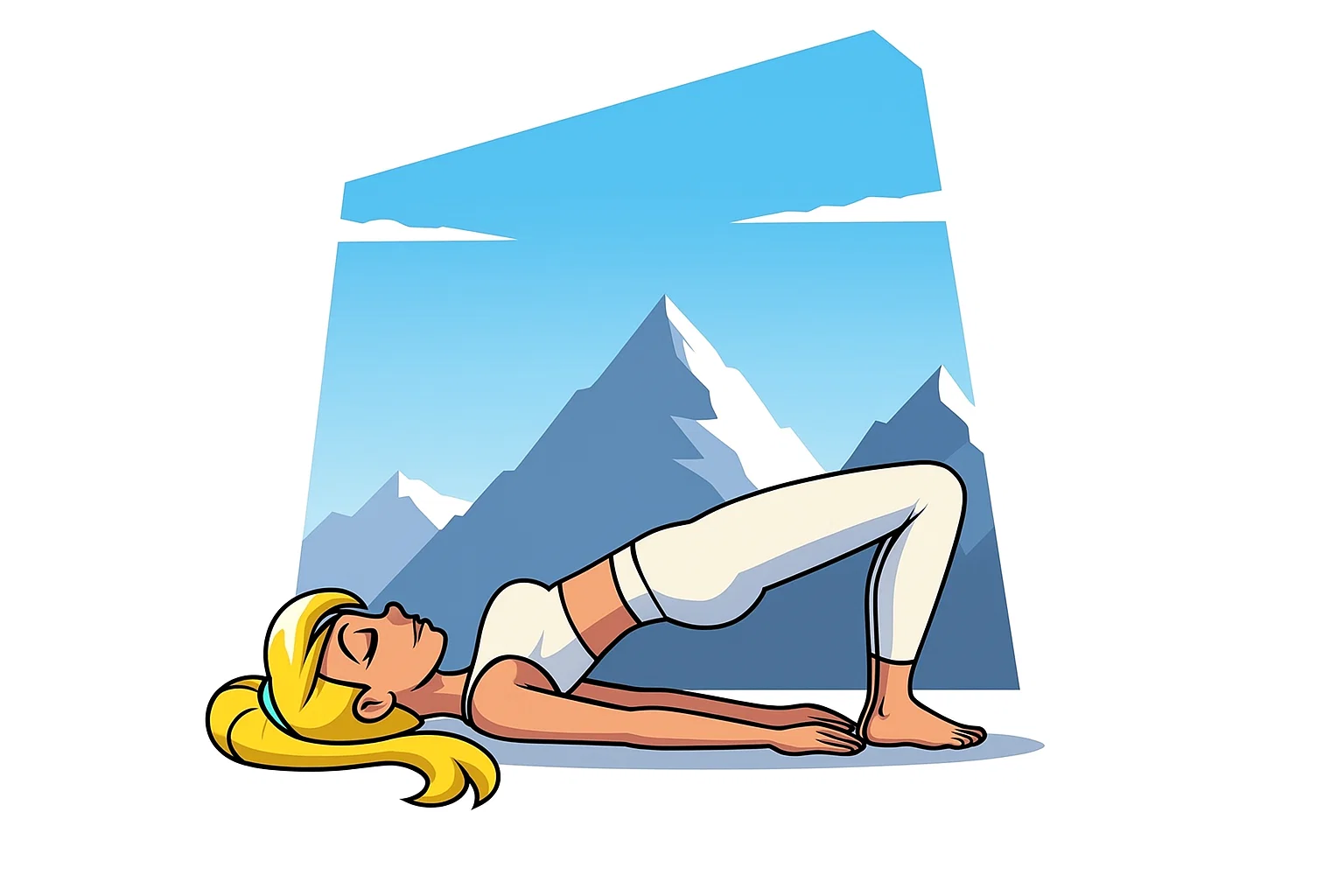
Bridge Pose, also known as Setu Bandhasana, is a versatile posture that strengthens your back and glutes while opening your chest and shoulders.
Lie on your back with your knees bent and your feet hip-width apart, flat on the mat. Place your arms alongside your body with your palms facing down. As you inhale, press your feet into the floor and lift your hips toward the ceiling. Engage your thighs and inner feet to maintain stability.
Keep your knees positioned above your ankles to avoid strain. Allow your shoulders to relax and gently roll underneath you to support the opening of your chest. Hold the position for several breaths, noticing the stretch across your chest and the engagement in your lower back.
To release, exhale and slowly lower your spine back to the mat, one vertebra at a time.
Regular practice of Setu Bandhasana can improve posture, ease lower back tension, and enhance core stability.
This pose also supports relaxation and may reduce stress. Listen to your body and avoid overstretching.
With patience and consistency, you develop strength and balance in this steady posture.
10. Dandasana (Staff Pose)

Dandasana, or Staff Pose, is a foundational seated posture in yoga that supports better posture and strengthens your core, legs, and back. It forms the basis for many other seated yoga positions.
Sit on the floor with your legs extended straight in front of you. Keep your spine upright and your shoulders relaxed yet slightly drawn back. Flex your feet and press your thighs into the floor to engage your leg muscles.
Rest your palms on the floor beside your hips with your fingers pointing forward. If your hands do not comfortably reach the floor, you can use blocks for support.
Align your head, neck, and spine and maintain an active posture. Engage your core by gently drawing your navel inward to support your lower back.
Focus on your breathing, inhaling deeply and exhaling fully while holding the pose. This helps you stay grounded and attentive.
Dandasana prepares your body for more advanced poses. With regular practice, you increase postural awareness and build a stable foundation for your yoga practice.
11. Balasana (Child’s Pose)

Balasana, or Child’s Pose, is a restorative yoga posture that offers a moment of relaxation and reflection during your practice.
This foundational position helps you reconnect with your breath and release tension. Kneel on the floor, bring your big toes together, sit back on your heels, and separate your knees about hip-width apart. As you exhale, fold forward and extend your arms in front of you or alongside your body, allowing your forehead to rest on the mat.
In Child’s Pose, focus on deepening your breath, feeling your back expand with each inhale and letting stress release with each exhale.
This posture gently stretches your hips, thighs, and ankles while calming your mind. It provides a supportive space to pause and restore your energy during a session.
12. Navasana (Boat Pose)
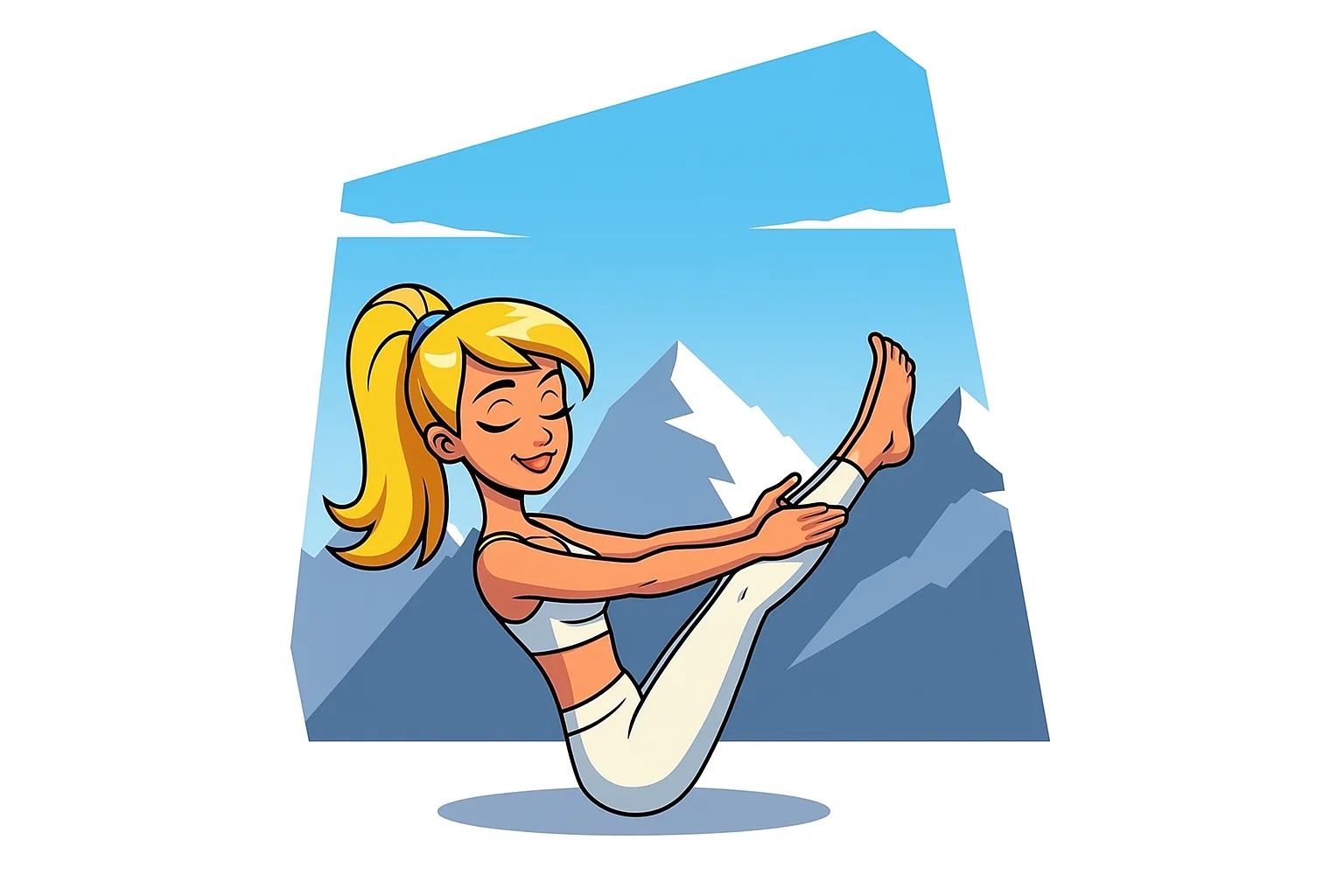
Navasana, known as Boat Pose, is a challenging posture focused on strengthening your core. It challenges your balance and stability while activating your abdominal muscles, hip flexors, and spine, contributing to improved posture and core strength.
With regular practice, you may notice improved balance and endurance that benefits other yoga poses.
To enter Navasana, sit on the floor with your legs extended in front of you. Bend your knees and lean slightly back while keeping your back straight and your chest open. Lift your feet off the floor so your shins are parallel to the ground.
Extend your arms forward, parallel to the floor at shoulder height. Engage your abdominal muscles to maintain the position, keep your spine long, and direct your gaze forward. If you feel stable, try straightening your legs to form a V shape with your body.
Continue to breathe deeply with steady inhales and exhales. If you feel tension in your neck or back, reduce the intensity by keeping your knees bent.
Through consistent practice, your muscles strengthen and Navasana becomes a valuable part of your routine.
13. Paschimottanasana (Seated Forward Fold)
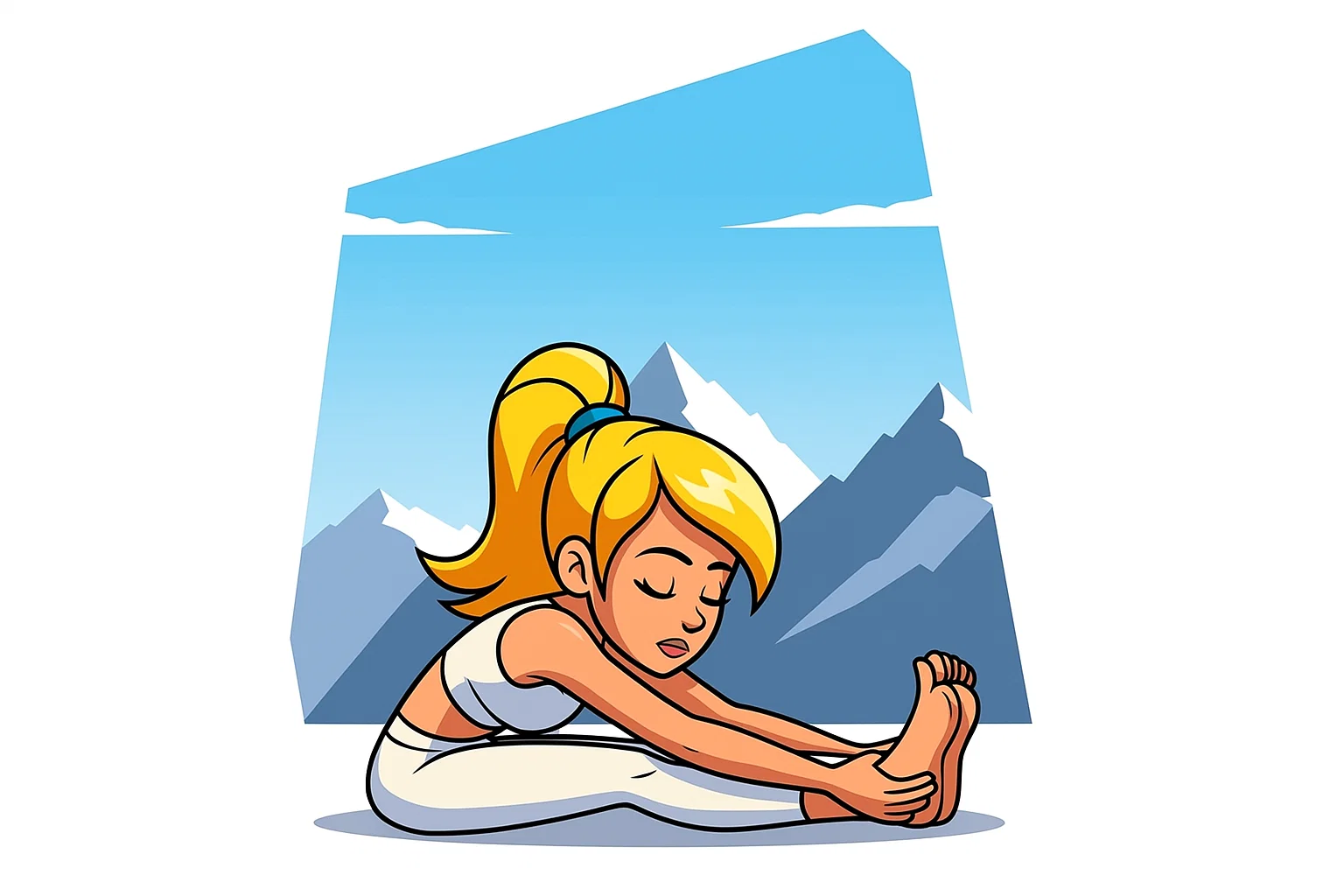
Paschimottanasana, often seen as a symbol of introspection, is an important forward fold that supports flexibility and relaxation in both body and mind.
By practicing this posture, you gently stretch your spine, shoulders, and hamstrings, which can have a calming effect on your nervous system. It encourages deeper breathing and helps you turn your attention inward, supporting a meditative state.
To practice Paschimottanasana, sit on the floor with your legs extended straight in front of you. Engage your core and lengthen your spine as you reach your arms up.
As you exhale, hinge forward from your hips while keeping your back long. Reach your hands toward your feet, ankles, or shins, depending on your flexibility. If needed, use a strap around your feet for added support in the stretch.
Keep your breathing steady and relaxed. Use each inhale to lengthen your spine and each exhale to settle deeper into the fold.
Avoid forcing the position and allow your body to release tension gradually. This asana may help reduce stress and anxiety, support digestion, and improve your overall well-being.
Consistent practice brings greater benefits over time, so stay patient and kind with yourself.
14. Savasana (Corpse Pose)

Savasana, also known as Corpse Pose, is a restorative posture that helps integrate the benefits of your practice. It may look simple, yet it can be a powerful position for relaxation and mental clarity. Lying flat on your back with your arms alongside you and your palms facing up allows your body to absorb the physical work fully. A key part of the practice is allowing yourself to stay still and present.
Start by finding a comfortable place where you can lie down without interruption. Close your eyes and focus on your breathing, letting each inhale and exhale flow naturally. As you continue, consciously relax each part of your body, starting at your toes and moving upward. This progressive relaxation helps release tension and supports a deep sense of rest.
Even though the posture appears straightforward, Savasana takes practice and patience. It is normal for your mind to wander; gently guide your attention back to your breath without judgment.
As you become more familiar with the pose, you may notice a clearer mind and reduced stress. Savasana is an essential moment for recovery and reflection.
15. Padmasana (Lotus Pose)

Padmasana, or Lotus Pose, is a well-known meditation posture that supports focus and a sense of inner calm.
Begin seated on the floor with your legs extended. Bend your right knee and place your right ankle on your left thigh, with the sole of your right foot facing upward. Then bend your left knee and place your left ankle on your right thigh, also with the sole facing upward. This posture requires flexibility, so move slowly and pay attention to how your body feels.
Keep your spine upright and your shoulders relaxed. Rest your hands on your knees with your palms facing up in a mudra of your choice, such as Gyan mudra to support concentration.
Keep your head aligned with your spine and soften your gaze. Breathing matters here: take deep breaths and allow yourself to settle into the pose.
If full Lotus feels too intense at first, place a cushion under your hips for support. You can also begin with Ardha Padmasana (Half Lotus) and gradually build from there.
Consistent practice matters. Yoga is a journey, so stay patient as you develop flexibility and comfort.
Benefits of each pose
- Tadasana, Mountain Pose, improves posture and balance and activates the whole body, supporting concentration and body awareness.
- Vrikshasana, Tree Pose, strengthens the legs and core and supports focus and stability.
- Adho Mukha Svanasana, Downward-Facing Dog, stretches the hamstrings and calves, strengthens the shoulders and arms, and supports better posture.
- Bhujangasana, Cobra Pose, opens the chest and shoulders, eases lower back tension, and supports spinal flexibility.
- Utkatasana, Chair Pose, builds strength and endurance in the legs and core and trains focus.
- Virabhadrasana I, Warrior I, strengthens the legs and back, opens the chest, and supports confidence and concentration.
- Virabhadrasana II, Warrior II, supports endurance, stretches the legs and groin, and encourages determination.
- Trikonasana, Triangle Pose, stretches the hips and hamstrings, improves balance and stability, and supports mental clarity.
- Setu Bandhasana, Bridge Pose, strengthens the back, glutes, and core and opens the chest and shoulders, with a relaxing effect.
- Dandasana, Staff Pose, trains the core and posture and forms a base for other seated poses.
- Balasana, Child’s Pose, relaxes the back, hips, and ankles and offers calm and recovery during practice.
- Navasana, Boat Pose, strengthens the abdominals and hip flexors and improves balance and stability.
- Paschimottanasana, Seated Forward Fold, stretches the spine, shoulders, and hamstrings and calms the nervous system.
- Savasana, Corpse Pose, supports deep relaxation, restores energy, and integrates the effects of practice.
- Padmasana, Lotus Pose, supports meditation and focus and encourages inner calm and stability.
When you practice these poses with attention, you may experience both physical and mental benefits. You develop a stronger connection with your body and support your overall well-being. Each posture can contribute to a sustainable yoga practice over time.
Common alignment mistakes
Good alignment helps prevent injury and supports the benefits of yoga. Many of the same mistakes show up regularly.
A common issue is insufficient engagement of the core. This can create pressure in the lower back and reduce stability. Keep your core gently active to support your spine.
In poses such as Warrior II, the knee position is often overlooked. Keep your knee stacked over your ankle and avoid letting it collapse inward. This helps protect your joints and keeps the posture steady.
In forward folds, many people round the back. Hinge from the hips with a long spine and an open chest, so the stretch shifts toward the hamstrings without straining the back.
In poses with arm support, such as Downward-Facing Dog, the shoulders can sink. Press actively through your palms and create space in your neck by drawing your shoulders away from your ears.
Deepening your yoga journey
Recognizing alignment issues supports a safe and effective yoga practice. As you gain experience, careful attention to detail helps refine your poses and reduce the risk of injury.
Listen to your body’s signals. If a posture feels uncomfortable, adjust it. This approach builds body awareness and supports a calmer practice.
Consistency makes a difference. Short daily sessions often lead to more progress than occasional long practices. Set realistic goals and appreciate each step forward.
Adding breathwork and meditation can strengthen focus and improve the quality of each posture. As you grow, you can explore more complex poses while staying true to your own pace.
Related Articles




Frequently asked questions
What are the psychological benefits of regular yoga?
With consistent yoga practice, you can develop mental clarity and greater emotional steadiness. Stress symptoms often decrease and resilience tends to grow. Yoga can also train attention, helping you approach everyday challenges with more calm and focus.
How can yoga be adapted for physical limitations?
Yoga can be made more accessible with props such as blocks, straps, or chairs. Poses can also be adjusted or swapped for gentler variations. Breathwork and meditation offer additional options. Practicing under the guidance of an experienced teacher can help support safety and effectiveness.
What is the best time of day to do yoga?
Many people find that a morning practice brings energy and focus for the rest of the day. In the evening, yoga can support relaxation and recovery, which may improve sleep. The key is choosing a time that fits your rhythm and that you can maintain consistently.
How does yoga compare with other forms of training, such as strength training or running?
Yoga supports muscle balance and flexibility, which can benefit strength training and endurance sports. It can also support recovery and help reduce injury risk. Adding yoga alongside other training can create a more complete approach that supports both physical and mental balance. Practicing yoga, and more specifically exploring the benefits of power yoga, can also provide an intense workout that develops strength and endurance. It demands focus and a meditative mindset, which can support concentration during other sports and help athletes build stronger mental resilience.
What kind of nutrition supports a yoga practice?
A balanced diet with plenty of vegetables, fruit, and adequate hydration provides a strong base. Lighter meals before practice often make movement feel more comfortable. Limiting highly processed foods can support steadier energy and a clearer feeling during practice.
Conclusion
You have now covered 15 foundational yoga poses, each contributing in its own way to strength, flexibility, and awareness. Practicing these postures regularly, with attention to alignment and your body’s signals, supports a sustainable and safe practice. As consistency grows, you may notice that yoga strengthens the body while also calming and deepening the mind. This gives you a solid base to continue your journey and expand with confidence.