Kundalini yoga is a form of yoga that not only moves the body, but especially touches the inner self. Through a combination of postures, breathing techniques, mantras, and meditative exercises, work is done on expanded consciousness — a state of presence in which stillness and energy meet.
This form of yoga originates in the ancient tantric traditions of India. In the 1960s, Kundalini yoga was first made accessible to the West through Yogi Bhajan. His teachings brought a practice that had largely remained secret until then.
By using specific kriyas — successive sequences of movement, breath, and focus — the Kundalini energy is activated: a force that, it is said, rests like a coiled serpent at the base of the spine. Not to control, but to learn to work with.
The 5 Key Takeaways
- Kundalini yoga uses powerful breathing techniques, mantras, and kriyas to activate the inner energy flow.
- The practice was brought to the West in the 1960s by Yogi Bhajan.
- Central to the practice is experiencing elevated consciousness and a deeper sense of connection.
- The exercises are both physically and mentally intense, but often bring deep relaxation.
- According to practitioners, Kundalini yoga contributes to more energy, vitality, and inner success.
What is Kundalini Energy?
In the tantric view, Kundalini is not symbolism, but a direct experience — a potential that lies dormant at the base of the spine. Often described as a coiled serpent, this energy represents the primordial life force that exists within every human being.
When this force is awakened, it moves — so it is said — upward along the spine. It touches the seven chakras, or energetic centers, and opens layers of consciousness that seemed hidden before. The process rarely unfolds linearly. Sometimes subtle, sometimes intense. As if something that was always present within you slowly gets the space to expand.

The Origins of Kundalini Yoga
The roots of Kundalini yoga run deep in Indian spirituality. It is a tradition that emerges from the tantric tradition within Hinduism — an approach that does not reject, but integrates; that seeks to expand consciousness through body, breath, and attention.
The word ‘tantra’ does not refer to something exotic, but to methods intended to expand awareness of connection. For centuries, this knowledge was passed down orally, often from master to student, in silence — far from the world. Precisely because the techniques are intense, powerful too. And therefore not meant to be shared carelessly.
Read also: The Amazing Benefits of Kundalini Meditation You Must Experience + 10-Step Guide
Yogi Bhajan Brings Kundalini to the West
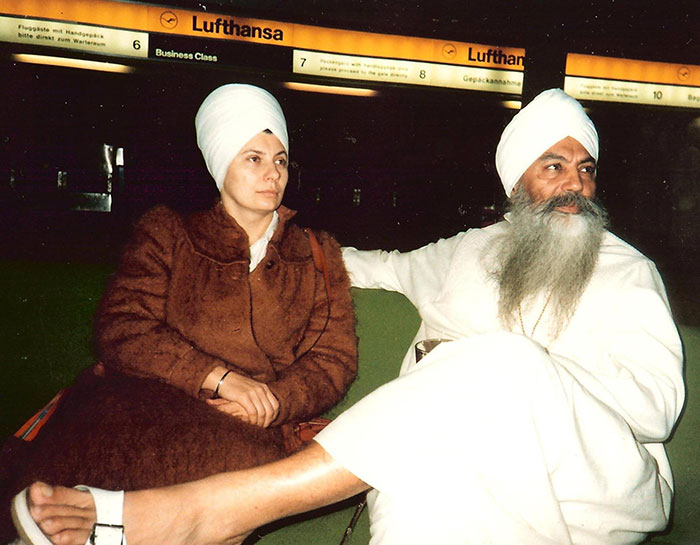
The name inseparably linked to the spread of Kundalini yoga outside India is Yogi Bhajan (1929–2004). In a time of social unrest and spiritual hunger in the West, he was invited by Canadian students to share his knowledge.
What followed was a quiet revolution. Yogi Bhajan was able to translate this ancient teaching into an accessible practice, without losing its essence. He spoke in the language of his listeners — sometimes literally, sometimes symbolically — and showed that spiritual growth is not bound by land or culture.
Glossary
- Kriya: a series of movements and breathing techniques, often with specific intention
- Mantra: a sound or phrase that is repeated to focus the mind
- Chakra: energetic centers in the body, connected to layers of consciousness
- Tantra: spiritual method aimed at integration, expansion, and liberation
The Benefits of Kundalini Yoga
According to many practitioners, the influence of Kundalini yoga extends beyond the physical. The kriyas strengthen the body and smooth the breath rhythm, but what may touch even more is the stillness that follows the effort. As if the body itself remembers what it feels like to be home.
The breathing techniques and meditative repetitions bring relaxation, yes — but also clarity. Creativity, focus, even feelings of connection are often mentioned. Some experience heightened intuition, others report a shift in their attitude toward life. It is not a prescription, rather an invitation. What unfolds is rarely planned.



The Practice of Kundalini Yoga
A Kundalini yoga class is often intense. Not necessarily because of difficulty, but because of duration and rhythm. The exercises — dynamic, repetitive, sometimes seemingly simple — are held for long periods. Powerful breathing forms such as breath of fire and chanting of mantras play a key role.
The physical postures are not always comfortable. Some positions require perseverance, others require surrender. Your body speaks a language you may not yet know, but you do understand. For beginners, it can be confronting, and that is precisely what makes it valuable.

Awakening Kundalini Energy
What many hope for rarely happens all at once. The awakening of Kundalini energy — if it occurs at all — is usually a slowly unfolding process. Not spectacular, but profound. Not to be forced, but to be approached — with dedication, rhythm, and patience.
There are practitioners who speak of inner shifts: more clarity, energy, gentleness. Some experience flashes of deep connection or temporary peak experiences. But for most, it remains subtle. A fine-grained change, noticeable in the small things of everyday life.
Yoga is the stilling of the fluctuations of the mind. ~ Patanjali
That is also what Yogi Bhajan likely meant when he described Kundalini yoga as a pearl of infinite value. Not to have, but to be. Those who walk the path meet themselves — and sometimes, something that lies beyond.
Cautions Regarding Kundalini Yoga
As with any powerful practice, Kundalini yoga also requires care. The techniques can set much in motion — physically, emotionally, mentally. Not everything needs to be opened at once. Sometimes it is better to leave the door slightly ajar.
There are experts who warn against attempting to awaken Kundalini energy on your own. Without guidance, this can lead to confusion, imbalance, or even psychological issues. When energy arises while the body or mind is not yet ready, it can be overwhelming.
Therefore, it is essential to practice under the supervision of an experienced teacher. Someone who knows the path — not only from books, but from within. A gradual progression, with space for integration, makes the journey safer and often deeper.
The Controversy Surrounding Yogi Bhajan
Yogi Bhajan is seen as the bridge between an ancient tradition and the modern West. At the same time, his legacy has not gone unchallenged. In the silence after his death, accusations emerged of boundary violations and abuse of power.
For some, he is a teacher who opened doors; for others, a figure who used spiritual power to control. And perhaps it is both — or perhaps that very tension tells us something about the humanity behind holiness. What remains is the question: can we honor the teaching without idealizing the teacher?
Conclusion
Kundalini yoga is not an easy path. But for those willing to slow down, listen, and gradually meet themselves, it can be a path that reaches deeper than outer form. An invitation to peel back layers — not to become something, but to remember what was always there.
Whether you seek physical vitality, inner peace, or a broader perspective on existence, the practice of Kundalini yoga can offer something. Not as a promise, but as a possibility. And as with anything that truly sets things in motion: it requires attention, humility, and personal exploration.
Verified Sources
- A randomized study on the effects of Kundalini yoga on mild cognitive impairment (2017)
- A review of Kundalini yoga meditation for the treatment of mental disorders (2004)
- A study on the role of Kundalini yoga in youth in South Africa (2023)
- Website of the 3HO organization (Happy, Healthy, Holy Organization) of Yogi Bhajan
- Kundalini Research Institute – online database of scientific research
Related Articles




Frequently Asked Questions
What is the difference between Kundalini yoga and other yoga styles?
Kundalini yoga differs from styles like Hatha or Ashtanga in that it places breathing techniques, mantras, and meditative elements much more centrally. The dynamic kriyas are not aimed at performance, but at energetic flow. It is less form-focused and more attuned to inner experience.
Is Kundalini yoga suitable for beginners?
In principle, yes. Although sessions can feel intense, especially for beginners, the emphasis is on gradual progression and personal space. You don’t need to be ‘good’ at yoga to start — but willingness to feel helps.
Can I practice Kundalini yoga at home?
Are there risks associated with Kundalini yoga?
When techniques are applied too intensely or too quickly, without guidance, they can be overwhelming. Gradual progression and careful attunement are essential. Inner processes cannot be forced — and they don’t need to be.
Is Kundalini yoga a religion?
No. It is a spiritual practice with roots in Hindu and Sikh traditions, but it stands apart from religious belief. It invites awareness, regardless of worldview or background.