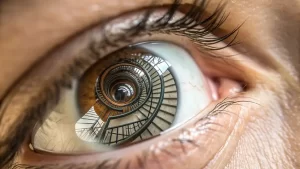
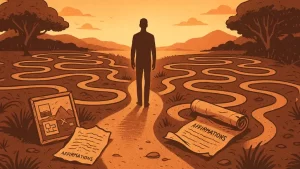
According to psychotherapist and coach Tess Brigham, MFT, doomscrolling means mindlessly scrolling through negative news, social media, or other online content — often without realizing you’ve been at it for too long.
You read one ominous story after another, often without pause. A Canadian study aptly names this phenomenon “social media panic.”
While the term gained prominence during the turbulent year 2020, with the pandemic and growing social unrest, it likely appeared on Twitter as early as 2018. Since then, the concept has been widely embraced.
How do you recognize doomscrolling?
When you notice yourself reading disturbing articles or comments for minutes or even hours on end, without knowing how you started, chances are you’re doomscrolling.
You get caught in a stream of information that holds you without realizing it. Sometimes you don’t even remember why you picked up your phone — yet there you are, deep in a thread from someone you don’t even follow.
Who is most susceptible to doomscrolling?
People struggling with anxiety or related disorders such as panic disorder, post-traumatic stress disorder (PTSD), obsessive-compulsive disorder (OCD), or social anxiety are often extra vulnerable to this pattern.
Anxiety is often about control — or the loss of it. During times of unrest, we try to gain control by gathering information. But paradoxically, doomscrolling actually reinforces feelings of helplessness.
Why do people keep doomscrolling despite the negative effects?
It’s a contradiction: we know doomscrolling doesn’t help us, yet we stubbornly keep doing it.
The underlying reason is often a sense of control in an uncertain world. By constantly staying informed about everything going wrong, we hope to prepare ourselves better.
It seems like a logical reflex — but rarely works as we hope. From an evolutionary perspective, we’re wired to survive: our brains constantly scan for danger. Instead of a lion in the bushes, it’s now an alarming headline or trending topic.
How doomscrolling negatively affects your mental health
Anyone who doomscrolls daily will eventually notice the impact on their mood. You become more anxious, irritable, or even depressed — without knowing exactly where it’s coming from.
It also robs you of presence in the here and now. Instead of living consciously, you slip unnoticed into a digital tunnel of negativity.
Often you only realize later how heavily that stream of information weighs on your mood — for example, when your mind keeps racing as you lie in bed.

How do you stop doomscrolling?
Fortunately, there are ways to break this habit. It starts with awareness and the choice to adjust your digital consumption patterns.
Limit your news consumption to one reliable source or a summary. Avoid platforms designed for sensationalism. Not every stimulus deserves your attention — and that’s okay.
If you notice yourself slipping into endless scrolling multiple times a day, that’s a sign your system is becoming overloaded. Time for a mental check-in.
What you pay attention to grows — even if you direct that attention to what you fear. ~ Jordan Peterson
Tips to prevent doomscrolling
- Direct your attention elsewhere. As soon as you notice you’re in the pattern, interrupt it consciously. Put your phone down or choose a different activity.
- Set a time limit. Give yourself, for example, 20 minutes a day to follow the news. After that, you’re done.
- Actively seek positivity. Watch something lighthearted, call someone, or flip through a photo album that makes you happy.
- Practice gratitude. Write down three things you’re happy about each day. It helps your brain adopt a different perspective.
Verified Sources
-
Depoux A, Martin S, Karafillakis E, Preet R, Wilder-Smith A, Larson H. The pandemic of social media panic travels faster than the COVID-19 outbreak. J Travel Med. 2020;27(3). doi:10.1093/jtm/taaa031
Related Articles



Frequently Asked Questions
What exactly is doomscrolling?
Doomscrolling means mindlessly scrolling through negative online content, such as news or social media, which can harm your mental health.
Who is at the highest risk of doomscrolling?
People with anxiety disorders are often extra susceptible to doomscrolling because they try to gain control over uncertain situations through information.
How can I prevent doomscrolling?
By setting a time limit, seeking distraction, and focusing on positive content, you can break the doomscrolling pattern.