The sexual revolution, driven by the contraceptive pill, promised freedom. What it also brought: a commercial market for the female body and desire. The pornography industry seized the opportunity. “Her body, her choice” became the slogan through which exploitation received a freedom flag.
Commodification means that something once having human value is converted into merchandise. Sexuality. Bodies. Fertility. Everything with a price tag. Marx pointed this out first. And today it’s no longer theory — it’s practice.
Is this freedom? Or a new packaging for old forms of exploitation?
Take surrogacy. A woman rents out her body. Womb as service. Technology creates space for prospective parents — but simultaneously a woman is reduced to a breeding machine. Technology solves something, but simultaneously breaks something. Where is the line?
The Core Problems Outlined
- The idea of freedom of choice has devolved into a boundless body-libertarianism in which everything seems permissible as long as it’s individually chosen.
- Surrogacy and transhumanist technologies tamper with the natural order and reduce women to deployable functions.
- Freedom is a flag under which increasing exploitation hides — with female bodies as raw material.
- Every so-called progress must be questioned anew. Not every ‘possibility’ is a blessing.
- The myth of total autonomy is an ideological smokescreen that obscures sight of relational, cultural, and moral coherence.
Intersectionality: Theory Without a Compass
The new flag within modern feminism is called intersectionality. The idea: women are disadvantaged not only because of their gender, but also because of skin color, class, or sexual preference. In theory, that sounds fair. In practice, it’s a minefield.
What began as an attempt at greater justice has devolved into a bureaucratic struggle over victimhood. Whoever is most hurt gets the most voice. The focus shifted from womanhood to fragmentation. From shared woman-being to political identities. One inequality is fought with another — the overview is lost.
The call for a ‘fairer world’ has devolved into an ideological mess in which being a woman is merely one of many checkboxes on an identity card. What women really need — clear boundaries, protection, meaning — gets buried.

Women’s Spaces Are Being Undermined
Under pressure from activists, women’s spaces today must become gender-neutral. Changing rooms, shelters, sports teams — nothing may be exclusively female anymore. The reasoning: everyone gets to decide what they are. Self-identification has become sacred.
But anyone who grew up as a woman in a male world knows: those spaces existed because they were needed. For safety. For healing. For rest. If that foundation disappears, we sacrifice the collective good to the individual with the loudest voice.
What feminists once built — shelter against male dominance — is now being demolished by the same movement claiming to stand up for women. Inclusion sounds nice, but also has limits. Whoever doesn’t dare draw that line loses everything.
Motherhood Under Pressure
Many women collide with a painful truth once they become mothers. The ideals they grew up with — autonomy, freedom, self-fulfillment — break the moment a child arrives. Reality demands something different: dedication, sacrifice, presence. And that collision is not gentle.
What they feel is not weakness. It is truth. Motherhood demands something modern feminist language cannot contain. It’s not about feeling good, but about being there. Not for yourself, but for the child. In that lies strength, direction too.
As a society, we’ve long pretended that caregiving roles are ballast. While precisely in carrying, caring, connecting, human measure returns. A liberated woman is not separate from others — she knows who she carries and why.
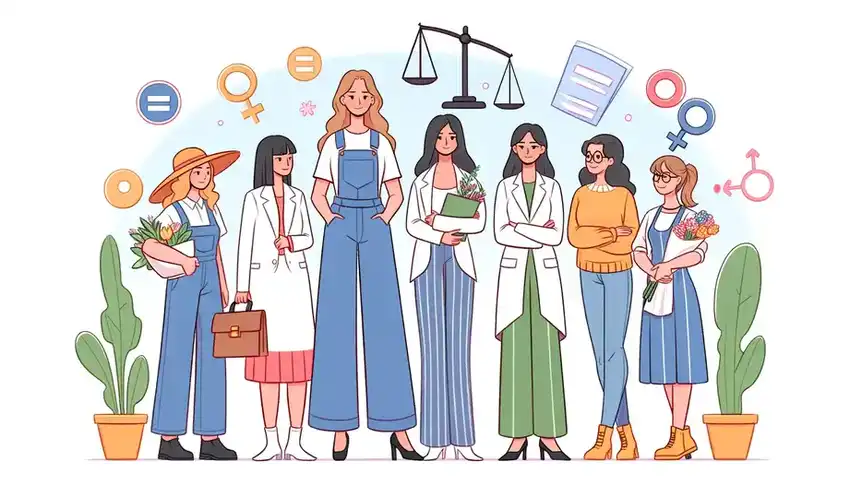
Women Between the Factory Whistle and the Boxing Ring
When industrialization and emancipation marched together, the playing field for women changed radically. For the first time, the path lay open: build a career and be a mother. But reality proved less rosy. Society demanded everything — both work and care and social contribution. The second shift was born.
Women were freed from the home, only to be doubly burdened afterward. They were allowed to participate in the labor market as long as they kept everything running at home. That ‘freedom’ had a price. The myth of total balance is a modern illusion — someone always pays.
Glossary
- Autonomy – Living independently, without external direction.
- Empowerment – Word from the management world; sounds powerful, rarely means anything concrete without action or discipline.
- Industrialization – Human and machine in service of efficiency, at the cost of connection.
- Contraceptive Pill – Medical tool that brings fertility under control. Change with major consequences.
The Pill: Liberation With a Downside
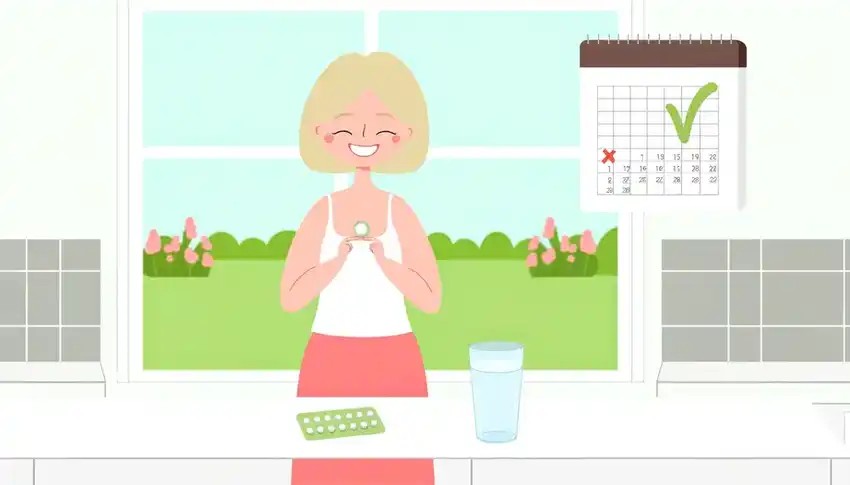
The arrival of the contraceptive pill in the sixties was a turning point. Sex was decoupled from reproduction. Women gained control over their cycle. The pill gave autonomy — but also responsibility. With freedom came a new kind of pressure.
The rules in relationships changed. The taken-for-grantedness of children disappeared. Sex became casual, but also more meaningless. Partners had to find new language for fidelity, intimacy, and connection. And that language wasn’t always there.
Technology as a New Chain
Feminism has opened many doors: education, work, political influence. But not everything that opens leads to liberation. In the pursuit of autonomy, a new chain has been forged: the chain of technological control.
The female nature — cyclical, receptive, fertile — is seen as a problem to be solved. The pill. IVF. Surrogacy. Everything becomes manageable, plannable, deployable. Even the body.
Instead of valuing the woman in her nature, modern technology makes her a platform. Functional. Rentable. Controllable. The old oppression has been traded for a new, quieter one. This time in the name of freedom.

Gender Identity: The New Fault Line
The discussion around transgenderism and medical interventions in youth is splitting feminism from within. Where is the line between autonomy and protection? Children are today subject to permanent intervention — with hormones, surgeries, ideology. That’s not progress. That’s boundless malleability.
Under the guise of ‘self-determination,’ major medical decisions are legitimized, often before someone has even come to know their adult body. What was once meant to protect women from coercion is now used to reprogram children. And the consequences only come years later.
Relationships Without Foundation
The economic independence of women has changed the playing field in relationships. Partnerships became optional, marriage became a choice — not a duty, not a foundation. But freedom without foundation makes instability the norm. Divorces increase. Children more often grow up without a father in the home.
What was lost is the vision of relationships as covenant. As a place of fidelity, dedication, sacrifice. Instead, a model emerged of mutual performance and personal satisfaction. But relationships are not a project. They are a promise.
Why Men Need Their Own Space
Male brotherhood has stalled. Not because men no longer seek each other out, but because they have nowhere left to be unwatched, uncorrected, uninterrupted as men. Men’s spaces have been abolished, dismissed as outdated, or co-opted in the name of equality.
But men need places where they learn to carry, where they don’t have to explain. Fishing. Sweating. Being silent. Not talking, but knowing. Young men are formed in silence and struggle — not on a talk-group cushion with soft blankets.
Protecting Women’s Sports = Respecting Men’s Space
There is one hard lesson too few women want to hear: you can only keep women’s spaces if you leave men’s spaces alone. Mutual respect. No selective exclusivity. Many men feel betrayed because their spaces have been opened up, while those of women are defended as sacred.
Male communities work differently. Few words, much rhythm. Much space, little control. Think of fishing, tinkering, shooting, metal detecting. Activities in which brotherhood emerges without needing to be named.
That’s not outdated behavior. That’s how you forge character. That’s where young boys grow into reliable men. Not perfect, but dependable. And that can only happen if women are not there.
Relationships Are Not a Mirror, But a Covenant
In this time, a relationship has often become a form of self-optimization. The moment the other no longer ‘measures up,’ people exit. Love as a project, partnership as a consumer product. But that’s not how you build a future. You only really build something when you stay, especially when it chafes.
A relationship is not an instrument for personal growth. It is a covenant that demands perseverance, service, and humility. Two people who carry each other, even when things don’t go perfectly. In a time when systems waver and certainties fade, relationships become foundation.
Whoever now learns to build on mutual dedication — not based on need, but on responsibility — lays a solid foundation. Not for happiness as a feeling, but for stability as a supporting framework.
Where Does Feminism Go From Here?
The future of feminism collides with its own limits. Artificial intelligence, biotechnology, gender blurring — everything shifts, everything blurs. What remains of womanhood if everything becomes makeable?
Feminism can only remain relevant if it has the courage to draw boundaries again. Not everything that’s technically possible is desirable. Not every choice is progress. And not every autonomy is liberating.
Conclusion
Feminism has opened doors, but also closed others. Women gained voice, space, and influence. But along the way, they’ve also been pushed into a new mold — one of endless performance, technological control, and ideological confusion.
It’s time to return to the essence: dignity, boundaries, connection. Not more choices, but better choices. And that requires something rare today: the courage to think against the current.
Verified Sources
- New Feminist Activism, Waves, and Generations – UN Women, 2021
- Feminist Theory and Its Use in Qualitative Research in Education – Oxford Academic, 2020
- Feminism and Its Impact on Women in Modern Society – International Journal of Interdisciplinary Research, 2019
- Feminist Qualitative Research: Toward Transformation of Science and Society – Oxford Academic, 2020
- Research Made Simple: An Introduction to Feminist Research – BMJ, 2021
Related Articles




Frequently Asked Questions
What is the impact of feminism on modern society?
How has the contraceptive pill changed the role of women?
The pill gave women control over their fertility, but also changed the meaning of sex, relationships, and family formation. Freedom was expanded, but responsibility grew.
Why are men’s spaces important?
Men’s spaces are essential for brotherhood, character formation, and stability. They offer young men a place to be formed outside the female gaze.
What are the risks of medical gender treatments for youth?
Medical interventions in minors raise concerns about bodily integrity, parental consent, and the long-term consequences of irreversible choices.
Is marriage still relevant today?
Marriage remains an important framework for dedication, stability, and shared responsibility. Not out of tradition, but out of necessity in a fragmented world.
What is the downside of complete individual freedom?
Freedom without moral compass can lead to isolation, exhaustion, and commodification of the body. True freedom has limits and is always embedded in responsibility.
Why do many men feel excluded?
Because their spaces and traditions have been dismantled in the name of equality, while women’s spaces often remain sacred. This creates an imbalance and leads to alienation.
What role does technology play in the future of womanhood?
Technology changes everything — from fertility to identity. Without critical awareness, womanhood itself risks being reduced to function and algorithm.
What is the core critique of modern feminism?
That in the pursuit of total autonomy, it overlooks the human measure: security, boundaries, mutual dependence — precisely where true freedom begins.
What can men and women build together?
A society built on mutual support, clear roles, and a shared moral foundation. Not by erasing differences, but by honoring them.