There are people who notice after a week of castor oil packs that their belly feels calmer and they wake up more alert in the morning. Not spectacular — but noticeable. Castor oil has been used for hundreds of years for various applications. Yet in practice, the correct application often makes all the difference.
This thick, amber-colored oil contains ricinoleic acid — a fatty acid that according to research can influence inflammatory processes and may provide support for digestion. What exactly does it do when you apply it to your skin? We’ll discuss that step by step here. But first…
The 5 Key Takeaways
- Ricinoleic acid has specific properties that differ from other fatty acids
- Application above the liver activates certain processes according to traditional Chinese medicine
- The first week typically shows gradual changes in digestion
- Sleep quality can improve due to the relaxing effect
- Consistent use for seven days is essential for noticeable results
What Makes Castor Oil Special?
Castor oil stands out due to its high content of ricinoleic acid — a component that may work as an anti-inflammatory and is found almost nowhere else in nature. Other studies point to pain relief and mild anti-inflammatory effects.
In Ayurvedic tradition, castor oil is used to loosen ‘ama’ (accumulated waste). Although bioavailability through the skin is limited, many users report that local application produces noticeable effects. In any case, the effect is different from internal use as a laxative.
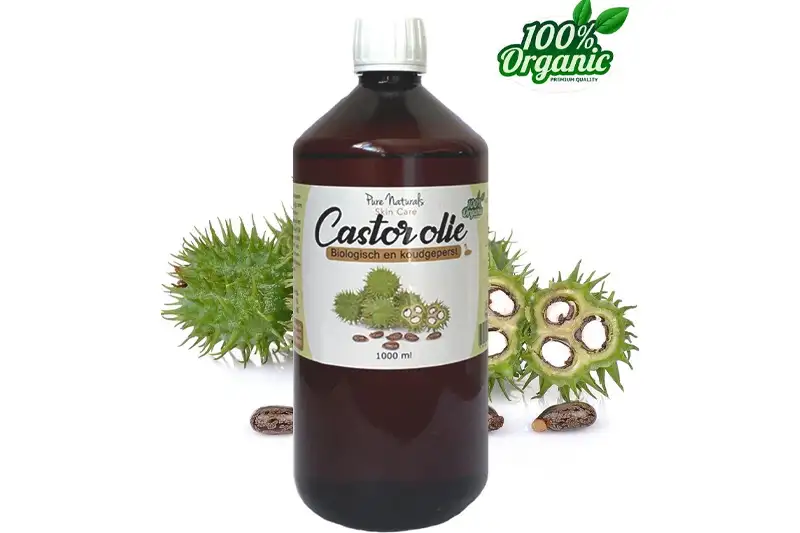
The quality of the oil makes a difference. Organic, cold-pressed castor oil in a glass bottle has the best composition for external use. Choose fair-trade oil when possible — good for your skin and its origins.
The Science Behind Nighttime Application
According to traditional Chinese medicine, the liver is most active between 2 and 4 a.m. Scientific evidence for this is lacking, but it is established that the liver performs various processes at night, such as breaking down waste and hormones.
During the same period, the parasympathetic nervous system activates — the part that supports recovery, rest, and regeneration. Castor oil may strengthen this by stimulating local relaxation, especially around the abdominal area.
Pros and Cons
Pros
- Natural application with no side effects when used correctly
- Can support digestion and sleep
- Easy to incorporate into evening routine
- Relatively affordable and long-lasting
Cons
- Can stain clothing and bedding
- Results are individual and not guaranteed
- Limited scientific evidence for all claims
- Requires consistency for possible results
Practical Application Step by Step
How you apply it makes a big difference. Use organic, cold-pressed castor oil in a glass bottle. Combine this with a cotton cloth or special castor oil pack.
Apply 1 to 2 tablespoons of oil to the cloth and place it over your right rib cage — the area where your liver is located. Wear an old T-shirt over it and protect your sheets from stains.
The best timing is 30 to 60 minutes before bedtime. Leave it on all night. If you want to see results: apply consistently for seven days without skipping.

What to Expect Per Day
- On day 1, a slight warm or tingling sensation usually develops at the application site. Some notice a feeling of relaxation fairly quickly, sometimes accompanied by less gas or gurgling intestines.
- On days 2 and 3, a more regular digestive rhythm is often reported. Bloating can decrease and sleep seems deeper, especially due to relaxation around the abdominal area.
- From day 4 onward, many people experience broader effects: more energy upon waking, fresher skin, and in women sometimes relief from menstrual discomfort. Users also more often experience a calmer mood. In Chinese medicine, the liver is associated with regulating emotions like frustration and anger. Women in perimenopause sometimes report that this application helps with hormonal fluctuations.
Glossary
- Ricinoleic acid: Main fatty acid in castor oil with possible anti-inflammatory properties
- Parasympathetic nervous system: Part of the nervous system involved in rest, recovery, and digestion
- Lymphatic system: Network involved in draining waste from tissues
- Bioavailability: The extent to which a substance is absorbed into the body through the skin or digestion
Scientific Nuance
According to the MD Anderson Cancer Center, castor oil is not a detox agent for the liver. It cleanses itself through complex biological processes. However, it is recognized that local application can do something for blood flow and relaxation.
Research into these applications is still in its infancy. Yet personal experiences remain positive, even if they’re not always objectively measurable. Realistic expectations help place the experience better: it may work more as a supportive measure than as a therapy in itself.
| Component | Amount | Where It’s Found |
|---|---|---|
| Ricinoleic acid | 85-90% of castor oil | Natural component of the Ricinus communis plant |
| Vitamin E | Small amounts | Acts as an antioxidant and protects the oil from oxidation |
| Minerals | Trace elements | Depends on the production process and purity of the oil |
Safety and Considerations
Never apply castor oil to damaged skin, open wounds, or areas with active infection. Always test a small amount first on an inconspicuous spot, such as the inside of your forearm, to see how your skin reacts.
Pregnant women should exercise caution. Castor oil is known to trigger contractions when taken internally — which is why external use during pregnancy is not recommended. People with sensitive skin should start with a small amount and keep application time short. Only increase if your skin tolerates it well. Experiencing itching, redness, or irritation? Then pause the application and observe recovery.
For existing liver conditions or use of medications such as blood thinners, consulting a doctor is wise. Even though it’s a plant-based remedy, interactions with other processes in the body cannot always be predicted.
Conclusion
Castor oil has been used for generations as a supportive self-care method. There are people who benefit from it — for others it remains an experiment that yields little. What is clear in any case is that the combination of warmth, a quiet moment, and local application is experienced as beneficial by many.
A reader of liberteque.com wrote: “After seven days, my sleep felt deeper and my skin more radiant – a real boost for my daily routine.”
Whether it brings you anything, you’ll only discover by trying it. Don’t expect a quick breakthrough, but rather the possibility of subtle changes in digestion, sleep rhythm, or general comfort. Consistency over several days makes the difference. Those who combine it with a calming evening routine, such as meditation or journaling, often get more out of it.
Also check out the: comprehensive infographic about castor oil
Verified Sources
- Healthline: Castor Oil Uses, Benefits, and Side Effects – Information about castor oil applications and effects.
- NCBI: Ricinoleic acid as anti-inflammatory agent – Research on the anti-inflammatory properties of ricinoleic acid.
- Natural Remedy Ideas: Castor Oil Packs for Liver – Traditional use of castor oil on the liver area.
- MD Anderson Cancer Center: What to know about castor oil health claims – Medical nuance on castor oil health claims.
- Rupa Health: Science behind the castor oil TikTok trend – Explanation of the scientific background of the castor oil hype.
- NCBI: Transdermal drug delivery systems – On bioavailability through the skin.
- NCBI: Effects of castor oil on the gastrointestinal tract – Research on castor oil as a laxative and its effect on digestion.
- PubMed: Analgesic effects of ricinoleic acid – Study on the pain-relieving properties of ricinoleic acid.
- NCBI: Traditional medicine and liver detox practices – Critical look at traditional liver detox methods.
- ScienceDirect: Pharmacological properties of castor oil – In-depth analysis of pharmacological effects of castor oil.
- NCBI Bookshelf: Castor Oil (2024) – More scientific literature on mechanism, side effects, and toxicity.
- PubMed: Castor Oil (2024) – FDA approval as a laxative and traditional use.
Related Articles


Frequently Asked Questions
Is castor oil safe for daily use?
For external use, castor oil is generally safe on healthy skin. Test a small area first and stop if irritation occurs.
When do you see the first results?
Usually within 1-3 days of noticeable changes in digestion or sleep. Broader effects can occur after a week.
Can I use castor oil during the day?
Yes, but nighttime application is recommended due to the relaxing effect and natural recovery processes during sleep.
What if I have sensitive skin?
Start with less oil and shorter application periods. Build up gradually to full dosage if your skin tolerates it well.
Does castor oil really help with weight loss?
Direct weight loss is unlikely. However, improved digestion and reduced bloating can contribute to a lighter feeling.