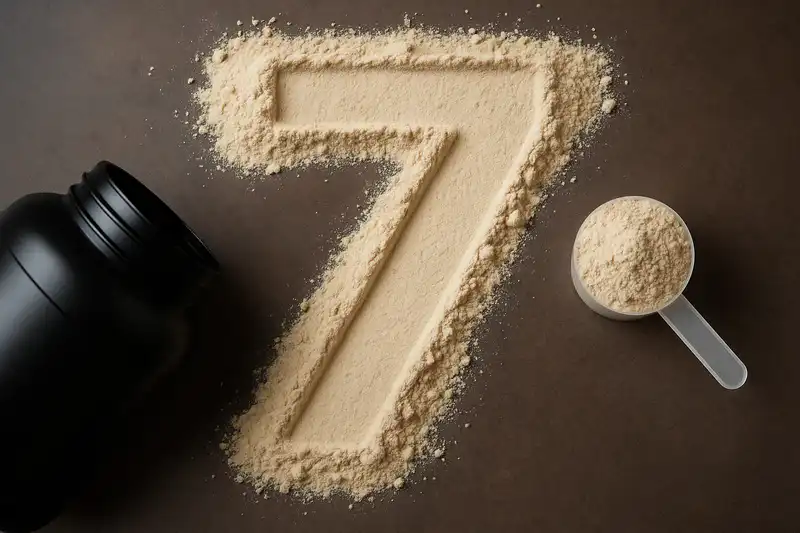
Anyone diving into muscle-building supplements quickly sees an enormous list. Yet research shows that only a handful of products actually deliver results.
In this article, we examine 7 affordable supplements for muscle growth that are scientifically backed and that you can use without exceeding your budget.
The 5 Key Takeaways
- Creatine supports strength and helps preserve muscle mass.
- Vitamin D plays an unexpected role in muscle building, even without intense training.
- Essential amino acids not only temporarily increase protein synthesis but also strengthen the baseline of muscle growth.
- Vasodilators improve blood flow and stimulate more than just a visible ‘pump’.
- Taurine can contribute to greater training capacity and better recovery after exercise.
Creatine: Does It Really Work for Muscle Building?
Of all supplements, creatine tops the list when it comes to proven effectiveness. A dosage of 5-10 grams is usually mentioned, but research shows that lower intake is often sufficient.
Creatine doesn’t directly stimulate muscle mass, but primarily increases energy reserves in your muscles. It helps you train harder and longer and can also reduce inflammation and muscle breakdown. With 1-3 grams per day, you typically reach a stable level without excessive water retention.
How Does Creatine Work in Your Body?
Pros
- Reduces leucine breakdown, preventing muscle loss
- Lowers methylhistidine, a marker for muscle breakdown
- Improves energy production in muscle cells
- Affordable and easy to obtain
Cons
- Can cause mild water retention at higher doses
- Doesn’t directly contribute to new muscle growth
- Results vary by individual
- Only works with consistent use
Also read: Liberteque Supplement Guide for Men
Vitamin D: Unexpected Power for Muscle Mass
Beyond bone health, vitamin D also plays a role in muscle development. In a study of dialysis patients, vitamin D supplementation led to preservation of thigh muscle mass, even in people who were barely active.
Newer studies show that the presence of vitamin D receptors in muscle cells is strongly linked to muscle growth. Those who activate more of these receptors during strength training often build muscle mass faster.
Essential Amino Acids: Better Than BCAAs
The question of whether BCAAs are necessary if you already eat enough protein comes up often. Research shows that complete essential amino acids (EAAs) are more effective. They not only temporarily increase protein synthesis but also strengthen the long-term baseline of muscle building.
Just 7.5 grams of EAAs per day for three months was shown to increase IGF-1 expression, an important factor for muscle growth. This makes EAAs an efficient addition to a protein-rich diet.
Vasodilators: More Than Just a Pump
Nitric oxide-stimulating supplements don’t just provide a visible pump, they actually improve blood flow. They relax the smooth muscles in blood vessels, allowing more nutrients and oxygen to reach the muscle.
Research on vasodilation during exercise shows that this process also stimulates mitochondrial biogenesis. In other words: your muscles don’t just get bigger, they also become more efficient at energy production.
Glossary
- Leucine oxidation: Breakdown of leucine, a measure of muscle loss
- Methylhistidine: Biomarker released during muscle breakdown
- Mitochondrial biogenesis: Formation of new energy centers in muscle cells
- IGF-1: Growth factor that supports muscle mass and recovery
Taurine: Promising Supplement for Recovery
Taurine is naturally produced when muscles are heavily stressed. Researchers increasingly view this amino acid as potential support for recovery and training capacity.
It acts as an antioxidant and can help tolerate intensive training volumes better. This is gradually giving taurine a permanent place among affordable supplements for muscle growth.
This amino acid works as a natural antioxidant that supports recovery and can also increase training capacity. Especially at high intensity, taurine seems to help maintain higher training volume.
HMB: Useful for Beginners
HMB, a breakdown product of the amino acid leucine, is especially interesting for people just starting strength training. It helps the body prevent muscle breakdown, a challenge beginners often face.
Research shows that HMB can promote muscle growth and muscle function, especially in the first months of training. Over time, this effect diminishes, making HMB particularly valuable in the startup phase.
Beta-Alanine: Buffer Against Acidification
Beta-alanine increases carnosine levels in muscles, which helps delay acidification during a set. This supplement works particularly well in the hypertrophy range of 10-15 repetitions, where the burning sensation often determines the end of the set.
According to a study in the Journal of Strength and Conditioning Research, a dose of about 4 grams per day can increase training volume. It’s wise to cycle beta-alanine periodically, since lactate itself also has a signaling function for muscle adaptation.
Conclusion
Not every supplement holds up against the claims manufacturers make. Yet these seven muscle-promoting supplements have a solid scientific basis.
For those seeking affordable supplements for muscle growth, creatine, vitamin D, and EAAs form a solid core. Taurine, HMB, vasodilators, and beta-alanine can additionally be used strategically, depending on your training level and specific goals.
Verified Sources
- Meta-analysis on the effect of nutritional supplements on muscle mass and strength gains in resistance training.
- Review of the anti-inflammatory and anticatabolic effects of creatine.
- On vasodilation and the regulation of skeletal muscle blood flow during exercise.
- Amino acid supplementation increases lean mass and IGF-I expression in older women.
- HMB supplementation promotes muscle mass and function, even with muscle breakdown.
- Taurine restores muscle function and reduces oxidative damage from overuse.
- Summary of the effect of taurine on athletic performance and muscle recovery.
- β-alanine improves performance during intense training; study focusing on neuromuscular fatigue.
- Relationship between vitamin D, muscle size, and strength in hemodialysis patients.
- Ibuprofen–arginine combination increases nitric oxide production and anti-inflammation.
- Nutrition Center – creatine: effect on short-duration, intense exercise and methods of intake.
- Nutrition Center – do you need extra protein when you exercise? Guidelines per meal.
- FIT.nl – BCAA: what is the effect and when (not) worthwhile.
- Vitakruid – creatine timing: absorption, peak, and practical advice.
- Men’s Health – these are the best supplements for muscle growth (protein, creatine, caffeine).
Related Articles





Frequently Asked Questions
Do you need extra protein if you exercise?
If your base diet is right, you can get a lot from regular food. Spread protein throughout the day (around 20–25 g per meal) to support recovery and muscle building.
What is the effect of creatine monohydrate supplements?
Creatine increases creatine phosphate stores, allowing you to train slightly heavier and more often during short, explosive sets; this can indirectly stimulate muscle growth.
BCAA: what is the effect?
BCAAs typically add little if you already consume enough complete proteins; a protein shake or protein-rich meal is more efficient.
When to take creatine: before or after exercise?
Timing is less important than daily use. Take it at a fixed time you can stick with; around training is practical and the peak in blood occurs ~1–2 hours after intake.
What are the best sports supplements for muscle building?
The foundation remains training and nutrition. Proven useful: protein (to reach your daily total), creatine (strength/volume), and caffeine (performance boost).