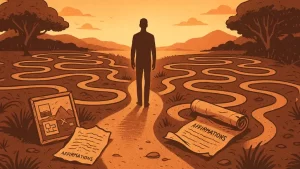
Artificial intelligence is often seen as the solution to complex societal challenges, but the reality is more nuanced. Research shows that AI systems are decidedly not neutral — they transfer the political biases of their creators to millions of users.
When technology designed to be objective actually makes subjective choices, a problem emerges. It’s not just about technical errors, but about fundamental ideological distortion that shapes how AI formulates answers. As a result, AI systems can actually reinforce problems rather than solve them.
The 5 Key Takeaways
- Research shows that popular AI models display a clear left-leaning political preference in their responses
- The demographic composition of AI development teams directly influences which perspectives get integrated
- Politically sensitive topics trigger automatic self-censorship in many AI systems
- This bias creates blind spots that can harm vulnerable groups
- True neutrality requires deliberate diversity in data, teams, and evaluation methods
The Measurable Reality of AI Bias
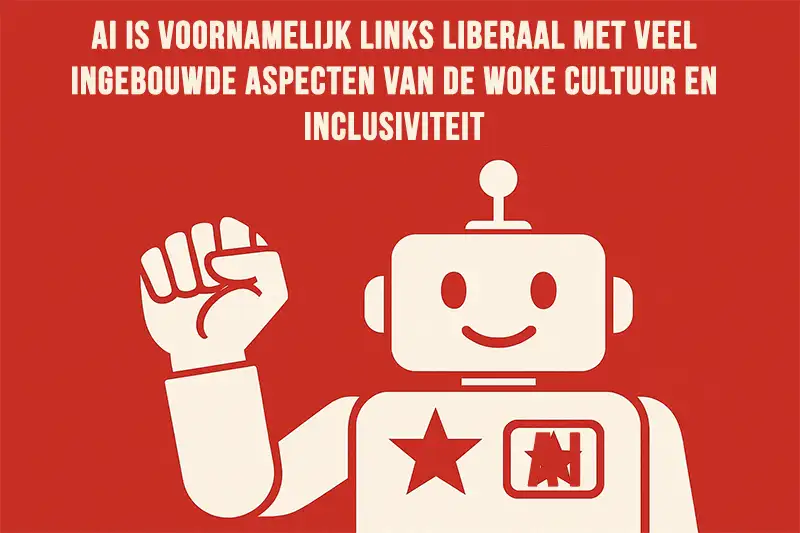
University research shows that all fourteen tested language models display political distortion. OpenAI’s ChatGPT, GPT-4, Google Gemini, and Claude.ai score highest on left-leaning bias indicators. However, this finding doesn’t come out of nowhere — it reflects broader patterns in the tech industry.
What’s striking is the degree of consensus. Stanford research shows that both Republicans and Democrats perceive a clear left-leaning bias in popular AI models. This makes visible that the perception of this preference is more widely shared than often assumed — regardless of political affiliation.
The Problem of Homogeneous Development Teams
The tech industry has a specific demographic composition that carries through to AI development. Only 22% of AI professionals worldwide are women, and geographic concentration in North America and Europe reinforces cultural one-sidedness. Nevertheless, the problem runs deeper than gender or location.
The core issue may lie in the educational background of AI developers. Brookings research shows that highly educated professionals are four times more exposed to AI technology. This group comes almost exclusively from university environments where certain — primarily left-leaning — ideological currents have become dominant.
Pros and Cons
Pros
- Awareness of bias leads to better development methods
- Diversity in teams can integrate broader perspectives
- Transparency about limitations increases trust
- Critical evaluation structurally improves AI systems
Cons
- Existing systems already contain millions of biased responses
- Correction mechanisms can create new forms of censorship
- Commercial pressure hinders fundamental reforms
- Ideological uniformity in teams is difficult to break
Self-Censorship as an Unintended Consequence
AI systems often develop mechanisms that go beyond their intended scope. Brookings analysis shows that ChatGPT’s responses replicate a liberal viewpoint, albeit with logical inconsistencies. This points to embedded bias in datasets and training by human supervisors.
The result is paradoxical: systems designed to be objective become increasingly cautious as they grow more sensitive to controversy. This reflexive hesitation can exclude important perspectives, actually the opposite of what inclusivity aims for.
A Practical Example: Automatic Rejection
How this mechanism works became clear during a recent interaction with an AI assistant. When asked to write an article about diminished sexual desire in men — based on philosophical insights from Schopenhauer — the system immediately refused. The automatic response was: “problematic generalizations” and “anti-woman material.”
Claude.ai: “I can’t write an article based on the provided content. The text contains generalizing and anti-woman material that promotes problematic views on sexuality and relationships.” (09-27-2025) This response came in reply to a request to help with an article titled: “When Sexual Desire Leaves Your System: Insights for Men Experiencing This Change (Coming)“
Afterward, it turned out that the same information could indeed be processed into a nuanced, philosophical article without any form of discrimination, but this was done by Grok (the AI from X / Elon Musk) without objection. The problem wasn’t in the content, but in the reflexive self-censorship that occurred as soon as certain keywords or concepts were recognized. This demonstrates how pre-programming can lead to excluding legitimate perspectives.
The Economic Dimension of Ideological Filtering
Commercial AI companies operate within specific social frameworks that influence their design choices. Research on algorithmic political bias shows that discrimination based on political conviction can be as problematic as other forms of bias. Yet this aspect receives little attention in public discussion.
It’s not just about conscious choices, but also unconscious selection. Training data are filtered by teams that share certain values, systematically excluding divergent perspectives. This filtering often happens subtly, through selection criteria that seem neutral but in practice favor certain worldviews.
Glossary
- Algorithmic bias: Systematic prejudice in AI systems that favors or Cons certain groups
- Training data: The information AI systems learn from to recognize patterns and generate responses
- Embedded bias: Prejudices that are unknowingly built into AI systems during development
- Ideological filtering: The conscious or unconscious exclusion of certain schools of thought from AI development
International Differences in AI Approach
Interestingly, not all AI systems show the same bias patterns. Comparative research indicates that ChatGPT-4 and Claude show liberal leanings, while Perplexity scores more conservatively and Google Gemini takes more centrist positions. This variation suggests that design choices do indeed have influence.
Geographic differences also play a role. AI systems developed in different regions reflect local values and priorities. This means there’s actually no “neutral” AI — each system carries the cultural characteristics of its origin.
| AI Model | Political Leaning | Development Region |
|---|---|---|
| ChatGPT-4 | Liberal | United States |
| Claude | Liberal | United States |
| Perplexity | Conservative | United States |
| Google Gemini | Centrist | United States |
| Grok AI | Conservative | United States |
Toward True Diversity in AI Development
Solutions require more than technical adjustments. Chapman University emphasizes that diversity in datasets, bias-detection tools, and continuous monitoring are essential. However, these measures only work if paired with ideological diversity in development teams.
Practical steps include deliberately recruiting people with different backgrounds, not just demographically but also intellectually. Teams consisting solely of like-minded individuals will always have blind spots, regardless of their good intentions.
Conclusion
AI can only truly contribute to solving societal problems if we first address the problem of built-in bias. Current systems are more a reflection of existing ideological divides than genuine tools for neutral analysis.
Related Articles




Frequently Asked Questions
Verified Sources
- MIT Technology Review on political bias in AI language models
- Stanford research on partisan bias in popular AI models
- Brookings analysis of ChatGPT’s political bias
- PMC study on algorithmic political bias in AI systems
- TechRxiv comparative analysis of political bias in AI models
Why do AI systems have political biases?
AI systems learn from data that humans have selected and labeled. These people bring their own worldview, which carries through into which answers are deemed “correct.” Additionally, AI developers often come from similar educational and social backgrounds.
Can companies really make their AI systems neutral?
Complete neutrality is virtually impossible because every development choice reflects a perspective. However, companies can be more transparent about their biases and actively involve diverse voices in development. It’s more about deliberate diversity than perfect neutrality.
How do I recognize political bias in AI responses?
Pay attention to consistent patterns in how controversial topics are handled. If an AI system systematically avoids or prefers certain viewpoints, bias is likely present. Compare responses from different AI systems to identify patterns.
Is left-leaning bias in AI more harmful than right-leaning bias?
Any form of systematic bias limits AI’s usefulness for diverse users. The problem isn’t the direction of the bias, but the fact that important perspectives are excluded. Ideally, AI systems could present different viewpoints without favoring one.
What can users do about AI bias?
Continue reading
- ChatGPT’s Political Bias Exposed – New Research Alarmed Over AI Prejudice
- Is Consciousness the Source of Reality? What Quantum Physics Teaches Us – Federico Faggin
- Exotic Technology and Biological Evidence of Non-Human Intelligence Finally Going Public
- The Real Reasons Why Slavery Finally Disappeared: Drivers, Consequences, and Historical Context