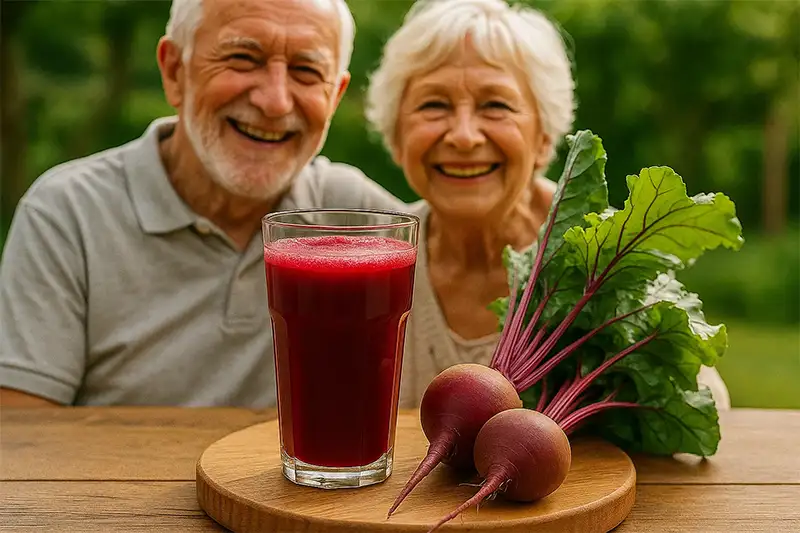
A new study shows that beet juice can help lower blood pressure in older adults — and it has everything to do with the bacteria in their mouth. Younger adults showed no such effect.
Researchers from the University of Exeter discovered that nitrate in beet juice influences oral flora: harmful bacteria decrease, while beneficial species actually increase. This change appears to affect how the body converts nitrate, and thus blood pressure. Healthy aging gains an extra nutritional dimension.
The 5 Key Takeaways
- Beet juice affects oral flora and changes the ratio between bacterial species
- Only older adults show a clear blood pressure reduction; younger people remain stable
- Unwanted bacteria are suppressed, while nitrate-metabolizing bacteria increase
- Nitrate is converted to nitric oxide — which keeps blood vessels flexible
- Vegetables like spinach, arugula, and kale provide comparable amounts of nitrate
Why Beet Juice Works Mainly in Older Adults
A large-scale study shows that nitrate from vegetables plays a key role in maintaining blood pressure. In older adults, this process becomes less efficient because the body’s natural production of nitric oxide decreases with age. This substance is essential for keeping blood vessels flexible.
Additionally, many older adults have elevated blood pressure, which increases the risk of heart and cardiovascular disease. The conversion of nitrate to nitric oxide appears to depend heavily on the composition of the oral flora — and that’s exactly where beet juice comes in.
Read also: Transcendental Meditation and High Blood Pressure: What Does Science Say?
The Role of Mouth Bacteria
Converting dietary nitrate to nitric oxide requires a specific group of bacteria. When less beneficial species take over, this process becomes disrupted — something that happens more often in older adults.
In the study, participants consumed concentrated beet juice for two weeks. In older adults, the number of Neisseria bacteria increased — a type that supports nitrate conversion. At the same time, Prevotella decreased, a bacterium that can actually hinder the same conversion. Read the full study here.
Pros and Cons at a Glance
Benefits of Beet Juice
- Supports blood pressure naturally
- Promotes a healthier balance in oral flora
- Contains antioxidants and anti-inflammatory compounds
- Supports heart and blood vessel health
Drawbacks of Beet Juice
- Can cause beeturia — pink urine or stool
- Commercial juices sometimes contain high natural sugars
- The taste is strong and not pleasant for everyone
- At high doses, it can interact with blood-thinning medication
Nitrate-Rich Alternatives for Those Who Don’t Want Beets
Those who prefer something other than beet juice can turn to nitrate-rich vegetables like spinach, arugula, fennel, celery, or kale. All these vegetables contain enough nitrate to produce a similar physiological effect.
However, the research shows that concentrated beet juice delivers a higher amount of nitrate per serving than regular vegetable juices. Read more about that here.
Study Design and Measurement Methods
Researchers followed 75 participants across two test periods of two weeks each. Each participant received both real beet juice and a nitrate-free placebo, with a rest period in between to allow the effect to wear off.
Before and after each period, the composition of oral flora was mapped using bacterial gene sequencing. This technique shows exactly which microbes are present and how they change under the influence of diet.
Glossary
- Nitrate: A plant-based substance that can be converted to nitric oxide
- Nitric oxide: A gas that causes blood vessels to relax
- Oral flora: The collection of bacteria that live in the mouth
- Prevotella: A bacterial species that can disrupt nitrate conversion
| Nutrient | Amount per 100 ml Red Beet Juice |
|---|---|
| Energy | 40 kcal |
| Carbohydrates | 9.6 g |
| Sugars | 6.8 g |
| Protein | 1.6 g |
| Fat | 0.1 g |
| Fiber | 0.2 g |
| Nitrate | 250–400 mg |
| Potassium | 325 mg |
| Folate (B11) | 80 mcg |
| Vitamin C | 5 mg |
| Iron | 0.8 mg |
| Magnesium | 23 mg |
| Alternative Nitrate-Rich Vegetables (per 100 g) | |
| Spinach (raw) | 250–300 mg nitrate, 558 mg potassium, 2.7 g protein |
| Arugula | 350–500 mg nitrate, 369 mg potassium, 2.6 g protein |
| Kale | 90–120 mg nitrate, 447 mg potassium, 1.9 g protein |
| Celery | 150–250 mg nitrate, 260 mg potassium, 0.7 g protein |
| Fennel | 100–180 mg nitrate, 414 mg potassium, 1.2 g protein |
Conclusion
For older adults looking to support their blood pressure naturally, beet juice can be a worthwhile addition. The effect isn’t due to a magic ingredient, but rather an interplay of nutrition, mouth bacteria, and how the body processes nitrate. Especially in aging, when nitric oxide production declines, this can make a difference.
The scientific evidence is clear: concentrated beet juice changes oral flora and promotes the conversion of nitrate to nitric oxide, which supports flexible blood vessels. That’s not a promise, but a measured effect. At the same time, it requires realism — not everyone tolerates the taste or sugar content equally well, and interactions with medications remain a consideration.
Those who aren’t fans of beets have alternatives in the form of nitrate-rich leafy greens. Spinach, arugula, and kale provide similar compounds, provided they’re eaten regularly. What matters is consistency — and the understanding that small lifestyle adjustments can sometimes have surprisingly large impacts.
Related Articles



Frequently Asked Questions
How much beet juice can you drink per day?
Most studies use a shot of 70 ml concentrated beet juice twice daily. For daily use, one shot of 70 to 140 ml is a safe guideline, unless otherwise discussed with a doctor.
Why should you be careful with too much beet juice?
High intake can lead to beeturia (pink urine) or an excessive drop in blood pressure, especially when using blood thinners or blood pressure medication. It’s important to monitor the effect on your body.
How do you make fresh red beet juice at home?
Press raw beets using a slow juicer or centrifuge juicer. For a milder taste, you can add apple, lemon, or ginger. Drink the juice immediately after making it for maximum freshness.
Is Zonnatura beet juice healthy to drink?
Zonnatura offers an organic beet juice without added sugars. It contains less nitrate than concentrated shots, but is still a nutritious choice within a balanced diet.
What’s the best time of day to drink beet juice?
Just before a meal or in the morning on an empty stomach often produces the greatest effect on blood pressure. For athletes, it’s also taken 2 to 3 hours before training for endurance benefits.
How much beet juice is needed to lower blood pressure?
Research shows that twice daily 70 ml of concentrated juice for two weeks can already produce a measurable effect. For long-term support, consistency is more important than quantity.
How much beet juice should I drink for blood pressure effects?
In the study, participants drank a concentrated beet juice ‘shot’ twice daily for two weeks. The exact amount can vary by product, so it’s wise to check the label.
Does beet juice work for younger people too?
No, the research showed that beet juice only lowers blood pressure in older adults (60+). Younger participants (under 30) showed no blood pressure-lowering effect.
Can I combine beet juice with blood pressure medication?
Always consult your doctor first before using beet juice for blood pressure issues. Beet juice can affect medication and dosage adjustments may be necessary.
How long does it take for beet juice to work?
In earlier studies, a drop in systolic blood pressure was measured within 6 hours. However, for optimal effects on oral flora, two weeks of daily use is needed.
Are there side effects from drinking beet juice?
The most common side effect is beeturia — temporary pink or red urine. This is harmless and disappears on its own. Large amounts can cause digestive issues.