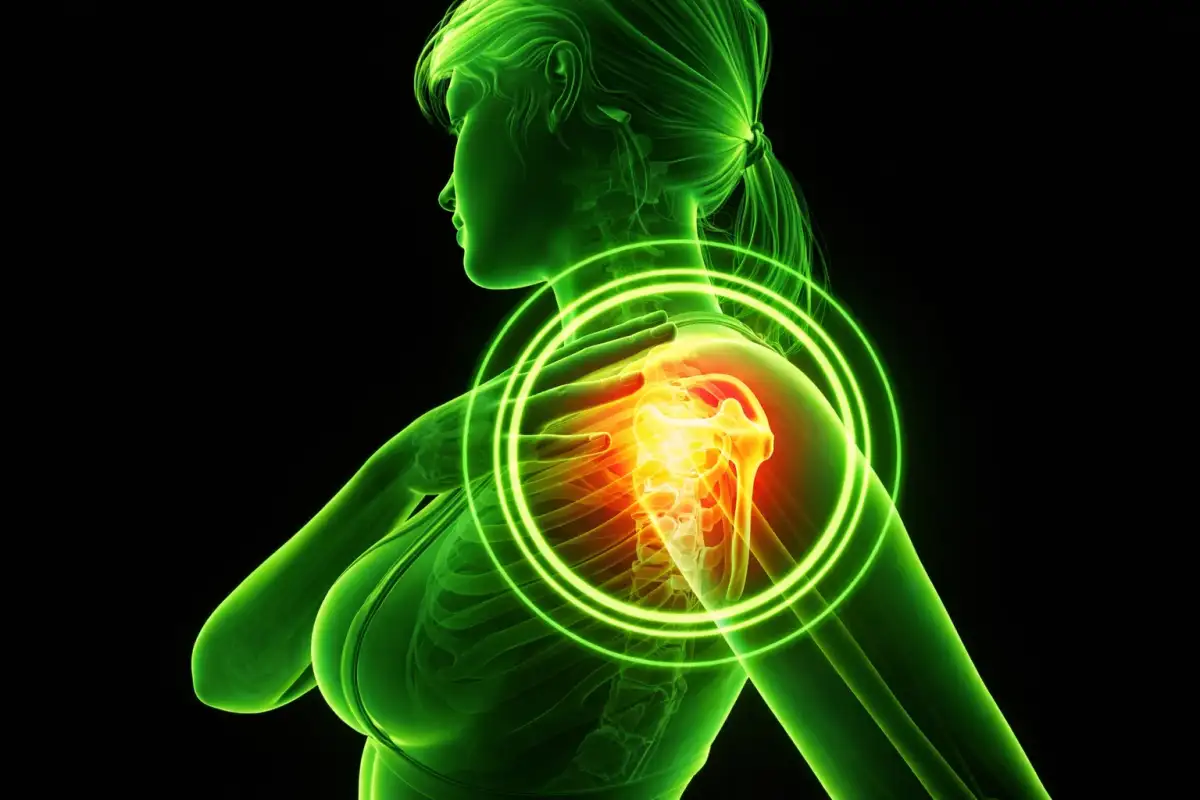
Around your fifties, your shoulder can suddenly become so stiff that pouring a cup of coffee causes pain. For many women, frozen shoulder during menopause comes as a very unpleasant surprise.
The condition appears to be connected to hormonal shifts. Particularly declining estrogen plays a role in inflammation and connective tissue thickening. Research shows that hormone therapy and frozen shoulder may be connected in a positive way — women receiving hormone replacement therapy appear to have lower risk of this condition.
The 5 Key Takeaways
- Estrogen receptors sit on nerve cells and partly determine how your body processes pain.
- Declining hormone levels change how connective tissue heals and can cause stiffening.
- Postmenopausal women with hormone therapy had less frequent frozen shoulder in a study.
- Controlled trials are underway investigating whether HRT can actually ease symptoms.
- Beyond hormones, thyroid function, metabolism, and immune responses also play a role in the inflammatory process.
Why estrogen matters for connective tissue and joints
Estrogen plays a role in regulating inflammation and the elasticity of connective tissue. A 2025 review describes frozen shoulder as an immunometabolic condition, meaning different systems — hormones, immune cells, metabolism — exert influence simultaneously. When estrogen levels drop, the immune response changes and susceptibility to chronic capsule thickening increases.
Hormonal fluctuation around menopause also affects how the nervous system registers pain. Research on estrogen receptors shows these receptors sit on nerve cells and modulate pain signals. Without adequate estrogen, pain and sensitivity can increase, even with mild irritation.
Clinical data: Hormone therapy and less frozen shoulder
An observational study from Duke Health followed nearly 2,000 postmenopausal women. Women receiving hormone replacement therapy were less likely to develop adhesive capsulitis compared to women without HRT. The difference was clinically interesting but not statistically significant due to the limited study size.
The figures showed: approximately 3.95% of women with HRT developed frozen shoulder, compared to 7.65% without hormone therapy. Prevalence research confirms the condition occurs more frequently in women around menopause, supporting the hypothesis of a hormonal cause.
Benefits and drawbacks of hormone therapy for shoulder complaints
Pros
- Possibly lower risk of developing frozen shoulder in menopausal women
- Support of collagen structure and connective tissue elasticity
- Can reduce inflammation sensitivity through anti-inflammatory pathways
- Alleviates other menopausal symptoms such as hot flashes and sleep problems
Cons
- No large-scale studies yet definitively proving causality
- HRT is not specifically indicated for frozen shoulder treatment
- Possible side effects such as blood clotting risk or breast tissue changes
- Does not work for everyone and requires careful consideration with a physician
How estrogen counteracts fibrosis
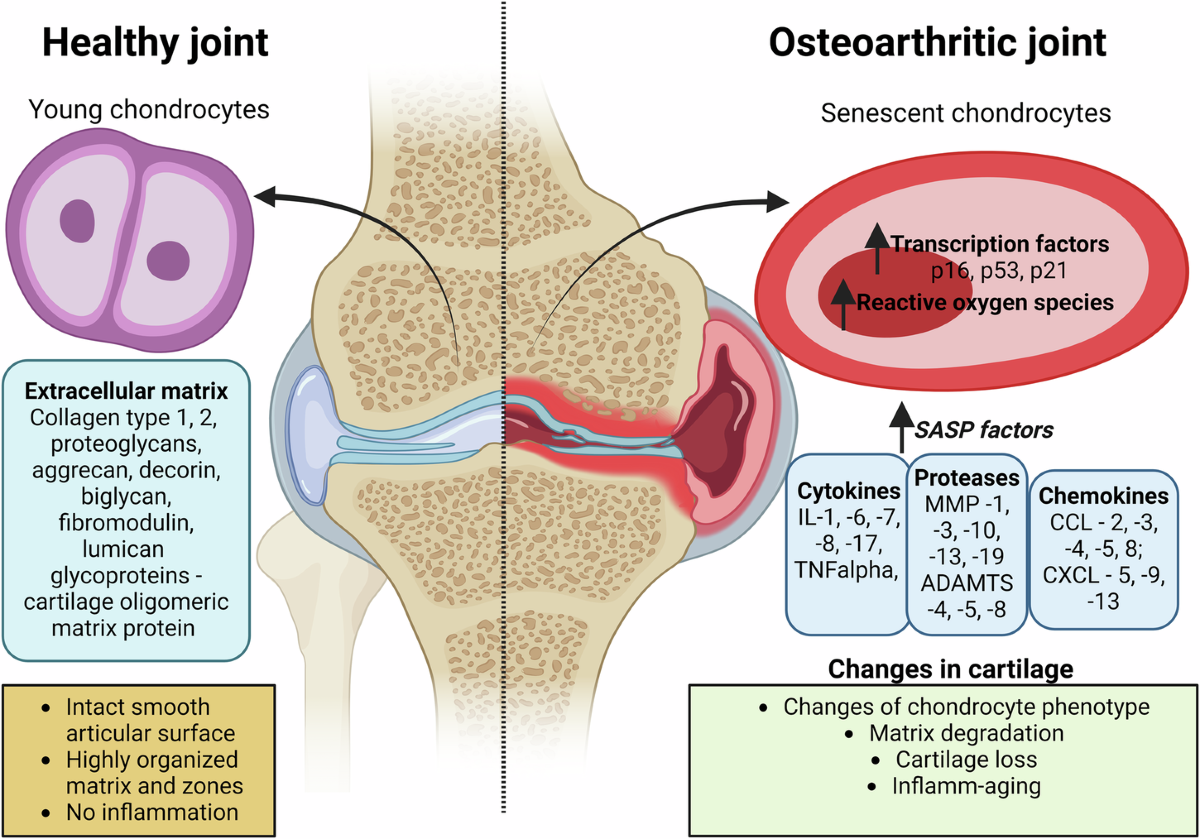
Scientific research on fibrosis and sex hormones describes how estrogen has antifibrotic properties. The hormone inhibits pathways that lead to connective tissue hardening. Studies on collagen metabolism show that estrogen decline affects connective tissue by disrupting the synthesis and breakdown of collagen.
In tissue research, estrogen appears to suppress the production of inflammation-promoting substances. When the hormone drops, the shoulder capsule can become harder and thicker. That makes movement painful and limited.
 |
 |
 |
Ongoing research on HRT and shoulder mobility
A randomized clinical trial at the University of California is currently investigating whether hormone replacement therapy combined with physical treatment improves symptoms. The trial focuses on peri- and postmenopausal women with adhesive capsulitisInflammation and adhesion of the shoulder capsule that limits movement.
Researchers measure objectively how pain and range of motion develop. This type of proactive research helps not only identify risk factors but also validate treatment options.
Glossary
- Adhesive capsulitis: Medical term for frozen shoulder where the capsule around the shoulder becomes inflamed and adhered
- Fibrosis: Excessive formation of connective tissue that becomes stiff and thick, limiting movement
- Immunometabolic condition: Disease where the immune system, metabolism, and hormones together exert influence
- Estrogen receptors: Proteins on cells that respond to estrogen and transmit signals to tissues
Neuro-endocrine change and pain sensitivity
Lower estrogen levels make the nervous system more sensitive to fibrosisExcessive formation of connective tissue and pain. Research on neuro-immune interactions shows the hormone influences how nerve cells interpret signals. Without sufficient estrogen, the body reacts more strongly to local irritation, making chronic shoulder pain in women develop faster.
This neuro-endocrine interaction also explains why some women experience more pain at night. The hormonal rhythm affects inflammatory mediators that peak during rest.
| Phase | Characteristic | Average duration |
|---|---|---|
| Freezing | Increasing pain and stiffness | 2–9 months |
| Frozen | Severely limited movement | 4–12 months |
| Thawing | Gradual recovery of mobility | 6–24 months |
Thyroid, metabolism, and the bigger picture
The immunometabolic review also describes how thyroid hormones interact with estrogen deficiency. Many women develop thyroid issues around menopause, and research on systemic inflammation shows this combination increases inflammation sensitivity.
Metabolism also changes. Cells respond differently to insulin and glucose regulation becomes disrupted. Women with diabetes have significantly higher risk of frozen shoulder, likely due to chronic inflammatory processes.
Practical implications: What you can do about it
Even though hormone therapy is promising, it remains important not to completely avoid movement. Light mobilization exercises keep the capsule more flexible. Information on estrogen and joint health suggests that diet rich in omega-3 and vitamin D may potentially moderate inflammation.
Sleep also plays a role. Women who sleep poorly more often experience worsening of immunometabolic conditionsCondition where the immune system, metabolism, and hormones work together in a disrupted manner. Stress management and regular movement support tissue healing.
Conclusion
Science is beginning to understand how hormones and shoulder complaints are connected. Estrogen appears to play a key role in protecting connective tissue and regulating inflammation.
Clinical data suggest hormone replacement therapy is associated with lower incidence of frozen shoulder. Large-scale studies are ongoing, but the biological plausibility is strong. Women who develop shoulder complaints around menopause can discuss this with their physician — both for symptom relief and to consider broader hormonal care.
Verified Sources
- MDPI: Frozen Shoulder as a Systemic Immunometabolic Disorder – Review article on estrogen, immune system, and capsulitis.
- Duke Health: Study on hormone therapy and frozen shoulder – Observational research in postmenopausal women.
- ClinicalTrials.gov: HRT for frozen shoulder – Ongoing RCT at UCSF on HRT and shoulder mobility.
- NCBI: Role of Estrogen Receptors in Pain Perception – On the neurological role of estrogen receptors.
- NCBI: Estrogen deficiency and collagen metabolism – How estrogen decline affects connective tissue.
- NCBI: Fibrosis, inflammation and sex hormones – Review of antifibrotic effects of estrogen.
- NCBI: Neuro-immune crosstalk in pain regulation – Explanation of neuro-endocrine mechanisms in chronic pain.
- SAGE Journals: Adhesive capsulitis in menopause – Research on prevalence in menopausal women.
- Liberteque: Estrogen and joint health – Popular science overview of estrogen and muscles/joints.
- NCBI: Systemic inflammation in postmenopausal women – Connection between hormones and increased inflammation sensitivity.
- Thuisarts – Stiff shoulder (frozen shoulder) – Guideline-based explanation of symptoms, phases, duration, and treatment.
- Schoudernetwerk Nederland – Frozen shoulder – Causes, risk factors, and general explanation for professionals and patients.
- Cleveland Clinic – Frozen Shoulder – Symptoms, recovery window (1–3 years), and treatment options.
- NHS – Frozen shoulder – Basic information on symptoms, duration, and exercises.
- Duke Orthopaedics – Estrogen & Frozen Shoulder study – Research signal: lower risk of adhesive capsulitis with HRT use.


Frequently Asked Questions
What is frozen shoulder?
A frozen shoulder (adhesive capsulitis) is a painful stiffening of the shoulder joint because the joint capsule becomes inflamed and thickened; this limits mobility and can hinder daily activities.
How long does frozen shoulder last?
Symptoms typically worsen over months and then gradually improve; on average, it takes 1 to 3 years before pain and stiffness noticeably decrease.
What are the three phases of frozen shoulder?
Usually it progresses in three stages: a painful “freezing phase,” a stiff “frozen phase” with less pain, and a “thawing phase” where mobility gradually returns.
What is the relationship between frozen shoulder and menopause?
Around menopause, estrogen drops, which can affect connective tissue and inflammatory processes; studies and clinical signals point to increased risk during this life stage and possibly lower risk with HRT use.
Which treatment helps most with frozen shoulder?
Movement within pain limits, targeted exercises, and pain relief form the foundation; for severe pain, an injection can be considered, and in specialized settings additional options may be available.