Slavery was not abolished because morality suddenly appeared, but because various forces began shifting simultaneously. Economics, religion, resistance, and technology worked together to break a system that had seemed standard for ten thousand years.
What stands out is how quickly it happened — within a century and a half, a worldwide system collapsed that had been taken for granted for centuries. That demands explanation. And that explanation is more nuanced than most people think.
The 5 Key Takeaways
- Religion justified slavery for centuries — until suddenly a turning point came
- Uprisings like Haiti and Jamaica shocked investors and governments awake
- Paid labor proved cheaper and more flexible after the Industrial Revolution
- William Wilberforce influenced the world from one parliament, with one image
- Great Britain deployed its navy to combat slave trade worldwide
The Core Reasons Behind Abolition
For centuries, the Old Testament, the Quran, and biblical authorities legitimized human ownership. Paul called on slaves to obey their masters, and that was cited as though it were a law of nature. But in the eighteenth century, a new moral orientation emerged within Christian circles, particularly among Quakers and evangelical groups.
At the same time, the way labor was organized changed. Adam Smith wrote in The Wealth of Nations that labor by free people proved cheaper — precisely because you could hire and fire people as needed. That turned out to be an economic incentive that made wage labor more attractive than holding onto workers.
Economic Shifts and Labor Systems
Plantations required not only capital to buy people, but also to guard, feed, and house them. That became increasingly expensive as resistance increased and security became heavier. Rebellious slaves broke tools, worked slowly, or escaped — and that cost owners money.
After the Industrial Revolution, demand emerged for flexible labor in factories and cities. Slavery simply no longer functioned there. Whoever offered paid work could hire people at demand peaks and let them go when the market crashed. The economy of the North in America showed that such a system grew faster.
The Rise of Abolitionism and Moral Pressure
The movement against slavery grew from religious circles, particularly in Great Britain. William Wilberforce stood up in parliament for twenty years with legislative proposals — and for twenty years he was rejected. But he didn’t stop. He organized boycotts of sugar and called on churches to participate.
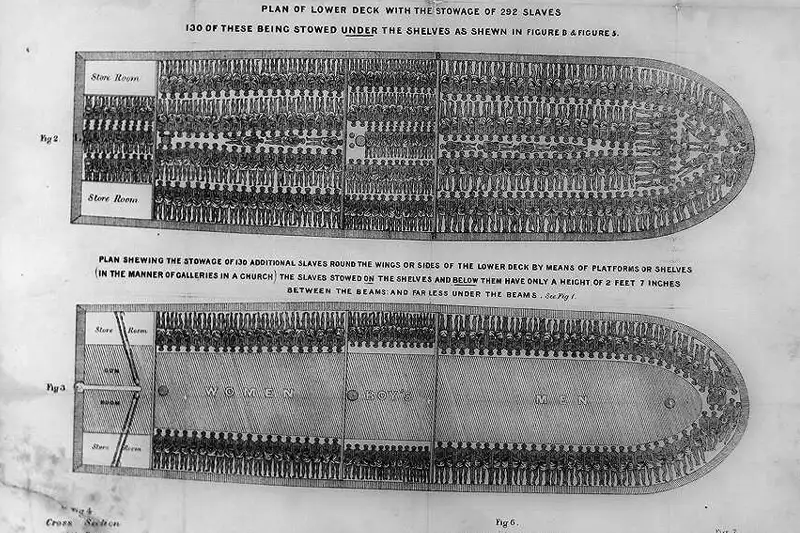
An image of the slave ship Brookes spread like a viral campaign. It showed how 454 people were crammed together like cargo. Within months, parliament received more than one hundred thousand signatures — a massive mobilization for that time.

Legislation, Resistance, and International Treaties
In 1807, Great Britain banned the slave trade within the realm. Then came the Emancipation Act in 1833, which abolished slavery itself. Former owners received compensation that accounted for forty percent of the national budget — one of the largest wealth transfers in British history.
But after that, Great Britain went further. The Royal Navy established the West Africa Squadron — a permanent patrol that hunted down illegal slave ships. Over sixty years, more than 1,600 ships were intercepted and over 150,000 Africans freed. It cost money and lives, but it changed the global norm.
What Does Abolition Mean in Different Countries?
In the Netherlands, the process took until 1863 before slavery in Suriname and the Caribbean officially stopped. Yet formerly enslaved people were still required to work as contract laborers for ten more years — a transition system that delayed emancipation. Similar delays occurred in French Caribbean territories.
Brazil was the last major Western nation to let go of slavery, not until 1888. That was because it fell behind economically: without industrialization and with an agricultural system that functioned only with unpaid labor. The gradual transition showed that legal abolition didn’t always align with immediate freedom.
Pros and Cons of Economic Arguments in Abolition
Pros
- Wage labor proved cheaper in the long term due to flexibility
- Industrialization required skilled labor, not forced labor
- Economic growth accelerated after abolition in multiple countries
- It gave moral pressure an economic foundation
Cons
- Slave owners received compensation, enslaved people did not
- Transition systems like contract labor continued to fuel exploitation
- Economic arguments sometimes downplayed human suffering
- Countries that modernized late clung to slavery longer
The Role of Uprisings and Resistance
The Haitian Revolution in 1791 was a turning point. Half a million enslaved people fought French troops for thirteen years and won. Haiti became the first Black republic in the world. That was an economic disaster for France, but also a signal that slavery was not stable.
Later came the Baptist War in Jamaica — an uprising that lasted ten days but shook London awake. Parliament responded with the Slavery Abolition Act a year later. Resistance was not a new phenomenon, but its scale and impact changed drastically in the nineteenth century.
How the Industrial Revolution Changed Everything
Factories demanded labor that could be quickly trained and move with technology. Slavery was rigid: you owned someone regardless of whether there was work. That backfired when markets fluctuated. A shift toward wage labor gave entrepreneurs more control.
At the same time, the middle class in Europe and America grew. They increasingly saw slavery as outdated and morally unacceptable. That group had influence, voice, and money — and that mattered in political decision-making.
Glossary
- Abolitionism: Movement aimed at ending slavery
- Emancipation Act: Legislation that granted legal freedom to formerly enslaved people
- Contract Labor: System where formerly enslaved people were required to continue working
- Moral Shift: Change in collective conviction about slavery
How Great Britain Exerted Pressure Worldwide
After legal abolition, Great Britain pressed on. Through diplomatic pressure and military might, it forced other nations to move along. Cuba and Brazil depended on transatlantic slave transports — and those routes were blocked by the Royal Navy.
That effort was partly altruistic, but also strategic. Control over African waters strengthened Great Britain’s position against France, Spain, and Portugal. Treaties with those nations gave London additional influence. It was effective, but not purely driven by human rights.
| Country | Abolition of Slave Trade | Abolition of Slavery |
| Great Britain | 1807 | 1833 |
| United States | 1808 | 1865 |
| Netherlands | 1814 | 1863 |
| France | 1815 | 1848 |
| Brazil | 1850 | 1888 |
What Remains Today?
Legally, slavery is banned in virtually every country. Mauritania did so officially only in 1981 and made it punishable in 2007. But in practice, modern slavery still exists — in the form of forced labor, debt bondage, and human trafficking.
Estimates point to tens of millions of people worldwide living in comparable conditions. So abolition in law books is not the end of the story. Government oversight and international cooperation remain necessary.
Conclusion
The collapse of slavery came through a combination of resistance, religion, economic shift, and political pressure. It was not a simple moral evolution, but an interplay in which different forces strengthened each other.
What began with a Quaker congregation and a printed image of a slave ship ended with new legislation, international treaties, and a different view of labor. But the story doesn’t stop at abolition — because what disappeared legally remained in other forms.
Verified Sources
- Dutch Government – Commemoration Year of Slavery Past – Facts about dates, context, and impact of abolition (1863/1873).
- Canon of the Netherlands – Slavery – Overview of causes and timeline of abolition within the Netherlands and beyond.
- Historical News Journal – Dossier Slavery – Historical context and aftermath of abolition in the 19th century.
- OER Project – Why Was Slavery Abolished? Three Theories – Economic and ideological models behind the end of slavery.
- TIME – General Order No. 3 and Juneteenth – Example of legal and practical implementation of freedom in the US.
- Slavery in Brazil – For 350 years, slavery was the heart of the Brazilian economy
Related Articles



Frequently Asked Questions
Why was slavery abolished?
A combination of economic shifts toward wage labor, moral pressure from abolitionists, and new legislation made the system increasingly untenable and ultimately unacceptable.
When was slavery abolished in the Kingdom of the Netherlands?
By law in 1863 in Suriname and the Caribbean territories, with state oversight ending in 1873; in the Dutch East Indies, it was formally banned in 1860.
What is the difference between abolition of the slave trade and abolition of slavery?
The ban on slave trade stops the supply and sale of enslaved people; abolition of slavery itself ends ownership and forced labor.
Which factors played the largest economic role?
Industrializing economies, rising middle class, and efficiency Pros of paid labor undermined the profitability and social support for slavery.
Does slavery still exist today in another form?
Yes, modern forms such as forced labor and human trafficking occur; international treaties and organizations combat this, but enforcement remains a challenge.
Continue reading
- 10 Ways a Book From 1857 Solves the Mystery of Near-Death Experiences
- Exotic Technology and Biological Evidence of Non-Human Intelligence Finally Going Public
- Why ChatGPT Can’t (Yet) Help Us Solve Social and Societal Problems
- Breaking the Rules of Chemistry: New Theory Turns Old Ideas About Crystal Formation on Their Head