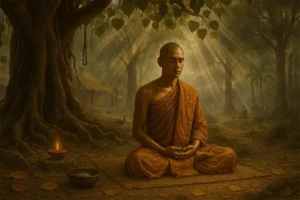
The bodhisattva, seated in deep meditation, is one of the most recognizable images in Buddhism. It awakens something within us — a reminder of stillness, dedication, and inner strength.
If you’re curious about meditation, a question soon arises: what does it mean to be a bodhisattva?
In essence, a bodhisattva is someone who focuses not only on their own awakening, but dedicates their path to the well-being of all living beings.
While there are inspiring examples from history, the bodhisattva ideal is not reserved for a spiritual elite. Anyone who opens themselves to compassion and insight can be a bodhisattva.
Do you feel the call to understand more deeply what this path entails? Do you want to discover how you yourself can walk a path of compassion in daily life? Then explore Mahayana Buddhism — a way that is both gentle and powerful.
The 5 Key Takeaways
- A bodhisattva dedicates their life to helping others — but what does that mean in practice?
- The path to enlightenment is not isolated, but rooted in connection with others.
- Compassion is the key to true wisdom — a quality that develops through daily practice.
- There are multiple approaches to following the bodhisattva path. The right form is the one that fits your life.
- Small acts of kindness can unexpectedly leave a lasting mark on the lives of others.
The Meaning of a Bodhisattva
In Mahayana Buddhism, being a bodhisattva means choosing a path that doesn’t revolve around you alone. You consciously distance yourself from the self-centered tendency that often governs us — the urge to put our own happiness first.
When you take your first steps on your meditation journey, it often begins from personal motivation. We want to feel calmer, think more clearly, suffer less. But over time, the perspective shifts. Space opens up for something greater than the self.
Compassion and Wisdom
With regular meditation, the capacity for compassion grows. And with that growth comes insight: true fulfillment comes from helping ease another’s suffering.
Others also long for freedom from pain — just as you do. When you heal yourself, a natural desire arises to support others on their path. Therein lies the power of the bodhisattva ideal.

The Bodhisattva Ideal
The idea of the bodhisattva forms an important distinction between Theravada and Mahayana Buddhism. In Mahayana, enlightenment is not something for yourself alone — it becomes a path of shared responsibility. This blurs the boundary between individual and community, leading to a deeper connection with other beings. Bodhisattvas often practice shamatha meditation techniques to calm the mind and achieve clarity, so they can better contribute to the well-being of others. This collective effort strengthens the movement toward enlightenment for all living beings. Bodhisattvas recognize that the path to enlightenment also involves understanding suffering and easing the way for others. The four noble truths clarify their mission to pursue not only enlightenment for themselves, but also to guide others toward deeper freedom and understanding. This dedication to altruism and compassion forms the core of their practices and inspirations.
The bodhisattva develops into a powerful, compassionate presence. Someone who doesn’t avoid the suffering of others, but embraces it as an invitation to service. In doing so, they live according to Mahayana principles, also called the paramitas.
Glossary
- Bodhisattva: Someone who pursues enlightenment to help all beings.
- Mahayana: A Buddhist tradition in which compassion is central.
- Bodhicitta: The inner motivation to walk the path for the well-being of everyone.
- Paramitas: The six virtues that guide the bodhisattva path.
- Compassion: The conscious choice to be involved in the suffering of others and contribute to enlightenment.
The Six Paramitas
These six guidelines — generosity, discipline, patience, effort, meditation, and wisdom — form the core of practice. They are not goals, but guideposts. The first, generosity, begins with the willingness to make space for another.
The bodhisattva says: let me do the work. Not because I’m better, but because I’m willing. Therein lies the heart of dedication.
Taking Responsibility
The bodhisattva path also asks for responsibility. Not only for your actions, but also for your choices, intentions, and inner attitude.
Personal growth arises when you take responsibility for your thoughts, your actions, and your contribution to the world. Who else could do that for you?
Yoga is the stilling of the movements of the mind. ~ Patanjali

The Three Paths to Bodhisattvahood
Bodhicitta is often described as the awakened mind — an inner attitude of compassion and wisdom. It is this mental state that awakens the desire to become a bodhisattva.
It’s not an idea you think up, but something you recognize in yourself. According to the Mahayana tradition, bodhicitta is present in every human being — ready to be remembered and activated.
The Challenge
Yet it can be confronting. How can you help others if you yourself are still struggling with pain, confusion, or unrest? The path sometimes seems too big for one lifetime.
In Mahayana, this paradox is embraced: the wish to help others and the pursuit of enlightenment go together. Compassion and self-development are not separate trajectories — they nourish each other.
The Process Unfolds
The bodhisattva path unfolds in different ways. There is no fixed path, but a dynamic dance of intention and action. Within the Mahayana tradition, three approaches are distinguished:
- The Way of the King: First liberate yourself, so you can then serve others from strength and stability.
- The Way of the Captain: Make the journey together — no one is left behind.
- The Way of the Shepherd: Let the other go first. Stay near, watchful and available, without being the center yourself.
These metaphors are not rigid typologies, but living guidelines. Some days you feel like a shepherd, other days like a captain — sometimes both.
Bodhisattvas Among Us
Avalokiteshvara, the bodhisattva of compassion, is one of the most beloved figures in Mahayana Buddhism. In Tibet this figure is called Chenrezig, in China Guanyin. Often depicted with many arms, he symbolizes action and manifold compassion.
Each arm reaches out to another being — an image that reminds us that compassion is not passivity, but conscious engagement.

Inspiration in Daily Life
Mahayana Buddhism teaches that bodhisattvas are also among us now. They don’t live only on mountaintops or in monasteries — they work in hospitals, cook for others, listen without judgment.
Sometimes you only recognize them later — in a small act, a warm glance, an unexpected gesture. Anyone can embody this, even if only for a moment. That is enough.
Your Path to Compassion
The path of the bodhisattva is not a route with an endpoint. It often begins in silence. The next time you meditate, you can activate bodhicitta with a simple intention:
“May my efforts benefit others.”
And when closing: “May the merit of this meditation spread for the benefit of all beings.”
This dedication makes your practice a gift. And every gift changes the world — subtly, but lastingly.
A Win-Win Situation
The beauty of this path is that you never have to choose between yourself and the other. Every step you take in your own well-being is also a step toward collective healing. It’s not a sacrifice, but a reciprocal movement.
Walking in mindfulness is a continuous act of peace. ~ Thich Nhat Hanh
Gerelateerde artikelen




What is a bodhisattva?
A bodhisattva is someone who strives for enlightenment, not only for themselves, but also to help all other beings. In Mahayana Buddhism, one takes a vow to put the well-being of others first. It is a path of compassion and dedication to alleviating the suffering of all beings.
How can I become a bodhisattva?
You can become a bodhisattva by developing bodhicitta, the wish to achieve enlightenment for the well-being of others. Generate bodhicitta during meditation by setting an intention and dedicating your efforts to benefit others. Close your meditation with a dedication of merit, offering the benefits you have received to all beings.
What are the six paramitas?
The six paramitas are transcendent generosity, discipline, patience, effort, meditation, and wisdom. They form the principles that a bodhisattva practices to promote their development. By cultivating these perfections, one can walk the path to enlightenment and help others on their own spiritual journey.