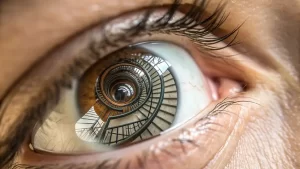
It’s a question that occupies many minds: just how powerful is your mind really? For decades, scientists have been trying to understand the connection between thoughts, beliefs, and the way we experience the world. What once sounded like a spiritual conviction is increasingly backed by science: the power of your mind influences your health, your success, and your well-being.
From pain management to goal-directed visualization — research shows that mental processes help shape our perception of reality. In this article, you’ll discover seven remarkable studies that demonstrate how the mind influences what we feel, think, and perceive. Perhaps there’s an insight here that will permanently change your perspective on your own life.
7 Studies That Underscore the Power of the Mind
1 – Mindfulness Meditation for Pain Relief
Can you experience pain differently if you think about it differently? According to researchers at the University of California San Diego, the answer is a resounding yes. Their research shows that mindfulness meditation significantly reduces pain perception — sometimes even more effectively than conventional painkillers.
MRI scans revealed that meditation activates specific brain regions involved in pain regulation. This changes how your body registers discomfort. The idea that conscious attention can influence physical sensations shifts from intuitive insight to measurable reality. This study confirms in tangible ways the influence of consciousness on bodily experience.
2 – The Neuroscience Behind Goal Visualization
The saying “what you think, you become” sounds like a cliché — but according to science, there’s more truth to it than you might suspect. Dr. James Doty, a neurosurgeon at Stanford, shows that visualization and concretely writing down goals activate the so-called default mode network in the brain. This strengthens neural pathways involved in motivation and goal-directed behavior.
By repeatedly directing your attention to a specific desire, the brain becomes, in a sense, “prepared” to notice the right signals, opportunities, and actions. Not because magic is involved, but because attention filters everything that was previously invisible. It’s no coincidence that successful people often refer to vision boards, affirmations, or other forms of mental focus. The mind paves the path toward reality.
3 – Thoughts as an Interface with Technology
The boundary between mind and technology is becoming increasingly blurred. For instance, a paralyzed man, Noland Arbaugh, became the first person in the world to control a computer via Elon Musk’s Neuralink brain implant. Without moving his body, he could type, navigate, and communicate — using only his thoughts.
What seemed like science fiction until recently is now becoming tangible reality: thoughts can control physical devices. A shift that not only has medical applications but fundamentally makes us reconsider the influence of consciousness on the world around us.
When you no longer see yourself as separate from everything, something wonderful begins to unfold. ~ Sadhguru
4 – Positive Thinking and Stress Regulation
Can your way of thinking influence your stress level? Research suggests it can. A positive mindset lowers the stress hormone cortisol and increases the production of serotonin — a neurotransmitter linked to mood and resilience.
What we think not only shapes our perception but literally reshapes our brain. By consciously focusing on gratitude and optimism, the neural networks linked to fear and overwhelm weaken, while structures related to inner stability strengthen. A simple mental shift can produce tangible changes.
5 – Visualization in Elite Sports
For many elite athletes, mental training is at least as important as physical preparation. Various studies show that visualization techniques — mentally rehearsing movements and performances — activate the same brain regions as actual practice.
In one study, basketball players who only visualized their free throws improved their accuracy almost as much as players who trained physically. The brain makes no distinction between actually performed and vividly imagined actions. Mental practice thus leads to real progress — even when the body is still.
6 – The Placebo Effect: The Healing Power of Belief
The placebo effect is one of the most researched phenomena in medicine — and simultaneously one of the most mysterious. In countless studies, patients experienced actual health improvements after taking a “fake pill,” simply because they believed they were being treated.
This effect raises a profound question: how strong is the influence of belief on our physical system? When belief in healing prompts the body to heal itself, it’s conceivable that consciously chosen thought patterns can also have surprisingly significant effects in daily life.
7 – Cognitive Behavioral Therapy: Reshape Your Thinking, Reshape Your Reality
Cognitive behavioral therapy (CBT) is a recognized therapeutic method that helps people break negative thought patterns. By reframing limiting beliefs, emotions can shift and behavior can change — with a positive impact on daily functioning.
CBT works because the brain adapts to new thinking strategies. This ability is called neuroplasticity: the brain’s capacity to restructure itself. With practice and awareness, anyone can learn to focus on empowering thoughts, and gradually reshape their own reality.
How to Use the Power of Your Mind in Daily Life
Understanding how powerful your mind is, is one thing — learning to work with it is another. The real shift lies in the application. Here are practical ways to strengthen your mental influence in your daily life:
- Practice mindfulness: Regular meditation and conscious breathing help deepen your attention, lower stress, and experience more peace.
- Use affirmations: Positive self-talk influences your brain and strengthens helpful beliefs.
- Formulate clear intentions: By writing down your goals and actively visualizing them, your mind is programmed for direction and action.
- Practice gratitude: Grateful thinking strengthens positive networks in the brain, reduces tension, and increases your capacity for joy.
- Limit negative influences: Less exposure to toxic information, criticism, or doubt protects your mental space.
- Surround yourself with positivity: Seek inspiration in books, people, and content that bring constructive energy.
- Develop a growth mindset: Seeing challenges as learning opportunities makes you more resilient and strengthens your confidence in your abilities.
- Ensure good sleep: During sleep, your brain processes emotions and anchors new insights. Adequate rest contributes to clarity and emotional balance.
The Role of Belief in Success and Well-being
Behind virtually every action lies a belief. Whether it’s your work, your relationships, or personal development — the stories you tell yourself often determine how things turn out. Psychological and neurological research shows that people who believe in their own potential significantly more often achieve success than people who consistently underestimate themselves.
This phenomenon is also called a self-fulfilling prophecy: your belief shapes your actions, and your actions shape your reality. By letting go of limiting ideas and replacing them with empowering beliefs, new possibilities open up — not only within, but also without.
Belief influences how you make choices, how long you persist, and how you handle setbacks. People with a strong sense of self-efficacy are often more flexible, more resilient, and less easily discouraged. Not because they don’t experience doubt, but because they don’t exclude themselves from the start.
The mind determines how we respond to setbacks: those who see failure as a learning opportunity recover faster; those who see it as an endpoint tend to get stuck.
Even in the realm of health, belief in recovery proves valuable. People with a positive outlook and confidence in their healing process demonstrably recover better than people who feel helpless. The interplay between body and mind is deep and complex — but it exists. And belief plays a key role in it.
By cultivating empowering beliefs and consciously recognizing doubt, you grow your ability to lead a life rich in meaning, connection, and inner freedom. Success and happiness prove to be less dependent on what lies outside you, and more connected to what you kindle from within.
Conclusion
The power of your mind is not a vague idea — it’s a fact. The seven studies in this article show that our thoughts influence pain, health, success, and even technological interaction.
When we start applying those principles, something fundamental shifts. Whether through mindfulness, visualization, or consciously chosen thought patterns: your mind is the starting point of what your reality becomes. The only question remaining is — what will you do with it?
Verified Sources
- Mindfulness meditation reduces pain perception – Study from UC San Diego on pain relief through meditation.
- Influence of consciousness on bodily experience – Article on how external stimuli influence the placebo effect.
- Neuroscience of goal visualization – Stanford research by Dr. James Doty on motivation and brain activation.
- Neuralink enables paralyzed man to type with thoughts – Article on technology and brain interface.
- Positive thinking lowers stress – Article on mindset, cortisol, and serotonin.
- Visualization activates brain regions in sports – On the power of mental practice in elite sports.
- The power of the placebo effect – Harvard discusses how belief has physical effects.
- Cognitive behavioral therapy and neuroplasticity – CBT as a method to change negative thought patterns.
- Gratitude strengthens positive brain structures – Article on the influence of gratitude on brain and mood.
- Psychological research on self-belief – Study on belief in one’s own abilities and success.
Related Articles




Frequently Asked Questions
How does my mindset affect my health?
Research shows that a positive mindset can contribute to lower stress levels, better immune function, and faster healing. Your thoughts influence hormonal responses and processes in your body.
Is visualization really effective or just suggestion?
Visualization techniques activate the same brain regions as physical actions. This makes them powerful in sports, therapy, or achieving personal goals.
What exactly is the placebo effect?
The placebo effect occurs when your body responds positively to a “fake treatment,” purely because you believe it will work. It demonstrates how powerful belief can be in influencing recovery.
Can I really change my thought patterns?
Yes, through neuroplasticity, your brain can adapt to new thought patterns. Cognitive behavioral therapy is a proven method for turning negative beliefs around.
How do I start applying conscious thinking?
Start with small daily habits like meditation, gratitude exercises, writing down goals, and recognizing negative self-talk. Repetition creates change.