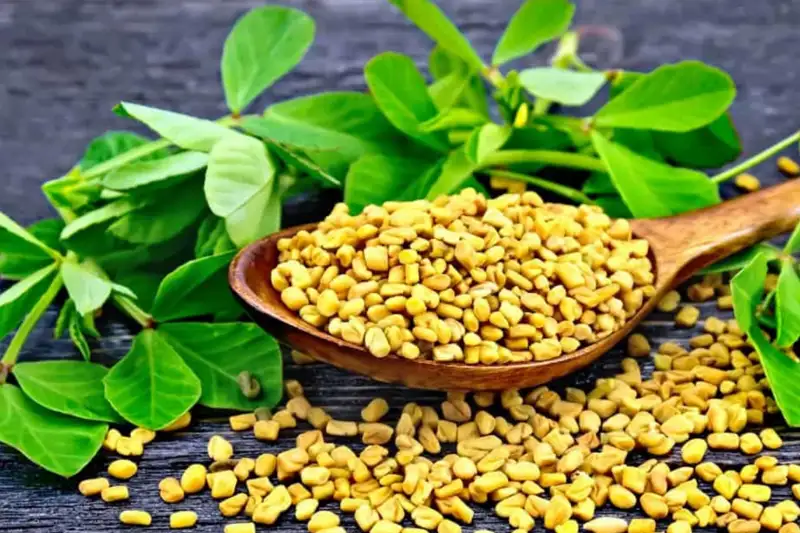
Fenugreek — Trigonella foenum-graecum — is an herb that has been used for centuries in both culinary and herbal medicine practices. The seeds originate from regions around the Mediterranean, Southern Europe, and West Asia.
In many ancient cultures, fenugreek was valued for its nutritive and strengthening properties. The seeds contain a range of active compounds that have been re-examined in modern studies. This article explores the applications of fenugreek based on current research findings.
The 5 Key Takeaways
- A specific type of fiber in fenugreek appears to influence blood sugar regulation.
- Certain extracts of this herb are used for hormonal issues such as PCOS.
- The seeds contain compounds that can support digestion on multiple fronts.
- Among athletes, fenugreek is sometimes used for muscle building and testosterone balance.
- This herb also contains interesting bioactive compounds for skin and hair health.
Nutritional Profile
Fenugreek seeds contain a combination of fiber, plant-based proteins, iron, magnesium, and vitamin B6 — nutrients important for recovery, muscle building, and energy metabolism. One tablespoon (11.1 grams) contains approximately 35 calories, with 6 grams of carbohydrates, of which 3 grams are fiber, and 3 grams of protein. Additionally, it contains antioxidants that help protect against cellular stress and inflammatory processes.
Pros and Cons of Fenugreek
Pros
- Supports stable blood sugar levels through its high soluble fiber content.
- May help relieve heartburn and promote digestion.
- Contains antioxidants that may help protect against cellular aging and inflammation.
- Being researched for applications in hormonal balance and energy level support.
Cons
- Can cause mild digestive issues such as diarrhea in some people.
- Not recommended in high doses during pregnancy due to possible effects on the uterus.
- Body odor may temporarily change due to compounds in the seeds.
- In rare cases, allergic reactions may occur in sensitive individuals.
Benefits of Fenugreek and Its Extracts
1. Blood Sugar Control
Fenugreek has been studied for some time in the context of blood sugar regulation. The seeds contain soluble fiber that slows the absorption of glucose into the bloodstream. In a study of people with type 2 diabetes, daily use of 10 grams of fenugreek seeds resulted in a reduction in both fasting blood sugar and HbA1c values. The effect appears to be most effective when combined with appropriate dietary patterns and exercise.
Read also: Why a Healthy Diet Is More Effective Than a Fecal Transplant
2. Digestive Health
Thanks to its fiber-rich profile, fenugreek seeds have been used for centuries for mild digestive complaints. They can contribute to regular bowel movements and provide relief from heartburn. In a modern study, a supplement based on fenugreek fiber was compared to a standard acid reflux medication. The results showed a reduction in symptoms, less use of additional medications, and improved overall comfort after meals.
3. Anti-inflammatory and Antioxidant Properties
Research indicates that fenugreek contains compounds such as flavonoids and saponins that can help reduce inflammatory responses. In animal models, fenugreek oil extracts showed a reduction in swelling and tissue damage. Oxidative stress was also reduced. These findings are currently being further investigated in the context of chronic conditions and recovery processes.
4. Breast Milk Production
Fenugreek is traditionally used in various cultures to support milk production in breastfeeding women. This effect is thought to be related to phytoestrogens: plant-based compounds that resemble estrogen and may stimulate natural production.
A network meta-analysis published in Phytotherapy Research (2018) analyzed five clinical studies with a total of 122 women. The results showed a statistically significant increase in milk production in women using fenugreek compared to a placebo group.
5. Testosterone and Libido
There is evidence that fenugreek extracts may influence testosterone levels and sexual function in men. In some studies, an increase in total serum testosterone is measured, as well as an improvement in libido and sense of vitality.
A 2020 meta-analysis (Phytotherapy Research) compiled data from four clinical studies. It showed a measurable increase in testosterone values in men who used a standardized fenugreek extract for several weeks.
Read also: Are Blackberries Healthy? History, Origin, Nutrients, and Kitchen Use + 3 Recipes
6. Weight and Satiety
The fiber in fenugreek can contribute to a feeling of fullness and reduced calorie intake. When used before meals, studies showed a reduction in hunger sensation, which can help with weight management over the long term.
A study published in Biomed Research International (2014) showed that an aqueous extract of fenugreek seeds (AqE-TFG) led to weight loss in test animals and improved metabolic parameters such as fat profile, insulin sensitivity, and leptin levels. The results suggest that this type of extract may influence both fat storage and glucose regulation.
7. Heart Health
Fenugreek contains soluble fiber that can reduce cholesterol absorption in the body. Through this binding capacity in the digestive tract, blood cholesterol levels can decrease, which is beneficial for heart function.
Animal studies have examined how fenugreek seed extract works in rats with diabetes-related heart problems. The treated groups showed a reduction in blood glucose, cholesterol, and triglycerides, while markers for antioxidant activity increased. Less damage to heart cells was also measured, which is relevant for conditions such as diabetic cardiomyopathy.
8. Skin and Hair Benefits
Fenugreek contains various bioactive compounds that are associated with supporting skin and hair growth. The antioxidants present can help limit damage from free radicals and thus slow skin aging. In practice, fenugreek seeds are sometimes used in face masks for acne or irritation. Fenugreek also appears in research on hair growth as a possible strengthening agent, particularly due to its protein and niacin content, which plays a role in hair follicle health.
9. Use in PCOS
Clinical studies have been conducted on the use of fenugreek extract in women with polycystic ovary syndrome (PCOS). A study of 50 women between 18 and 45 years examined the effect of a supplement with concentrated furostanol saponins. Participants took two 500 mg capsules of fenugreek seed extract daily for three months.
A significant portion of participants showed a reduction in ovarian volume and the number of cysts. Additionally, some had their menstrual cycle regulated, and a few women became pregnant. The extract was well tolerated, with no significant side effects. The study points to potential in supporting hormonal balance in PCOS, but requires confirmation in larger populations.
Nutritional Value of Fenugreek Seeds (per tablespoon / 11 grams)
| Nutrient | Amount |
|---|---|
| Energy | 35 kcal |
| Carbohydrates | 6 g |
| Fiber | 3 g |
| Protein | 3 g |
| Iron | 20% DV |
| Magnesium | 5% DV |
| Manganese | 7% DV |
| Vitamin B6 | 6% DV |
Side Effects and Precautions
In normal doses, fenugreek is safe for most people to use. However, there are some points to consider. The following side effects have been reported:
- Diarrhea
- Nausea
- Bloating
- Body odor resembling maple syrup
- Allergic reactions (rare)
Pregnant women are advised against using high doses of fenugreek due to its possible stimulating effect on the uterus. People with conditions sensitive to hormonal influences are also advised to consult with a healthcare provider beforehand, due to the phytoestrogenic properties of the herb.
Conclusion
Fenugreek is a versatile herb with a long history of use and a growing number of scientific applications. It contributes to blood sugar regulation, digestion, milk production, hormonal balance, and possibly recovery processes. Whether used as a spice, supplement, or tea — the composition of fenugreek makes it interesting for those seeking natural support for the body.
Verified Sources
- https://www.healthline.com/nutrition/fenugreek
- https://www.medicalnewstoday.com/articles/324334
- https://www.nccih.nih.gov/health/fenugreek
- https://www.health.com/nutrition/fenugreek-benefits
- https://www.sciencedirect.com/science/article/pii/S1658077X15301065
Related Articles





Frequently Asked Questions
What is fenugreek good for?
Fenugreek is being researched for its potential effects on blood sugar regulation, digestion, milk production, hormonal balance, and support for heart and skin health.
How do you use fenugreek seeds?
Fenugreek seeds can be soaked, ground, taken as a supplement, or made into tea, depending on the intended use and desired application.
Is fenugreek safe during pregnancy?
High doses are not recommended during pregnancy due to possible effects on the uterus. Always consult with a doctor if in doubt.
Does fenugreek help with weight loss?
Fenugreek contains fiber that can suppress appetite and promote a feeling of fullness, which can be supportive for weight management.
Can fenugreek affect hormones?
Fenugreek contains phytoestrogens and is being researched for hormonal issues such as PCOS, libido, and testosterone balance.