A week-long mind-body retreat led to consistent changes in the brain and at the molecular level. These shifts were associated with greater resilience, less pain, and faster recovery after stress.
Researchers from the University of California, San Diego describe how a short, intensive retreat—combining methods like meditation and self-healing—led to rapid and profound changes in brain activity and blood biomarkers.
The team discovered that the program activated natural physiological systems essential for brain plasticity, metabolism, immune function, and pain regulation. The study, published in Communications Biology, provides new evidence that mental and psychological exercises have measurable effects on physical health.
The 5 Key Takeaways
- Discover how an intensive week can fundamentally restructure the physical wiring of your brain at record speed.
- Researchers found that mental focus leaves measurable and lasting marks in your biological blood values.
- Brain scans from participants showed remarkable similarity to the effects of powerful psychedelic substances.
- Scientists observed how natural systems for pain relief and immune response were activated in surprising ways.
- Even in the laboratory, nerve cells showed unexpected growth after exposure to the biological results of the retreat.
A long history, little biology
Although meditation and other mind-body approaches have been used for millennia to promote well-being, the underlying biological mechanisms have remained largely unclear until now.
This new research is part of a million-dollar project funded by the InnerScience Research Fund. It is the first study to systematically measure the biological impact of a combination of techniques over a very short, concentrated period.

“We’ve known for years that meditation can influence health, but it’s remarkable that combining different exercises in one retreat affects so many biological systems simultaneously,” says lead researcher Hemal H. Patel, Ph.D., professor of anesthesiology at UC San Diego School of Medicine. “This goes beyond just stress reduction or relaxation; it’s about a fundamental change in how the brain processes reality. We can now demonstrate those changes biologically.”
Scientific proof for what we already knew!
For regular readers of Liberteque.com, Dr. Joe Dispenza is certainly no stranger. We have been writing with great enthusiasm about his groundbreaking methods for personal transformation for years. It is therefore fantastic to see that this large-scale research from the University of California now officially confirms what Joe Dispenza has always taught: that with the power of your own mind, you can fundamentally change your biology.
The fact that this now appears with hard numbers in a renowned publication like Communications Biology is a huge milestone for the mind-body community!
The experiment: an intensive retreat
The study involved 20 healthy adults who completed a seven-day residential program led by instructor and author Dr. Joe Dispenza. The retreat consisted of daily lectures, approximately 33 hours of guided meditation, and group healing sessions. It was conducted using an “open-label placebo model.” This means that participants knew the exercises were presented as placebo: treatments without active substances that still produce effects through expectation, social connection, and shared experience.
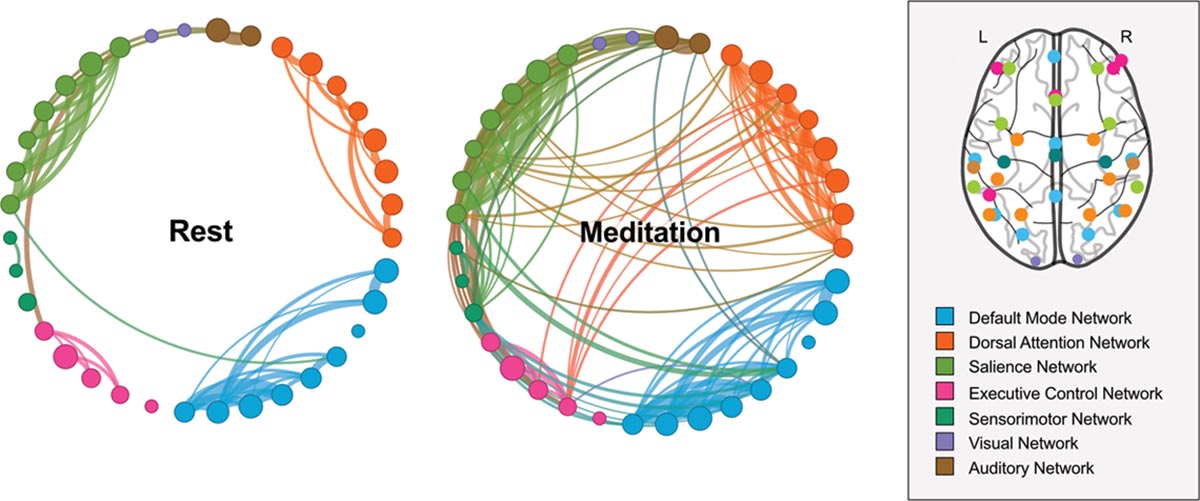
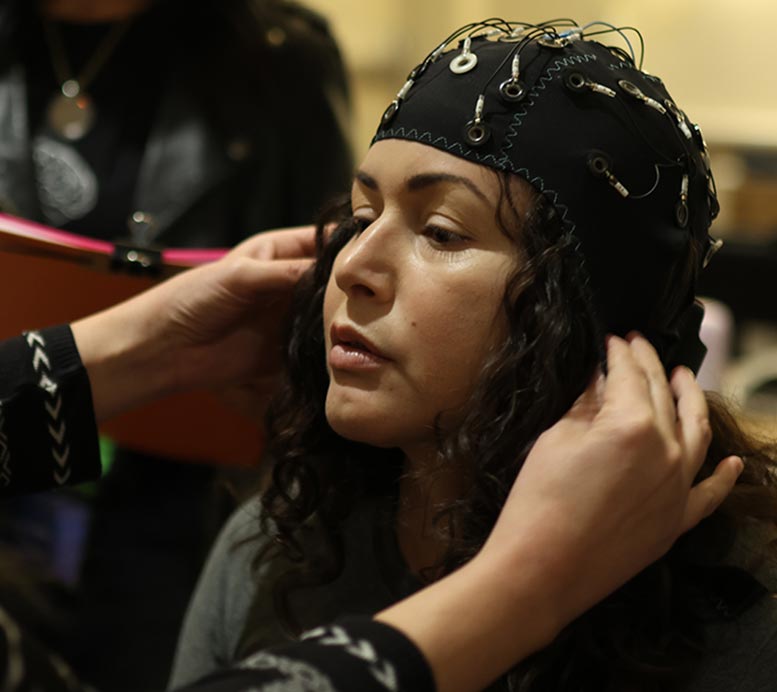
Before and after the retreat, participants underwent functional MRI scans (fMRI) to measure their brain activity in real time. Additionally, their blood was tested for changes in metabolism, immune activation, and other biological functions.
The main findings after the retreat were:
- Brain networks: Meditation resulted in reduced activity in brain regions linked to continuous rumination, resulting in more efficient overall brain function.
- Improved neuroplasticity: When laboratory-cultured nerve cells were exposed to blood plasma from after the retreat, these cells developed longer extensions and more connections. This points to greater capacity for neural growth.
- Metabolic shift: Cells treated with plasma from after the retreat showed higher sugar metabolism (glycolysis), indicating a metabolism that adapts more quickly to changing conditions.
- Natural pain relief: Participants had higher concentrations of the body’s own pain relievers (endogenous opioids) in their blood after the retreat, suggesting activation of natural pain management systems.
- Balanced immune system: Meditation increased both pro-inflammatory and anti-inflammatory signals, indicating a resilient and adaptive immune response.
- Genetic signals: Clear shifts were found in blood levels of small RNA molecules and gene activity, particularly in processes that drive brain function.
Participants also completed a questionnaire about their “mystical experiences” (feelings of unity and transcendence). Scores increased significantly after the retreat. There was a clear relationship with the biological data: the stronger the brain connections, the greater the likelihood of a mystical experience.
Parallels with psychedelics
The results suggest that intensive meditation can produce brain patterns that closely resemble the effects of psychedelic substances.
“We see the same mystical experiences and neural connection patterns that normally require psilocybin, but now they’re achieved purely through meditation,” says Patel. “The fact that we see this in both brain scans and blood values underscores that these exercises work at the whole-body level.”
Glossary of terms
- Neuroplasticity: The brain’s ability to form new connections and structurally adapt itself to new experiences.
- fMRI: An imaging technique that visualizes brain activity in real time by measuring changes in blood flow to brain regions.
- Endogenous opioids: Powerful, body-produced substances with pain-relieving effects that are created by the nervous system.
- Open-label placebo: An intervention where the participant knows that the treatment contains no active medical substances, but still experiences a physical effect through expectation.
The future in healthcare
The study provides a scientific basis for understanding how non-medicinal interventions can support health. By strengthening neuroplasticity and the immune system, these methods may help address stress, emotional complaints, and possibly even chronic pain.
The researchers emphasize that further research is needed in specific patient populations, such as people with mood disorders or autoimmune diseases, to establish the exact clinical benefits.
This research was supported by the InnerScience Research Fund and the Veterans Administration.
Conflict of interest: Co-author Joe Dispenza is employed by Encephalon, Inc., the company that organizes the retreats; the other authors declare no conflicts of interest.
In the future, the team wants to investigate which part of the retreat—the meditation, the theory, or the placebo treatment—has the most effect, and how long the results persist in the body. “This research shows how deeply mind and body are intertwined. What we believe and where we focus our attention leaves measurable marks in our biology,” says first author Alex Jinich-Diamant. “It’s a promising step toward better understanding the link between consciousness and physical health.”
Verified Sources
- “Neural and molecular changes during a mind-body reconceptualization, meditation, and open label placebo healing intervention” by Alex Jinich-Diamant et al., November 6, 2025, Communications Biology. DOI: 10.1038/s42003-025-09088-3
- With thanks to SciTechDaily
- UC San Diego Today – University news about the 7-day mind-body retreat with brain and blood measurements – Summary of the study and key outcomes.
- Communications Biology (Nature) – peer-reviewed article on neural and molecular changes during a 7-day retreat – Primary research with fMRI and multi-omics.
- PsyPost – Report on the research focusing on biomarkers and brain networks – Accessible explanation for lay readers.
- Health and Science – Fact-check on health effects of meditation – Critical context and state of evidence.
- Research journalism on risks of retreats – Notes and safety aspects.
Related Articles


Frequently Asked Questions
What does a meditation retreat do to your brain?
Short-term intensive practice appears to be associated with measurable shifts in brain networks involved in attention, emotion regulation, and pain modulation. In a recent study, changes in functional connectivity and task responses were observed before and after a 7-day program, consistent with rapid adaptation of neural circuits.
How quickly do you notice the effects of meditation?
With intensive programs, both subjective and objective effects can be seen within a week. Daily practice typically yields gradual gains; a retreat bundles many practice hours in a short time, making changes more visible in measurements and experience.
Which biomarkers change after an intensive retreat?
Researchers reported shifts in blood-related signaling pathways around neuroplasticity, metabolism, immune activity, and pain relief. Think of stress hormones and inflammatory markers moving toward recovery, alongside expression and metabolite patterns consistent with adaptation.
Is a 7-day meditation retreat safe for everyone?
For healthy adults under guidance, it is typically safe, but not suitable for everyone. For those with current mental health concerns, trauma, or medical conditions, prior consultation with a healthcare provider and a carefully chosen, well-guided setting is essential.
Can meditation reduce inflammation in the body?
There is evidence that intensive practice is associated with favorable shifts in inflammation-related signaling pathways. This suggests possible reduced inflammatory activity, though further research is needed to confirm causality and durability.