Can videos on social media really move things?
Robby Starbuck shows that they can. His campaigns are sharp and targeted. Companies are called out in public for their policies on diversity, equity, and inclusion. Not out of hate, he argues, but because ideals originally meant to connect people have, in his view, turned into mandatory correctness.
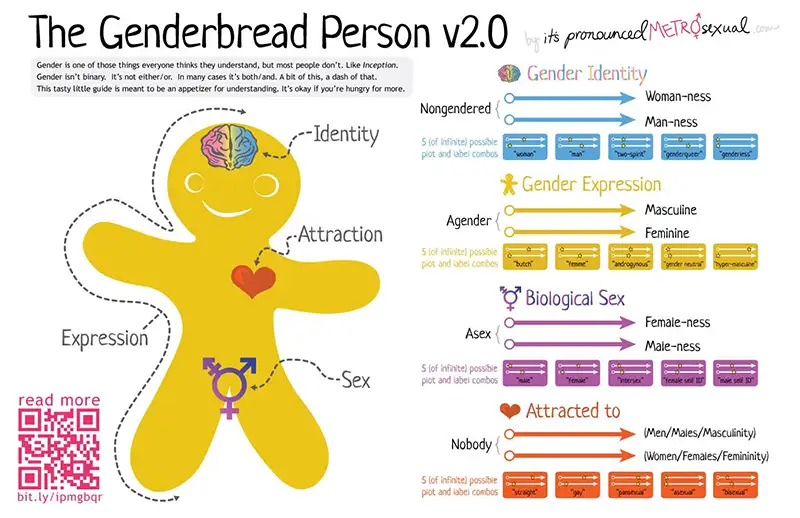
Starbuck takes aim at companies like John Deere, where employees received gender-diversity trainings that included the ‘genderbread person’, a model that explains how gender identity, biological sex, and sexual orientation differ. He was critical of the request asking employees to sign an ‘Ally Pledge’, a statement of solidarity with the LGBTQ community. According to Starbuck, that is not inclusion. It is ideology.
After his videos went up, John Deere announced a review of its trainings. Harley-Davidson followed soon after and rolled back parts of its diversity policy as well. Then bigger names came into view: Toyota, Target, Walmart.
Why are companies listening?
In the long-form interview that anchors this piece, Starbuck explains how he pulled this off. No lawsuits, no legislation. Pressure from the outside alone. He describes how his past as a director opened his eyes to what he calls the cultural erosion that seeps from the media industry into daily life.
What set the turn in motion
He started young, working with names like Natalie Portman, Jamie Foxx, and The Smashing Pumpkins. He directed music videos, campaigns, and documentaries. His company grew fast and worked with directors around the world. Somewhere along the way, he felt that his work was drifting from what gave it meaning. Culture is not neutral. It shapes a society, a moral compass, a sense of who we are.
When he became a father, that pull tightened. He saw how his oldest daughter was influenced by images he himself had helped circulate. The realisation landed: this touches more than other people. It walks into your own family. The change began there. Some projects he stopped. Others he let go. The reason was not duty. He wanted to set the example that his children could later follow. Character, he says, is built in the shadow of the choices you make, not under the spotlight.
What pushed it: what happened at school
The seed of Starbuck’s activism was planted when his oldest daughter came home from school. An elite school in California, as he puts it. A guest speaker had visited and lectured about ‘white privilege’ without informing parents in advance. His daughter said the speaker told white students they should not have lunch together without inviting students of other backgrounds, because those students might otherwise feel excluded.
An awkward moment at home became a turning point. He joked that she could mark him as her ‘token Latino’ since he is Cuban, which would let her tick the box. The joke pricked at something deeper. What is happening in our schools, exactly. And where is it coming from. He started looking. Not to attack, he says, but to understand how this framework had spread so widely.
Why a campaign against companies
What he found took him from the classroom into the boardroom. The same ideological frame his daughter encountered at school was visible in corporate life. What once started as conversations about bias or inclusion had, in his view, hardened into binding conviction inside corporate America. That shift accelerated, especially after the public debate that followed the death of George Floyd.
Starbuck saw the conversation playing out everywhere: in workplaces, in boardrooms, in training sessions, in marketing campaigns. That acceleration, he argues, changed something fundamental about how companies relate to their employees and their customers. A company that claims to be neutral is no longer neutral when it makes political ideals mandatory.
What drove him was not just disagreement with the content. It was the pattern: the pressure to fall in line, the absence of dissenting voices, the assumption that certain values should apply to everyone by default. He studied how past boycotts worked, how social media exerts influence, and reached a conclusion. The playing field has changed. A single video can reach further than a primetime segment on CNN. He wanted to use that reach, he says, to restore what he calls “a measure of common sense” to the cultural conversation.
His approach started with companies that have a conservative customer base. Those companies were not wrong, in his view. They were caught between public expectation and internal policy pressure. Anyone under pressure listens more closely. “I do not want companies to mirror my political position,” he says. “I want them to stop promoting ideology.”
Why did companies go along with this in the first place?
Why companies signed on en masse
The death of George Floyd was a pivot for many companies. Policies were drafted in haste, large investments followed, and there was a visible desire to be on the right side of history. According to Starbuck, that came partly from genuine emotion. It also came from fear. The fear of being the next company put on a public stake.
PR and HR departments warned that any company that did not actively profile itself on diversity, equity, and inclusion risked being seen as out of touch or even discriminatory. So agreements were signed, money was spent, and policy was rewritten, often without senior leaders engaging with the underlying definitions. Equality looked the same as equity. It is not.
Starbuck sees that as a critical misunderstanding. Under the banner of empathy, he argues, an ideological agenda rolled out that went well beyond equal opportunity. It did so without counterweight. Conservative voices, he says, were weakly organised. Meanwhile, activists from progressive movements, sometimes openly tied to political organising, were actively hired into DEI departments. The result, in his view, is that workplace policy became an extension of political conviction.
How can one person have this much influence?
Starbuck is aware of the paradox. He is not an organisation, not a lobby. He is one person with a camera and an idea. Social media changed the rules. When he launches a campaign, the reach is immediate and massive. Companies notice. A single video can move millions of consumers, with financial and reputational consequences.
Did companies come to him?
Some did. Starbuck describes three rough reactions. Some companies feel attacked. Others are relieved to have a reason to wind down DEI policy. A third group sits in between, weighing the situation depending on leadership’s convictions.
It comes down to the numbers, in his view. The numbers do not lie. When he targeted Tractor Supply, market value dropped by close to three billion dollars. At John Deere the loss ran past ten billion. Harley-Davidson held out the longest, and even there the board eventually bent under public pressure. Starbuck calls the Harley CEO a ‘true believer’, someone who genuinely believes in the progressive policy he champions. That direction does not match the customer base, in Starbuck’s reading. A brand that loses its identity loses its reason to exist.
The numbers seem to back him up. Harley reportedly lost more than sixty per cent in value year over year. With a new focus on electric motorcycles, a direction that lands poorly with the traditional Harley audience, Starbuck fears the brand is losing its core customer. Fewer than a hundred motorcycles sold in a single quarter. For a name that once stood for American independence, that is a painful figure.
What the brand needs, according to Starbuck, is leadership that understands what made Harley great. Connection, culture, grit, without political ballast. Someone willing to say: “We are stepping out of the policy-shaping business and returning to the customer.”
Why are people listening to him?
Social media often runs on reach. According to Starbuck, what really matters is action. His followers are not passive. They respond, they share, they walk away as customers. That makes a difference.
He calls it ‘force multiplication’. One video is rarely standalone. It starts a chain. Other accounts pick it up, large accounts amplify the message, podcasts dig in, the press picks up the thread, from left to right. A longer stream of attention follows. Not a single spike in a news cycle, but weeks or months of continuous visibility. A pressure wave that does not subside quickly.
Companies see that in their data. A billion-impression event lands hard, whether the framing is positive or negative. Negative attention is not free. It costs trust, customers, share price. Starbuck argues that the market increasingly rewards companies that step back from DEI, while companies that hold the line tend to pay a price.
His approach: dialogue first, then action
He claims no pleasure in public takedowns. In many cases his team first contacts the company in question. They ask questions, verify information, offer room for conversation. Where there is willingness to change, that path takes precedence. The aim is not destruction. The aim is shift.
That works when the willingness is real. Companies that substantively step back from a policy get a different kind of story. Starbuck points out that such announcements get fewer clicks than sharp criticism, yet they are more valuable in the long run. Real change deserves attention and space.
Why do some companies pivot within days?
Skepticism is common in the early days. According to Starbuck, the first companies tested his influence. What actually happens when they push back? The result was measurable: declining store traffic, negative media coverage, a falling share price. After that came the counter-reactions, and those were surprisingly mild. His followers, he says, are forgiving. When a company steps back from a policy, that is enough for many of them.
That balance, between criticism and recovery, is part of the strategy. There is a stick. There is also a carrot. The carrot is not a reward. It is room for repair. Companies that change get the chance to reposition themselves, and that often turns out to be profitable.
Changes without a public campaign
Some companies never needed a campaign. Coors and Jack Daniel’s were approached directly. The team explained what was on the table, and the companies decided to adjust policy in advance. Walmart did the same. Before its name was named in public, it had already revised parts of its policy.
The specifics, according to Starbuck, involved products and events aimed at children that he saw as sexually inappropriate. Chest binders, books about gender transition, and events where children encountered adult sexual themes. Walmart reviewed or paused those activities.
He leaves room for skepticism, though. Not every statement is taken at face value. If a company says it wants to change but the actions do not follow, the original exposure runs anyway. Change without conviction is hollow. Hollow change does not hold.
The confusion at JPMorgan Chase
What happens behind closed doors at a bank like JPMorgan Chase tends to stay out of view, even for long-standing customers. The same may have been true at the top. A thirty-billion-dollar investment programme aimed at racial equity looked, on paper, ambitious and even brave. When critical questions surfaced, however, the CEO seemed caught off guard. Not by the public debate, but by his own lack of awareness.
The execution of that policy included elements that still draw sharp reactions today. Money flowed into a youth event with Dylan Mulvaney, a public figure who draws admiration from some and aversion from others. Training sessions used methods like the ‘Genderbread Person’ to discuss the differences between gender, sex, and orientation. Not everyone considered that appropriate. Some saw something more juvenile than informative. The gap in interpretation was wide, perhaps too wide for a workplace that runs on cooperation.
Is it then meaningless?
There are people who genuinely benefited from these trainings. The idea that identity is not one-dimensional, and that making space for someone’s story is a form of respect, has been freeing for many. There is also unease. The unease is not about inclusion as such. It is about the firmness with which new terms and norms are introduced, as though doubt itself is suspect.
That creates friction, especially when the framework collides with intuition, lived experience, or upbringing. When someone feels pressed to adopt language or stances that feel fundamentally unfamiliar, resistance follows. Sometimes loud, sometimes quiet. Companies try to navigate this tension. JPMorgan Chase seemed to commit to a clear path until the criticism became visible. What followed was a faster pivot than expected. The CEO told an internal meeting that he had long wondered why so much money was being spent on what he called “nonsense”. A reversal that may say more about how disengaged the top had been than about the policy itself.
What you think, you become. What you feel, you attract. What you imagine, you create. ~ Buddha
On equality, and what makes it uncomfortable
Diversity sounds like a self-evident good. People from different backgrounds working together, complementing each other, enriching the work. It is an ideal that is broadly shared. The trouble starts when equity, often defined as equal outcomes, is introduced as a guiding principle. Who decides what is fair? What happens to those who advanced through effort, dedication, or sheer talent?
In some interpretations, a policy designed to support gradually becomes a system that discourages. The question is no longer what someone does, it is who someone is. That cuts against classical ideas of justice and against a basic sense of balance. What is left of motivation when outcomes are levelled regardless of input?
The fear under the surface is not new. The idea that equality can flip into control, and that control runs through new channels: technology, corporate policy, public morality. It evokes images of systems where individuality is subordinated to the collective. No state coercion, but social pressure through algorithms and policy memos. A creeping process, hard to capture in numbers, easy to feel in atmosphere.
Alliance under pressure: the duty to fall in line
In some companies, moral stances are not just encouraged. They are required. At John Deere this took the form of the so-called Ally Pledge, a commitment in which employees declared themselves allies of the LGBTQ+ community, including a pledge to keep learning about discrimination throughout their careers. On its face that may read as solidarity. For many people it played out more like an obligation than an invitation.
What do you do when such a pledge cuts against your worldview? For some believers, signing meant inner conflict. The hesitation was not about respect for colleagues. The wording clashed with what they themselves hold to be true. The catch was real: performance reviews were partly tied to participation in these initiatives. Saying no risked a lower rating, a missed bonus, or a stalled career. The line between choice and pressure grew thin.
When loyalty becomes one-way
The discomfort did not arise because people could not relate to colleagues from different backgrounds. The opposite was often true. There was mutual respect. When that respect was suddenly tied to an explicit declaration, with measurable consequences, the climate shifted. Who signed and who did not became visible. In an environment that runs on social bond, saying no began to feel like isolating yourself.
Connection turned into division. Not from hate or intolerance, but because the room to act from integrity narrowed. John Deere was called out in public. The company kept its DEI department, yet the conversation did not end. Insiders and outsiders alike say tension remains between policy and practice. That tension touches something fundamental: how companies handle values that collide with their own ideals.
Word salad and quiet protest
Other companies are struggling too. PepsiCo announced an end to ‘aspirational goals’ while simultaneously framing this as a deeper commitment to inclusion. To outsiders that may sound contradictory. Internally it often comes down to legal balancing. There is pressure to step back from ideological programming. There is also pressure to avoid the appearance of abandoning fundamental values.
The actual practice is less vague. Training modules are pulled. Web pages go offline. Sponsorship deals with advocacy groups such as the HRC, the Human Rights Campaign, are ended. The driver is not hostility. The political charge had grown too heavy. For some, that registers as a loss. For others, it lands as a return to sobriety. For many employees, the change feels like a step back to a workplace with room for difference and without moral obligation.
The language stays murky. The underlying question is sharper: what is actually changing? Look past the statements at what companies are actually doing and a course correction appears. It is less a return to the past than an attempt to find balance during a period of rapid moral change. That, however uncomfortable, may be exactly what is needed.
Why do companies speak in riddles?
There is a reason some corporate statements feel like a tangle of vague terms and hollow promises. Behind the ‘word salad’ often sits legal caution. Some states have announced they want to prosecute companies they consider to be crossing the lines of civil rights law. Whether they prevail in court is uncertain. The cost of time, reputation damage, and legal fees is real.
That creates an odd balance. Policy elements get pulled. The rhetoric of ‘inclusion’ stays upright. The company seems to want to say something without quite saying it: that going forward it will include everyone, including those who felt excluded by the DEI framework itself. That nuance is hard to articulate, especially when the terms themselves have become loaded. Words like ‘diversity’ and ‘equality’ read to some as banners of exclusion.
In this landscape, whistleblowers play a central role. They serve as the conscience inside companies. When policy changes in name only and continues in practice, an insider often raises the flag again. That is when it becomes visible whether the shift was about intent or only image.
An exception: the Costco path
Against this backdrop, Costco stands out. The company held to its policy despite outside pressure. Customers kept coming, revenue kept growing. The full story is not yet written. Unlike many other companies, Costco’s DEI policy dates back decades, well before the broader cultural debate that erupted after 2020.
The question still surfaces here too: are all of those measures still consistent with the law? Some elements look strained against existing rules on equal treatment. The issue is not the intent. The issue is the risk of preferential treatment based on race or gender. Supporters see this as a correction of historical inequity. There is no formal legal framework for that approach yet. A free country also means that laws apply to everyone, intent aside.
The limits of correction
The tension runs deep. On one hand, this society has historically produced inequality. On the other, laws exist to correct that by treating everyone equally. What if a well-intended policy produces new inequality? Internships available only to people from a particular background. Reviews that factor in immutable characteristics.
That triggers resistance, not because people reject justice but because they wonder whether this route truly leads to anything better. Should a company like Costco have the right to shape its own values, even when those values clash with the law? Or does the line sit there, where individual freedom meets collective responsibility?
Judged on actions, not on characteristics
At the centre sits one core question: on what basis do we judge people? On behaviour, effort, and values, or on traits they cannot change? Colour, origin, gender. They are real parts of who we are. Should they decide how we are treated?
Anyone who returns to the civil-rights ideal of judging people by their character rather than their skin colour sees something disquieting in the shift. In an attempt to do good, we risk sliding back into judgement by appearance. That asks for something difficult: an ethic built on individual responsibility. The point is not to reject diversity. The point is to recognise shared humanity.
‘White supremacy’ and the fractured debate
When words lose their meaning, what stays behind is confusion. On a broadcast hosted by Al Sharpton, the wind-down of DEI policy was described as a white-supremacist move, designed to erase not just policy but history. Statements like that are emotionally loaded, which makes them hard to interpret. What is left of such terms when they are applied to more and more people who are not part of the supposed power centre?
When someone with a Latin-American background is accused of white supremacy, something fundamental snags. Not only against reality but against the framework itself. What was originally meant to make power structures visible loses its edge when spread across anyone who voices criticism. In that blurring, concern for real inequity gets muddied. If everything is racist, nothing is.
Did anything exist before DEI?
There is a thought hiding under the claim that ending DEI policy equals erasing an existence. What is actually being said with that? That people only became visible once a label was placed on them? The history of inclusion is older than the term. Human dignity, justice, these are values that have been carried for generations, especially outside institutions.
DEI was meant as a vehicle to structure those values. In practice it became more than that. Training programmes, quotas, prescribed language acquired an ideological charge that ran past what many considered desirable. What sounded warm and inviting, diversity and inclusion, became for some a source of exclusion. That stings. It stings because it started from an ideal.
Word and reality
Many people embrace the idea of a workplace where nobody is shut out. They want colleagues with different stories and different backgrounds. That desire is genuine, more broadly shared than is often assumed. When that desire gets institutionalised through strict frameworks and political beliefs, some people lose their place. The reason is not that they are against diversity. They no longer recognise themselves in the framework.
There are companies where employees feel obliged to affirm beliefs they have no personal stake in. Where naming a pronoun is no longer simple courtesy. It is a test of loyalty. When political preference becomes part of those expectations, the room for dissenting voices shrinks. That shows up in practice, in evaluations, promotions, and the social dynamics on the floor.
Equal treatment as a vanishing point
Some people grew up during the civil-rights era under a simple, powerful principle: judge people not by the colour of their skin, but by the content of their character. That principle has in some places been swapped for a new yardstick. Not who you are or what you do, but where you came from, determines your place. Internships limited to certain groups, hiring practices that favour visible traits, are a reality that is increasingly questioned.
Supporters see it as a correction. Critics see a repeat of exactly what we once wanted to leave behind. The difference sits in perspective and in trust. Once policy is experienced as unequal or biased, the willingness to go along with it disappears. Nobody wants to return to a past of exclusion. The way forward may demand more honesty than slogans can offer.
On symbols and reality: the lesson of the end zone
A few years ago, the NFL ran a spot endorsing LGBTQ acceptance, prompted by a player’s coming out. Today the same spot would likely generate more controversy than applause. That says something about how fast the culture is shifting, and how cautious companies have become about public statements.
It is notable that even the line ‘End Racism’ has been replaced with the more neutral ‘Choose Love’. What appears on the field looks symbolic, yet it touches something larger. After years of hashtag campaigns in sports stadiums, a recognition is settling in: slogans on grass do not solve structural problems. Racism does not vanish through a phrase. Yet international comparisons show that many other countries deal with deeper forms of exclusion than the United States.
That does not make American self-criticism wrong. It makes it layered. Why would so many try to come here if the country were truly unlivable? What does that say about the paradox of freedom, that in a free country you are also free to criticise that country, sometimes to the point of absurdity?
A provocative thought experiment
Sometimes the debate hits a point where absurdity becomes attractive as a mirror. A thought experiment: what if people who deeply condemn the country were offered an alternative? Compensation, relocation, everything paid, in exchange for giving up citizenship. Would they go? Or would they stay, because love for the country sits deeper than they admit?
The provocation is clear. This is not a policy proposal. It is a reflection on how complicated it is to stay loyal to something imperfect. And how quickly the room for criticism gets confused with rejection of the whole. There is a difference between pushing back against something and seeing nothing in it anymore.
The pitfall of celebrities as a moral compass
Some well-known Americans have actually left the country, or spoken about it in the media. Whether that should set the direction for societal choices is another question. People in the spotlight live under heavy pressure, often surrounded by uncertainty and isolation. The outside shines while the inside is often more fragile than people assume.
For young people it is tempting to follow celebrities in style, conviction, and moral choice. Behind their convictions, however, often sits a life of distrust and loneliness. That does not make their opinions worthless. It makes them less universal than they sometimes sound. It is wiser to seek direction in values that are broadly shared and in experiences that sit closer to our own lives.
From policy to incentive: what really drives change?
Former President Trump’s decision to ban DEI in federal institutions read as a strong signal to many. Not only for the content, but for the intent behind it: a return to what supporters call common sense. Whether that ban came from outside pressure or from a broader sense of social fatigue is, in a sense, secondary. The direction was clear.
At its core, the argument runs, every society runs on incentive. What gets rewarded grows. What gets discouraged fades. Some advocate for a system where companies feel so clearly that DEI is no longer welcome that they correct course on their own. Not through dialogue, through pressure. Penalty for those who stay, preference for those who exit.
That strategy sounds hard, because it is. In the view of its advocates, softness was the problem. For too long, they say, room was given to policies that sowed division under the banner of equality. When the government actively contributes to that, for example through procurement rules, the government also has to actively undo it. Not on a voluntary basis, decisively.
Big Tech and the masking of belief
In the tech world the tone is subtler. Some influential voices appear to be stepping back from earlier DEI policy. The accents shift, new priorities are stated. Look closely and there is also restraint. The people who run the algorithms know better than anyone how quickly public mood can turn.
There are exceptions. Elon Musk, David Sacks, voices openly advocating for less ideologically tinted corporate management. Whether their influence reaches into the core of companies like Google or Meta is uncertain. Most organisations seem to adapt to the moment rather than to the principle. Enough to wait out the storm. Not always enough to turn the tide.
An economy with room for difference
What remains is the desire for a society where consumers and employees do not have to disown themselves to take part. Where shopping is not a moral test, and work is not an ideological battleground. That asks for more than a policy change. It asks for a new balance, where differences are recognised without becoming all-defining.
Whether that lands depends on the capacity to see past slogans and sentiment. Freedom asks not only for space, it asks for responsibility. That is where the challenge sits, for companies, for governments, and for each of us.
The language of merit and inequality
It is striking how quickly the term DEI gets tied, in certain circles, to one population group. As if ‘diversity’ only means Black. As if every discussion about equal opportunity must be narrowed to one ethnicity. That raises a question. Where does that reflex come from? More importantly, what does it say about our collective mental frame?
When people equate DEI with ‘Black’, an implicit assumption seems to be at work: that people with Black skin would not make it without help. That in a merit-based system they would fall short by default. That thought, however well-intended at times, carries an uncomfortable charge. What does it say about how we see human beings if we do not believe in the capacity of individuals, regardless of origin, to thrive?
In practice we see success stories from every corner of society. Not because of quotas or programmes, but through effort, through trial and error, through perseverance. That holds for people from dominant groups and for those whose families were locked out for generations. Those who got even a small opening often opened a world. Perhaps that is the heart of the discomfort: merit does not move uniformly, and the rules of the game are not always neutral.
The paradox of intent and impact
It is sometimes said almost casually that women, African-Americans, or Latinos will struggle if selection runs on merit alone. As though it were obvious. Under that ease sits something that grates. What if the emphasis on ‘support structures’ is confused with a lack of trust in resilience? What if that protection, however well-meant, achieves the opposite, a stalled status quo?
Many people who make those remarks speak from a collective past. A history of exclusion, disruption, marginalisation. That past is not every individual’s personal story. There is a difference between inherited pain and lived experience. Sometimes it is forgotten that people also carry hope, not only historical trauma.
Stories of rising from poverty, of breakthrough despite disadvantage, exist in abundance. Often they happen not because of state policy, but through the invisible force of survival, family, faith, or sheer determination. In that sense the American idea of ‘making yourself’ is not a myth but a wellspring of belief. Not accessible to everyone, not without obstacles, yet fundamentally hopeful.
What you think, you become. What you feel, you attract. What you imagine, you create. ~ Buddha
The quiet pressure of measurability
The Corporate Equality Index, a system that scores companies on their commitment to LGBTQ+ inclusion, looks at first glance like an administrative list. In practice it functions like something else. A moral scorecard. The more visible support you show for certain themes, the higher you score. Behind that sits an uncomfortable tension. What happens to authenticity when conformity is rewarded?
It is no longer only about how you treat your employees or how safe the workplace is. Companies are also scored on how many external events they sponsor, how many rainbow flags they fly, how visibly they signal involvement. Something else gets lost along the way: real connection that does not need to be advertised, that is felt in how people treat each other.
That may be the core problem: the pressure to perform on a particular index can outweigh the work of building a culture of respect, trust, and basic humanity. A question is rising in the hallways of companies: who are we doing this for?
Where does the line of inclusion sit?
In debates about care, identity, and policy, moral lines get blurred fast. That some health-insurance plans cover transgender care, including for minors, reads to some as progress and to others as a point of deep concern. What one person classifies as human rights, another experiences as a breach of fundamental belief. That tension is real, and it does not go away through argument.
For people with explicit religious or ethical limits, it can be confronting if their premiums or pensions, through an employer, indirectly support care they do not endorse. That is not only about the care itself, it touches on a sense of complicity. The result is emotionally charged, hard to discuss without polarisation.
The price of recognition
Some companies received a perfect score on the Corporate Equality Index. On paper that reads as noble: recognition for inclusion, acceptance, equality. In practice those scores were sometimes earned through policy that went past workplace safety. Conditions were attached: sponsored events, visible support, coverage for transition-related care including for children, depending on state law.
For those who see that policy as a form of care, it feels natural. For others it touches a deep ethical limit. When that difference shows up in policy backed by billions of dollars, worlds collide. Not because people lack compassion, but because compassion means something very different from one person to the next.
Movement inside the standoff
As the conversation became more visible, some companies began to pull back. Not all of them, and not at the same pace, but the shift was felt. Policy documents were rewritten, the focus moved cautiously from public statement to restraint. To some that registered as a win. To others it read as a loss of moral stance.
What we see in this is not a definitive answer but a process. A tension between social pressure and inner conviction. Between what has to be visible and what is bearable. That may be the larger challenge of this period: how to keep room for difference without the conversation immediately escalating into hostility.
Money, values, and influence
The Human Rights Campaign, prominent inside corporate America for years, turned out to be heavily reliant on donations from that same sector. A mutually reinforcing dynamic: companies supported the HRC and received public recognition on moral themes in return. As public criticism grew, that arrangement shifted too. Staff were laid off, support was reduced.
On its website the range of themes is broad: LGBTQ+ rights, reproductive rights, social justice. That breadth raises questions. Who decides what falls under human rights? Where does that definition start and end? The question gets sharper when government money is in the mix.
The role of companies in moral terrain
In a year of sharp political contrast, some organisations openly entered the debate. Not as observer, as participant. They took positions, used pointed language, named enemies. Companies that aligned with these organisations saw that choice reflected back in the public response.
That raises a broader question. What is a company’s role inside societal tension? Servant of the customer or spokesperson of a worldview? Should they hold back or lead on social change? There is no easy answer. The one lesson worth taking may be this: companies, like people, have to be careful about what they choose to align with and how they do it.
A film as a mirror
The documentary The War on Children tries to make visible what many parents have felt for a while: children are growing up in a world where the direction of their development is no longer self-evident. From gender identity to mental health, from the influence of social media to a shifting school climate, these are not isolated phenomena but overlapping movements that together shape a new parenting landscape.
In conversations with parents, young people, and teachers, the same concern keeps surfacing: the pace of change is so high that reflection has barely become possible. How do you protect children without closing them off? How do you stay open without losing your foundations? That tension sits at the centre of many contemporary debates, and the film exposes it without flinching.
The thin line between platforms and principles
That a film like this gets blocked from major platforms like TikTok, or temporarily blocked on Amazon Prime, raises fundamental questions. Is it about protecting vulnerable groups? Is it about controlling a narrative? Who decides where the line sits?
The lifting of those blocks seems to hinge on a political pivot point. That feeds a broader unease. When companies allow or refuse content based on who is in power, what is left of the neutrality of public debate? It may be naive to still expect that neutrality. We may already be past that point. The desire for it remains.
The algorithmic upbringing
TikTok, with its near-compulsive pull, is for many young people a first source of information, recognition, and reflection. That is exactly where the snag is. The app offers a digital world where everything looks fluid: identity, truth, body. For someone in confusion, that can open room. For someone in search, it can also blur the search.
The idea that children are algorithmically exposed to gender and transition content draws strong reactions. The subject is not taboo. The way it lands, unrequested, repeated, simplified, leaves little room for nuance. What once sat inside a private conversation now plays out in short videos shared with millions.
A parallel reality
The Chinese version of TikTok, Douyin, is a completely different app. Children there see videos about science, art, and national identity. Their screen time is limited. The content is educational, structured, nationally focused. The contrast with the Western version is striking. That is not far-fetched theory. It is visible, comparable, verifiable.
The question is not whether young people would be happier there. The question is: what does it say about our priorities? More important still: why do we take for granted that our children spend their days navigating content that does not only entertain but also forms them, with little guiding hand in return?
Bringing the conversation back
The film does not lecture. It documents. That is where its force sits. In focus groups, young people describe what they see, what they click, what touches them. Not directed, not manipulated, simply their experience. The picture is anything but uniform. It is important. In those stories there is a chance to learn how to listen again. Maybe to recover something we lost along the way: the conversation across generations.
It may sound innocent: an algorithm that shows you more of what you like. Cat videos, football, an unexpected reunion between soldiers and their family. Yet there is something less visible behind it.
What you see the moment you sign up to platforms like TikTok is rarely random. The system works with data that already exists about you. Age. Interests. Demographic assumptions. When you are young, sensitive to validation, and looking for direction, that is the soil on which the algorithm tunes its offering. A teenager who falls into pop culture can drift unnoticed into increasingly extreme suggestions. Not because someone deliberately steered it, but because the system spots the pattern and amplifies it.
In the documentary, a young woman named Layla Jane describes how, at twelve, she encountered gender dysphoria for the first time. One click. One video. Then another. The content kept coming back, as if the algorithm held on to her and would not let go. She discovered through social media that transition was even possible, something she had no notion of until then.
It hit her, as a young, traumatised girl going through early puberty. She grabbed on to what came her way as a handhold. It led to far-reaching choices: hormones, a double mastectomy, all before her fourteenth birthday. She says it herself: it felt like her life was being erased at critical points.
The indignation that follows is hard to ignore. That a girl, clearly struggling with herself and her environment, was steered so fast toward medical intervention, that grates. People hold responsibility for that. A procedure was performed, a payment collected, and the system moved on. A pain remains that does not forgive easily.
‘War on children’ sounds like an exaggeration. Then you look at the numbers and where they come from.
0.08 per cent sounds small. A reassuring figure, perhaps. Zoom in on specific regions and the contour changes. There are areas where the percentage of children who identify as transgender runs many times higher. In some public schools in California, more than twenty per cent of students say they sit somewhere on the LGBTQ spectrum. That is not a coincidence. That is a pattern.
Not every child undergoes surgery, true. Thousands receive medical treatments. The problem is that exact figures are scarce. Many health systems do not publish those numbers openly. When they do, extrapolations often reveal numbers larger than previously assumed. That opacity feeds the confusion, and the concern.
For some, this points to a social dynamic spreading rapidly. A kind of social contagion, some say, not in a malicious sense but as a result of collective vulnerability in a time of identity searching. That dynamic does not happen everywhere, not at that scale. It does happen often, in the Western world. In America. In urban regions. In classrooms where children learn at a young age to place themselves inside a grid of terms, boxes, and meanings.
Most young people doubt. Many eventually return to their original sense of self.
Doubt is part of growing up. It is near universal that teenagers ask themselves who they are, sometimes deeply, sometimes briefly. What previous generations allowed as room for experiment and reversal now in some cases turns into irreversible decisions. What once was an uncomfortable haircut that grew out has, in some cases, become a lifelong scar.
There is something painful in the thought that young people, in the middle of their vulnerability, undergo medical steps that permanently alter their bodies. The intent is rarely malicious. The search is for clarity. Calm. An answer to a feeling of being unhoused in their own body. When those decisions are made so early, before adulthood has settled in, very little margin remains to change one’s mind without trace. Those traces can run deep, physically and emotionally.
Some people genuinely feel different and report being happier after transition
Some people say with conviction that they have felt different since their earliest memories. Their body and inner experience did not match. That is recognised. In psychiatry, gender dysphoria has been described for decades. That does not mean every conviction is automatically grounded in fact. In other contexts we see the same: people can live with a deeply held inner conviction that is absolute for them, while the outside world does not share it.
The question that follows is both painful and philosophical: do you have to affirm every conviction, when affirmation is at the same time irreversible and potentially harmful? What is truth in cases like this? What is our responsibility, as bystanders, as caregivers, as parents?
Yes, some people feel better after transition. That right belongs to adulthood.
There are adults who choose transition with full autonomy and find peace in it. That right is not at issue. When the same route is made available to children, young people still in development, who do not yet fully understand the consequences, the ethical line shifts.
The interviews show how some young people, without in-depth psychological assessment, started puberty blockers, hormones, and even surgery. Crucial questions, about trauma, abuse, family situations, often were not asked. Everything was geared toward affirmation. Affirmation had to happen. That appeared to be the starting point, even when parents were concerned or refused to keep pace. In one wrenching case, that tension led to the loss of parental authority and, eventually, to a tragedy that words cannot hold. The mother in the documentary describes the moment her daughter, under state oversight, took her own life. She had tried to protect her child and was not given the room.
What you think, you become. What you feel, you attract. What you imagine, you create. ~ Buddha
That is what makes this theme so complex. It is about vulnerability, identity, power, and loss. About children who are searching. About adults who act. About systems that legitimise decisions from which no one seems able to walk back.
In Tennessee, a law was passed banning puberty blockers and gender-affirming procedures for minors. Protection or restriction?
When parents say, “Let me decide what is good for my child,” they invoke something fundamental. Parental authority. The freedom to choose. That freedom sometimes meets another limit, that of protection. Tennessee enacted legislation that bans medical interventions related to gender identity for minors. Some see this as an undermining of parental rights. Others see it as a necessary measure.
In public debate, it has been compared to other bans: a parent cannot give a child drugs simply because the parent chooses to. From that perspective, the issue is not autonomy but prevention. The protection of children, especially when they cannot yet grasp the consequences of their choices. The law passed not because parents have nothing to say but because society as a whole drew a line, a limit of permissibility intended to prevent irreversible harm.
What is the role of schools when children wrestle with identity? And what may parents know?
In some states the policy is now set up so that schools can withhold information about a child’s gender expression from parents. The reasoning is protection, protection against rejection or misunderstanding at home. There is friction in that. Parents are at the core responsible for the wellbeing of their child, which means they must know what is going on. Not to control, to be present when it counts.
Schools have a supporting role. They are not substitute parents. The balance between a child’s autonomy and a parent’s involvement is delicate, and it is being tested sharply. When information is withheld out of fear of a reaction, the question remains: who is protecting whom?
The word ‘groomer’ enters the debate, loaded and polarising
In heated discussions about gender and parenting, terms get used that leave little room for nuance. A politician was called a ‘groomer’, a word typically used for people who emotionally prepare children for sexual abuse. In this case the term was meant more broadly: as criticism of what is seen as an ideological movement that normalises gender topics in places and at ages some find inappropriate.
An uncomfortable tension surfaces here. People inside the LGBTQ+ community speak out forcefully against how these themes appear in children’s culture, in books, animated series, or educational programming. Their concern is about speed, tone, and the matter-of-factness with which some topics are presented. The objection is not to recognition. The point is that children need time and room to discover for themselves who they are, without pressure in any direction.
Where is the line between concern and ideology?
In conversations about identity and upbringing, sooner or later one question lands: what happens to children who feel different from the norm? Among young people who identify within the LGBTQ+ community, mental-health problems are strikingly common. That alone is reason for concern. Some see in that a call for more acceptance. Others see a structural problem: young people pulled too quickly into a narrative where questions can no longer be asked.
Critics point to political motives. Not only a search for recognition or safety, but an ideological agenda tied to activism, to specific schools of thought. The claim that some children who would once have identified as gay are now nudged toward identifying as transgender touches on a deeply felt confusion. What is honest self-exploration and what is steering? When is it discovery, and when does it become shaping?
“We are coming for your children”: taken out of context, or precisely the context?
The documentary cites a woman invoking a public-square phrase: “We are coming for your children.” A sentence that at first reads as provocative, a jab at conservative anxieties. When the same words appear in recordings of public demonstrations, the tone changes. It sounds like a joke. On repetition, in specific contexts, it grates.
Provocation and earnestness are hard to separate in matters like this. What is satire to one is proof to another. That is what makes the conversation so loaded. It is not only about words. It is about deep-rooted distrust on both sides.
What may children learn? When does something become ideology?
Books, animations, school libraries are no longer neutral domains. Some parents feel that through these channels, certain topics are introduced that they believe do not belong in young children’s lives. The objection is not always about sexual orientation. It is often about explicit content and the way it is presented.
Books like Gender Queer come up. Not only for the theme but for the direct imagery. Resistance grows against what some see as the normalisation of adult content inside children’s culture. Animations featuring drag queens. Characters undergoing gender transition in children’s series. The question follows: who decides what is appropriate? Who has the last word, educators, institutions, or the wider culture?
Conclusion
This piece opened with a question about the power of social-media videos. The answer, embodied by Robby Starbuck, is not only ‘yes’. It also exposes the fragility of institutions that allow themselves to be guided by ideology rather than by their core task or basic common sense.
Starbuck proved that targeted pressure through YouTube and Twitter could force companies like John Deere and Harley-Davidson to roll back DEI policies that for many felt like mandatory ‘woke’ indoctrination.
This is more than a commercial reaction. It is a reckoning with a period in which fear of public shaming and a blind embrace of activist agendas produced policy at odds with the values of employees and customers. The signal is clear: the time of uncontested ‘woke’ hegemony in boardrooms is winding down.
The hardest impact of that ideological pressure appears to land on the most vulnerable: children. The piece lays bare how young people, searching and often confused in adolescence, were exposed through algorithms on platforms like TikTok or through specific approaches at school to ideas and even medical paths with life-changing consequences.
The accounts of young people who underwent irreversible physical interventions at an age when they could not foresee the consequences, and whose parents were sometimes deliberately excluded, anchor a justified indignation.
Puberty is not an illness in need of cure through blockers or surgery. It is a natural process of development. That this path nonetheless was walked so widely, and sometimes so aggressively, and that it was sold as ‘inclusion’, shows how far the original ideal has been pushed off course.
The corrective now becoming visible, through parental resistance, critical documentaries, new legislation that protects minors from the medical rush, and corporate restraint, is a necessary counter-movement.
This is not about denying anyone’s struggle or identity. It is about rejecting a specific, damaging ideology that placed insecure young people on a trajectory that risked permanent harm, and that undermined the fundamental rights of parents. The ‘woke’ movement, at least in its most controversial and coercive forms, is clearly past its peak.
The focus is shifting toward restoring common sense, protecting children, and reclaiming room for an open, honest conversation about identity and development, without the weight of imposed dogma.