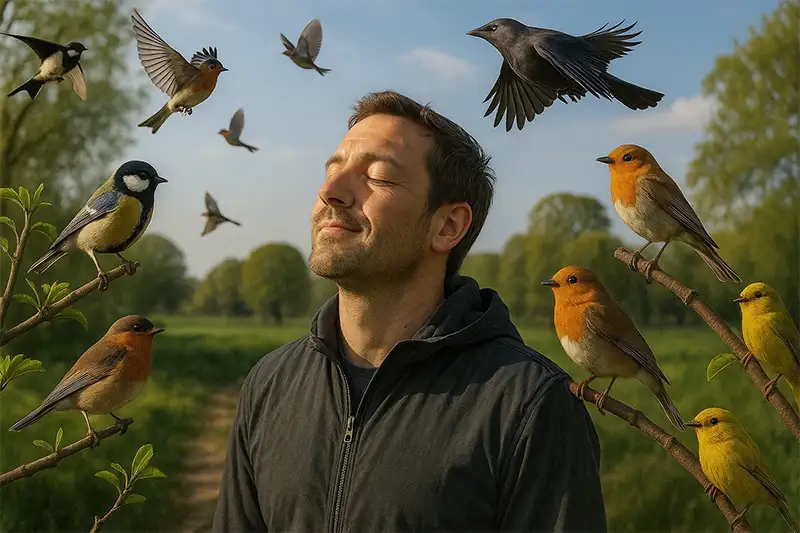
A major European study shows that the presence of birds in your immediate living environment has a noticeable impact on your happiness.
The data reveals that bird-rich areas contribute more to happiness than a significant salary increase. A conclusion that underscores just how important nature is for our well-being.
The 5 Key Takeaways
- An environment with fourteen additional bird species increases happiness comparable to a monthly income increase of 124 euros.
- Biological diversity proves to be a more reliable predictor of life satisfaction than financial progress.
- Daily seeing and hearing birds reduces stress and promotes mental recovery.
- Research among 26,000 Europeans shows that bird abundance has more impact on well-being than economic growth.
- Investing in nature conservation supports not only ecosystems, but also our own happiness.
The Surprising Connection Between Birds and Happiness
A morning walk often brings a sense of space and clarity. That effect turns out to be strongly connected to observing and hearing birds.
What Scientists Discovered
Pros
- Birds strengthen your sense of connection with nature
- Bird song is relaxing and increases concentration
- Observing birds creates moments of mindfulness in daily life
- Greater variety in bird species correlates with measurably higher happiness
Cons
- In urban areas, bird species diversity is often limited
- Declining biodiversity threatens this natural source of well-being
- People who pay little attention to their surroundings experience this effect minimally
- Observing birds requires time and quiet, something many people struggle with
Birds Versus Money: A Striking Comparison
According to a study published in Ecological Economics, an increase of fourteen bird species in your living environment produces comparable happiness to a monthly income increase of 124 euros.
Such a finding makes clear that the value of nature is often underestimated. It shows that quality of life is determined not only by economic figures, but equally by what we experience daily around us.
The Effect of Birds on Our Well-Being
Researchers from the German Center for Integrative Biodiversity Research demonstrate that seeing and hearing birds noticeably contributes to our happiness.
The rhythm of bird song and their natural behavior acts as a form of stress reduction. In a society that often runs at full speed, this can be an important source of recovery.
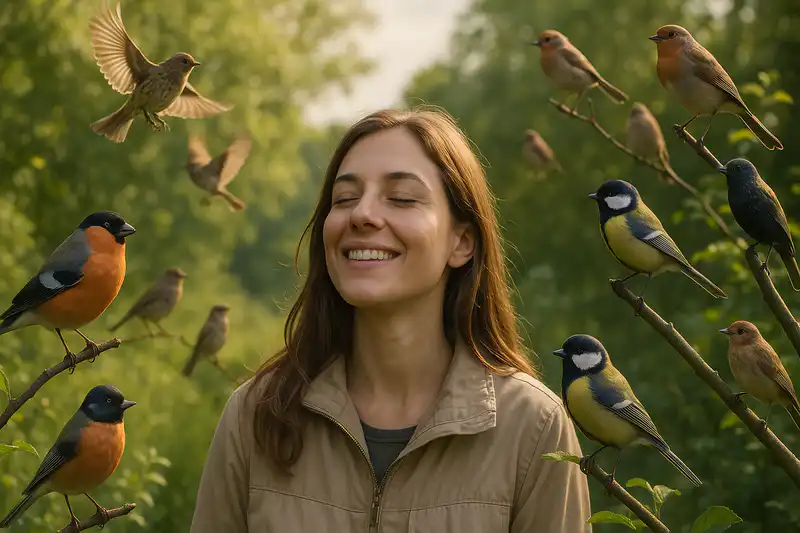
European Evidence for Bird Happiness
More than 26,000 adults from different European countries participated in an extensive study. The scale makes the results reliable and broadly applicable.
The findings show that people in areas with higher biodiversity, especially with greater bird species richness, experience a clearly higher level of well-being than in areas with less variety.
Glossary
- Biodiversity: The total variety of living organisms in a specific area
- Avian biodiversity: The number of different bird species in an environment
- Well-being factor: An element that directly contributes to mental or physical well-being
- Nature connection: The feeling of connection with the natural world
Birds as a Connection to Nature
For many people, birds represent the most immediate experience of wild nature in daily life.
Even in densely populated cities, species like sparrows, blackbirds, and pigeons are present. In doing so, they serve as a bridge between urban existence and the natural world we have always been part of.
From Happiness Research to Nature Conservation
The insights from this research have important implications for urban development and policy.
When birds play a proven role in well-being and happiness, protecting and expanding their habitats is not only ecologically valuable, but also an investment in public health and quality of life.
Conclusion
Scientific data confirm what many have long sensed: contact with birds and nature contributes more to happiness than additional material wealth.
Those who pay attention to the feathered inhabitants of their surroundings not only contribute to biodiversity, but also strengthen their own sense of well-being. A simple observation that can have unexpected significance.
Verified Sources
- ScienceDaily: Biological diversity evokes happiness – This source discusses iDiv research on the connection between biodiversity and happiness. The study shows that more bird species in the environment correlate with higher happiness. Even an increase of 14 bird species has an effect comparable to an income raise.
- World Economic Forum: Being around birds linked to higher happiness levels – This article explains how nature experiences, especially with birds, improve mental well-being. The researchers used data from thousands of European citizens. Results emphasize how important nature conservation is for happiness.
- BirdWatching Magazine: Birds increase human happiness, study finds – This source focuses on the influence of birds on happiness from a bird observation perspective. The article emphasizes that seeing and hearing birds promotes daily happiness. Bird abundance proves even more important than economic prosperity.
- ScienceDirect: The importance of species diversity for human well-being in Europe – This is the original academic article published in *Ecological Economics*. It shows that biodiversity is a significant predictor of life satisfaction. European survey data is used for the analysis.
- Forbes: More Birds Make You As Happy As More Money – Forbes compares the value of biodiversity to money in this article. Birds prove to contribute equally to happiness as a salary increase. The article provides accessible explanation of the scientific results.
Related Articles





Frequently Asked Questions
How can I attract more birds to my area?
You can attract birds by placing feeders and water basins in your garden or on your balcony. Planting native shrubs and trees that produce berries, seeds, or nectar also helps create a bird paradise.
Which birds are most common in Dutch gardens?
Dutch gardens often feature house sparrows, great tits, blackbirds, robins, and starlings. These species have adapted well to living near humans and thrive in urban environments.
Why does bird sound relax us?
Through our evolution, bird sounds are associated with safety and calm. When birds sing, it usually means there’s no immediate danger. Additionally, natural sounds are often rhythmic and varied, which has a calming effect on our nervous system.
How can I start bird watching as a hobby?
Start with a simple bird guide or app to identify species. Binoculars are helpful but not necessary for beginners. Visit parks or nature areas regularly and take time to sit quietly and observe. Early morning is often the best time.
What season is best for bird spotting?
Spring is particularly suitable because birds are more active and visible during breeding season. They sing more and build nests, making them easier to observe. However, each season has its own bird abundance, and you can spot special species even in winter.
Continue reading
- Why Virtual Nature Can Never Replace the Real Thing – Scientist Kondo Explains
- Forgotten Crops: Can They Make Pesticides and Insecticides Obsolete?
- Yellow Cucumber Makes a Comeback on Amsterdam Dinner Tables – A Forgotten Vegetable Returns
- Why Alcohol, Not Cannabis, Leads to Unexpected Pregnancies in Young Women