The human brain has been studied for centuries. One insight keeps surfacing: somewhere inside that system sits a kind of internal switch. When people set goals, their first thought is usually action, doing more, pushing harder. The deeper lever often turns out to be something else entirely: the way you think about yourself.
People who want to get fit usually start with workout schedules and nutrition. Those who actually sustain the change come at it from a different angle. Their internal phrasing shifts from “I have to train” to “I take care of my body.” That subtle wording carries the difference between staying with it and dropping off. Behavior matters, and the self-image underneath it matters even more. Your brain constantly looks for evidence to confirm that image and acts on it almost automatically.
The Power of Identity and Planning
For a new identity to settle in, two ingredients are needed: a clear picture of your future self, and a realistic read on what you will run into along the way. Researchers call this approach mental contrasting. You hold the desired outcome in mind while also naming the obstacles likely to show up. That combination is what nudges your brain into building an internal action plan.
The plan only gains traction when you anchor it to something you can actually do today. The starting point should be modest, almost laughably so. Read one page tonight, or knock out a single push-up before bed. It looks trivial, and to your brain it counts as evidence. A first signal that you are moving. The size of the action matters less than the meaning behind it. The real value sits in the confirmation: this matches who I am becoming.
Strategic Approaches
Identity steers behavior, and behavior holds up thanks to the right environment. You can shape that environment on purpose, using a technique known as temptation bundling. You pair something you should do with something you genuinely enjoy. Save a favorite podcast for the gym, for example, so listening only happens while you move. Reserve a particular coffee shop as the only place where you work on that one project that keeps getting pushed back.
Often the changes are small, and they sit in how visible and accessible something is. If you want to play more music, leave the guitar on a stand in your living room rather than tucked away in a case. If you want to eat better, keep fruit at eye level and move chips to a back shelf. Your behavior will quietly follow the new contours.
The Environment as an Ally
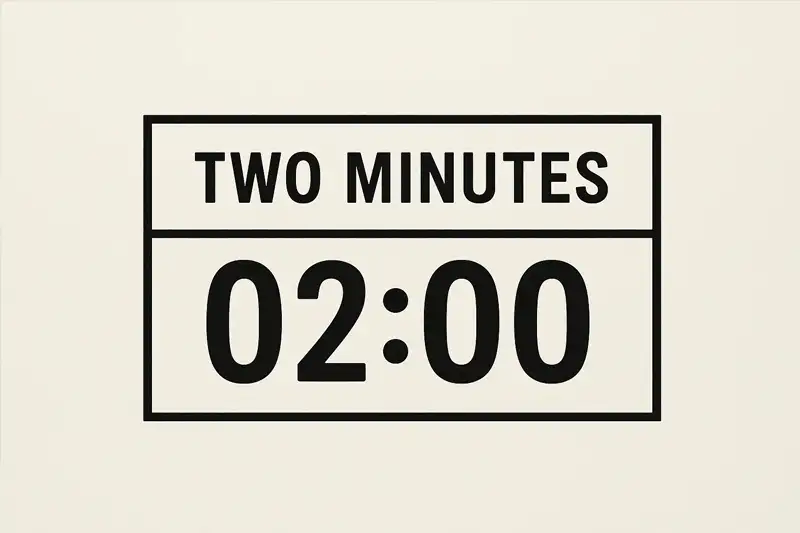
Every habit starts at an accessible entry point. Pick something that fits inside a two-minute window. That tiny opening acts as a doorway through which the rest of the behavior can flow. Keeping the start small raises the odds that you actually begin. Once you have begun, continuing usually takes far less effort than getting started in the first place.
You raise the odds of success by making the desired behavior easier to start. At the same time, you take away some of the obviousness of the old habit. This is less a question of willpower than of deliberate design. An environment that supports your choices says nothing out loud, and it still influences almost everything you do.
Psychological Leverage
Your environment shapes your actions. Look at how your brain handles loss and commitment, and a deeper layer comes into view. That is where the mechanisms for steering yourself mentally actually live. Your brain reacts strongly to loss, more strongly in fact than to an equivalent gain. Losses feel heavier. According to researchers, the effect is roughly twice as forceful as the pull of an equivalent win. You can put that asymmetry to work.
Consider staking money on your own behavior. The moment you tie $100 to a goal, something shifts. The prospect of failing carries new weight. Failure no longer means simply missing the target. It also means parting with money you already feel is yours. That triggers a kind of aversion your brain reacts to strongly. You feel actual stress, and along with it a sharpened focus. Leaving something unfinished simply feels off. Researchers have a name for this: the Zeigarnik effect, which explains why open loops keep replaying in your mind. Think of a song that cuts off before the final chord. The very fact that it stays unfinished is what drives you to keep going.
Commitment and Open Loops
You can put that trait to work for you. Begin something, then deliberately interrupt yourself. Leave a task open in the middle. Your brain will want to close the loop, and that pull can be channeled into actual progress. You make the path easier by building in smart anchors. Tell someone you trust about your goal, lock in an appointment on the calendar, or pay up front for something that will demand discipline of you later. Each of these techniques raises the odds that you follow through.
These are less gimmicks than ways of working with your brain instead of against it. You lean on its built-in pull toward consistency and tap the quiet discomfort that comes with loose ends. That discomfort becomes a source of energy.
Designing Habits
Every habit rests on a foundation that usually stays out of sight. You probably do not realize how many automatic patterns you already run on a normal day. From brushing your teeth to making coffee, you no longer think about any of it. Those existing routines can serve as a starting point for new habits. You might pair your morning coffee with five minutes of stretching, or with a short breathing exercise.
This technique is called habit stacking. You build something new on top of a pattern that is already running. One element turns out to be decisive: the right base habit to anchor to. Some habits produce a chain reaction across the rest of your life. These are the keystone habits, the ones that lift your whole system. Getting more sleep, moving more often, and eating better all fall into this category. Their power is less about each habit on its own. They work because they make other good habits easier to maintain.
Keystone Habits and Removing Friction
Keystone habits amplify almost everything that follows them. Solid sleep gives you a clearer head, sharper choices and steadier energy the next day. Regular movement does much the same. These are habits that recalibrate your whole system. Make sure nothing sits between you and that behavior. Wash and slice the fruit ahead of time so it is ready on the counter, and lay your workout clothes out the night before. Take friction out of the path.
Think of willpower as a resource you draw down over the course of a day. The less of it a habit demands, the better your chances of sticking with it. New habits should rest on structure rather than on raw motivation. You make the right choice easier by tying it to behavior that is already automatic. Start with the habits that strengthen all the others.
Mastering Motivation
Once you build habits from this foundation, motivation starts to look different. You begin to see it less as raw force and more as a system you can design. Your brain runs on expectations of reward. The reward itself triggers dopamine, and so does the anticipation of it. You do not need to be holding the prize. You only need to believe that the prize is on its way.
Compare it to building a bridge. You stand on one side, with your goal on the other. Every action you take lays down another plank. The distance closes one plank at a time. The clearer the far end looks to you, the more motivation your brain manufactures along the way. This is sometimes called dopamine planning: you train yourself to register progress itself as a reward. That changes how you experience your day-to-day actions.
Feeling the Future in the Present
Every step you complete leaves a trace in your brain. Small wins count along with the larger ones. When you track them, a quiet shift happens: progress starts to mean something on its own. Your brain learns to value the motion itself, regardless of how close the final outcome looks.
A lot of people treat their future self as a stranger, someone separate from who they are right now. That mental distance makes change feel abstract. A simple exercise can close the gap: write a short letter from your future self to your current self. Thank yourself for what you already did today. The exercise pulls the future a little closer and reinforces the motivation to keep going.
Increasing Productivity
Once motivation settles into a steady rhythm, you can aim the available energy more carefully. That is where productivity begins in practice. Your brain has a state of deep concentration in which it performs at its best. In that state time seems to slip away on its own, and thinking flows without obvious effort. Researchers call this phase deep work.
Reaching full focus takes roughly twenty to twenty-five minutes of ramp-up. Every interruption pulls that process back toward the start. This explains why fragmented work delivers so little despite the hours spent. When you create fixed blocks on the calendar, your brain gets the calm and the structure it needs for consistent results.
Working Smarter
One effective way to hold concentration is to batch similar tasks together. Email, phone calls and creative work each get their own slot on the calendar. That cuts down on context switching and saves mental energy. Every switch between modes costs you decision-making capacity, and the daily supply runs out faster than most people think.
People under heavy workloads often lean on fixed routines for exactly this reason. Repetition creates calm and opens up room for quality. Fewer decisions per day means more attention left for what actually counts. Productivity grows out of clarity, and not out of doing more for its own sake.
Cognitive Tools
Even with structure in place, your thinking capacity stays limited. Your brain has to store information, process incoming signals and weigh decisions all at the same time. That is heavy work for one organ. An external system can take a slice of that load off your shoulders. Some people refer to this as a second brain: a place outside your head where your thoughts and commitments live.
The idea is simple: what you write down, you no longer have to keep in mind. Tasks, ideas and lingering worries all get their own home in the system. The strain of holding everything in working memory drops, and mental room opens up for clearer thinking.
Creating a Second Brain
A trustworthy system creates calm. It can be a paper notebook, a digital dashboard or a board with task cards. The exact form matters very little; what matters is the confidence that nothing will slip through the cracks. Once your brain knows the information is safely held somewhere, it can turn its attention to analysis and creative work.
A practical version of this is the clarity break. Put everything still running in your head onto a page: open tasks, loose thoughts and lingering worries. Skip the organizing on this first pass. Just get it all out. The mental noise drops the moment everything has a place. You create room to think again instead of replaying what you already know.
Related Articles




Frequently Asked Questions
Why does identity matter more than motivation for reaching your goals?
Your behavior almost always lines up with the image you hold of yourself. When you focus on who you want to become, you put a stable base under the work. From that identity, habits emerge that feel natural and hold up over the long run.
How can I adjust my environment to support my goals?
Your environment is shaping your behavior at every moment. Small changes can carry real weight. Make sure the desired choice is the visible and easily reachable one, and dial down the pull of distractions in the same space. Pair tasks with something you genuinely look forward to, so your brain has a reason to move sooner.
What is the two-minute rule and how can it help me?
Every complex task has a simple opening move embedded in it. When you spot that move and use it as your starting point, the step into action gets dramatically smaller. Those two minutes open the door for everything that follows. Once you are actually under way, momentum tends to build on its own.