We’re still in the early stages of understanding how microplastics actually leave the body. It’s a relatively young field of research, but interesting insights are beginning to emerge. Some of them may sound simple, but they are scientifically backed — or at least promising in initial studies.
Rather than going into what microplastics are or why they’re harmful — that’s already well-known — we focus here on the practical side: what can you do to limit intake and promote elimination? Not based on hype, but based on what evidence is currently available.
The 5 Key Takeaways
- The smaller the plastic particle, the easier it’s absorbed by your body.
- Gut health plays a key role in eliminating microplastics.
- Certain food additives can promote absorption — avoiding them really helps.
- Simple changes in what you drink support your body’s natural elimination system.
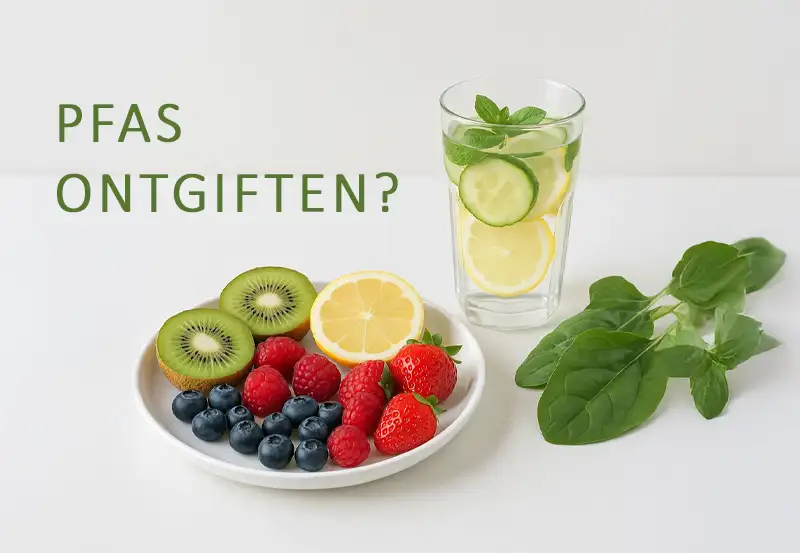
- Fruit, especially due to polyphenols, contributes to better gut function.
How Microplastics Move Through Your Body
Initial insights come from gut research. In a study published in Science of the Total Environment, microplastics were found in the stool of all participants. This suggests that these particles can not only be absorbed but also leave the body through the digestive tract.
Gut Absorption: Smaller Means More Dangerous
A second study, published in the International Journal of Pharmaceutics, shows that microplastic absorption depends heavily on particle size. The smaller the particle, the more easily it’s absorbed. Through the intestinal wall, these particles can then enter the bloodstream and circulate to organs and tissues.
The fact that some particles are found in stool is encouraging in itself — it confirms that our bodies can eliminate some of this pollution. But it also means the condition of our gut is crucial.

The Role of a Healthy Gut Barrier
A well-functioning intestinal wall ensures that unwanted substances, such as micro- and nanoplastics, don’t leak through as easily. People often talk about a “leaky gut” — a term that’s sometimes exaggerated or misused, but essentially refers to a real problem.
The tight connections between gut cells should remain intact. When they weaken, there’s a risk of increased absorption of substances the body wants to eliminate. In the context of microplastic exposure, strengthening the gut barrier becomes a relevant lifestyle choice.
What Really Helps for a Healthy Gut?
Building Blocks for the Gut Barrier
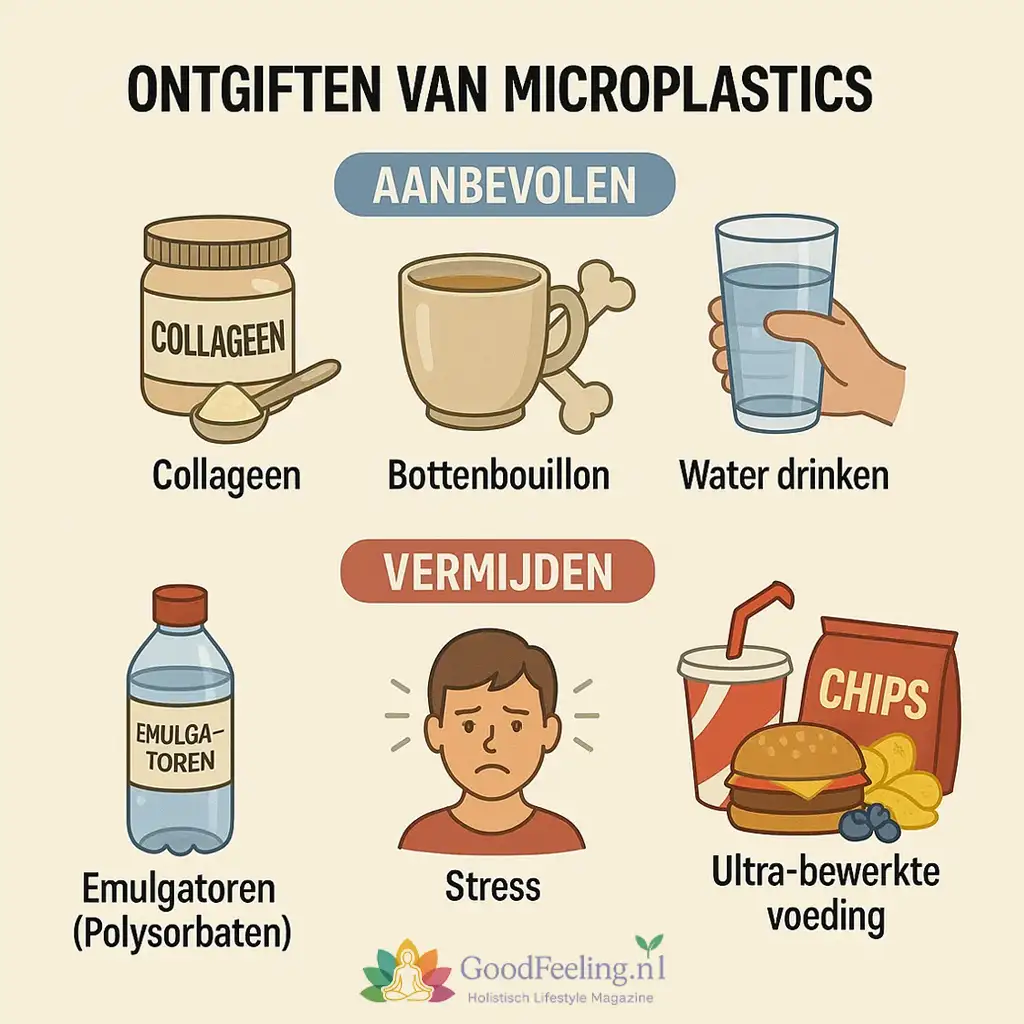
Nutrients like collagen, bone broth, and glutamine can help maintain a healthy gut barrier. Glutamine in particular is often mentioned for its role in strengthening connections between gut cells. According to research, 3 to 5 grams daily or every other day can help limit intestinal permeability.
The better that barrier functions, the less chance micro- or nanoplastics have of entering your body through the gut wall. You can’t eliminate it completely — we inhale them, absorb them through our skin, and some remain in organs for long periods. But the gut is one of the few entry points where we actually have influence.
Watch Out for Food Emulsifiers
Certain additives in processed foods, like polysorbates, can damage the mucous lining in the gut. This increases the risk of inflammatory reactions and disrupts the natural balance. Polysorbate 80 and similar substances are specifically used in laboratory research to deliberately trigger inflammatory processes — a sign that they can also stress our gut health in practice.
Avoiding these additives isn’t a miracle cure, but it is an achievable lifestyle choice with potentially major impact. Check labels regularly and choose foods without unnecessary additives whenever possible.
Rest and Recovery for Your Gut
Stress, overtraining, and sleep deprivation can also weaken the gut barrier. The body enters a state of constant alertness, where healing processes — like gut cell regeneration — have less opportunity to occur. Some people consider supplements like colostrum, though evidence is still limited. Practically speaking, reducing daily stress and strengthening nutrition remain the most robust approaches.
Bile Acid Sequestrants: Fiber as Natural Cleansers
What Bile Acids Have to Do with Plastics
Bile acid-binding substances (bile acid sequestrants) are fiber-rich components that help bind bile acids in the gut. This process not only aids fat digestion but can also help eliminate toxins and possibly even microplastics. Think of soluble fibers from chia seeds, flaxseed, or psyllium fiber — easy to add to yogurt or oatmeal.
Combine with Hydration and Rest
For healthy “transit time” — the time food takes to pass through your body — adequate hydration is also essential. Enough water ensures fibers swell properly and gut contents move smoothly. Here too, it’s about balance: rest, targeted nutrition, and an environment where your body has time to recover.
Healthy Gut Remains the Starting Point
Soluble fibers support bile acid binding. Through this mechanism, they can contribute to microplastic elimination through stool. Everything points to gut health being the central factor in limiting absorption and promoting elimination.
No one will be completely free of microplastics. Traces have now been found in brains, hearts, lungs, and even reproductive organs. But every step that reduces the burden — from less intake to more efficient elimination — makes a difference in the long term.
Glossary
- Microplastics: Small plastic particles found everywhere in the environment.
- Gut Barrier: The protective layer in the intestines that determines which substances are absorbed.
- Polyphenols: Plant compounds with antioxidant and anti-inflammatory properties.
- Bile Acid Sequestrants: Substances that bind bile acids to eliminate waste.
- Emulsifiers: Substances that help mix water and oil, often added to foods.
- Postbiotic: A substance created after fermentation by gut bacteria that can influence immune or cellular processes.
Polyphenols: Powerhouses for Your Gut
When supporting gut health, people often think of dietary fiber. That’s valuable, but for people with sensitive guts or irritable bowel syndrome (IBS), it can also cause problems. Polyphenols are a good alternative — these plant compounds offer anti-inflammatory benefits without the heavy load of lots of roughage.
More Than Just Antioxidants
Polyphenols work prebiotic and postbiotic. They feed your gut microbiome and promote a healthier bacterial composition. They also stimulate your body’s own antioxidant production, like superoxide dismutase and glutathione peroxidase, which may offer protection against inflammatory reactions caused by microplastics.
Quality Over Quantity
A handful of fruit or a small amount of concentrated extract is often enough. It’s less about how much fiber you eat, and more about the quality of the polyphenols and their postbiotic effects. When these substances are broken down by your microbiome, compounds are created that can have effects deep in your body — down to the cellular level.
Conclusion
Microplastics are now everywhere — in the environment and in our bodies. Complete avoidance isn’t possible, but there are ways to limit the damage. A healthy gut turns out to be one of the most important defense lines: through good nutrition, fiber, hydration, and avoiding certain additives, you can limit absorption and support elimination. No hard guarantees, but a realistic and practical direction.
Verified Sources
- Microplastics and microbiota: Unraveling the hidden environmental challenge – Research on the impact of microplastics on gut microbiome and environment.
- Nanosphere and microsphere uptake via Peyer’s patches – Study on nano- and microsphere absorption via Peyer’s patches in rats.
- Assessment of microplastics in human stool – Pilot study on microplastics in human stool and diet-related exposure.
Related Articles


Frequently Asked Questions
Can You Really Remove Microplastics From Your Body?
Complete removal is difficult, but some microplastics can leave your body through the gut. A healthy gut barrier and good fiber intake play a key role here.
What Foods Help Eliminate Microplastics?
Foods like collagen, bone broth, glutamine, and soluble fiber support gut health and can contribute to better elimination through stool.
What Are Bile Acid Sequestrants and Why Are They Important?
These are substances, like soluble fibers, that bind bile acids in the gut. This makes microplastics easier to eliminate through stool.
Why Is Avoiding Emulsifiers Like Polysorbates Important?
Polysorbates can damage the mucous lining in your gut, promoting absorption of unwanted substances. Avoiding them contributes to better gut resistance.
What Is the Role of Polyphenols in This Process?
Polyphenols support your microbiome and work anti-inflammatory. They also stimulate your body’s own defense substances that may offer protection against microplastics.
Continue reading
- Constipation: What to Eat and Drink? 9 Fast Choices That Actually Work According to 2026 Scientific Research
- The 5 Most Important Nutrition and Health Trends for 2026
- If You’re Using Wegovy or Ozempic, You Need This Guide for Nutrition, Muscle Preservation, and Fewer Side Effects
- Purple Potatoes, Anthocyanins, and Colon Cancer: What Does the Research Say?