What actually happens to your body when you stop drinking alcohol? You might expect some mood swings or a few cravings, but the changes go much deeper. From your brain to your skin: almost every system in your body begins to heal. And good news: that recovery can happen faster than you’d think.
Whether you’re taking a temporary break or quitting for good, giving up alcohol triggers a powerful recovery process. You’ll sleep better, gain more energy, and sometimes notice surprising improvements, like clearer skin and sharper mental focus. And the longer you stay alcohol-free, the more your body benefits.
This guide shows you step-by-step what to expect — from the first days through the weeks ahead — so you feel informed and supported throughout this process.
How Your Body Begins to Heal Once You Stop Drinking
The moment you stop drinking alcohol, your body springs into action. It doesn’t just stop — it actively begins to recover. Alcohol affects almost every system it touches, but your body has a natural healing capacity that kicks in quickly.
Your liver, responsible for detoxification, stops breaking down alcohol and shifts into recovery mode. In the process, it clears acetaldehyde: a toxic substance that not only causes hangovers but also contributes to chronic inflammation. At the same time, neurotransmitters in your brain, like GABA and dopamine, begin to heal. This can cause some temporary restlessness, but it sets the foundation for long-term improvement.
Within just a few days, your heart, skin, digestion, and immune system can respond positively to alcohol’s absence.
According to scientific research, your body begins to change almost immediately:
| System | What Begins to Change |
|---|---|
| 🧠 Brain | The balance between neurotransmitters restores itself, which can cause mood swings or irritability. |
| 💓 Heart | Blood pressure and heart rate begin to drop. |
| 🧪 Liver | Detox enzymes kick in to clear remaining alcohol waste products. |
| 💧 Hydration | Fluid balance improves, reducing swelling and fatigue. |
| 🩸 Blood Sugar | Glucose levels stabilize, providing more energy and fewer mood swings. |
These first internal changes lay the groundwork for what happens in the days ahead — system by system, step by step.
Immediate Effects (Within 24–72 Hours)
In the first days after stopping alcohol, your body actively begins to restore balance. That process often happens faster than expected.
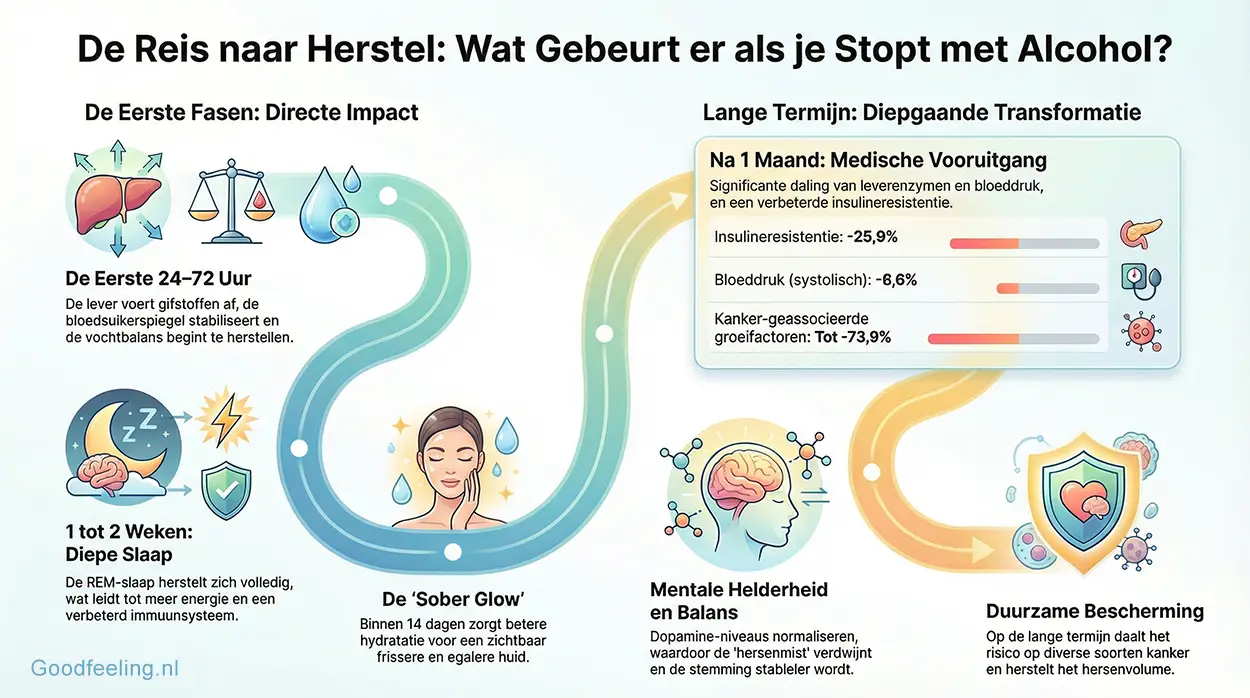
- After 24 hours: The alcohol in your bloodstream has dropped to zero. Your liver stops breaking down alcohol and focuses on recovery. Blood sugar levels begin to stabilize and dehydration decreases.
- After 48 hours: Many people notice changes in their sleep. While alcohol can put you to sleep quickly, it disrupts REM sleep. Without alcohol, your sleep eventually becomes deeper, though insomnia at the start isn’t uncommon as your brain chemistry rebalances.
- After 72 hours: For some people, withdrawal symptoms may peak now, especially with long-term or heavy drinking. Think headaches, nervousness, sweating, heart palpitations, and nausea. Cravings can increase. At the same time, others experience the first improvements in energy, clarity, and fluid balance.
What Starts to Heal First?
Short-Term Benefits (Within 1–2 Weeks)
After the first few restless days, something remarkable happens: your body begins to stabilize. In this phase, many people notice clear changes, both physically and mentally.
By the end of the first week without alcohol, inflammation decreases, sleep quality improves, and your energy level begins to rise. Even subtle signals like clearer skin or less sugar cravings can become noticeable.
For many, this is when confidence grows: your body isn’t just recovering, it’s thriving.
What You Might Notice After 7–14 Days
- Deeper, restorative sleep – REM sleep restores itself, so you wake up more refreshed.
- Healthier skin – Less dehydration and better circulation give your skin a fresher appearance.
- Improved immunity – White blood cell production restores itself, strengthening your immune system.
- Fewer cravings – Without alcohol, hormones like ghrelin stabilize, reducing the urge for sugary or fatty foods.
- Better physical performance – Less inflammation often means more endurance and faster recovery after exercise.
💡 A 2018 study published in BMJ Open found that one month without alcohol in moderate to heavy drinkers led to significant improvements in liver function, blood pressure, body weight, insulin resistance, and cancer-related growth factors — including VEGF and EGF.
Medium and Long-Term Changes (3–4 Weeks)
By the end of the first month, your body shifts from detoxification to deep healing. Many changes that happened beneath the surface become more noticeable and visible.
Liver function improves significantly, metabolic values stabilize, and your mind becomes sharper. Your sleep rhythm becomes more consistent and your mood often more stable. Even exercise or sports can feel lighter as inflammation levels drop.
This is the phase where people often start to show it: more energy, more calm, more balance.
What You Might Experience
- Greater mental clarity – The ‘fog’ lifts, sharpening your concentration, memory, and decision-making.
- More stable mood – Fluctuations decrease as dopamine and serotonin levels normalize.
- Healthier liver values – Tests show decreased enzymes like ALT, AST, and GGT, indicating liver recovery.
- Reduced high blood pressure risk – Blood pressure remains more stable, which is good for your cardiovascular system.
- Gradual weight loss – More stable insulin levels and fewer cravings often change your body composition.
Most health problems aren’t genetic fate — they’re the result of lifestyle choices we can change. ~ Dr. Mark Hyman
🧪 Research in Practice
A prospective study conducted by University College London, published in BMJ Open, shows that just four weeks without alcohol delivers powerful health gains for moderate to heavy drinkers:
- 25.9% reduction in insulin resistance (HOMA score)
- 6.6% drop in systolic blood pressure
- Significant weight loss
- Notable decrease in liver enzymes (ALT and GGT)
- Up to 73.9% reduction in cancer-associated growth factors (EGF and VEGF)
Remarkably, these improvements occurred without changes in diet, exercise, or smoking habits. This underscores alcohol’s direct impact on your metabolism and inflammation levels.
Source: Mehta G. et al., “Short-term abstinence from alcohol and changes in cardiovascular risk factors, liver function tests, and cancer-related growth factors: a prospective observational study.” BMJ Open. 2018;8(5):e020673.
Long-Term Health Benefits (After 1 Month and Beyond)
After thirty days, your body isn’t just recovering — it’s flourishing. The longer you stay alcohol-free, the more powerful and lasting the benefits become.
From a healthier gut microbiome to hormonal balance and lower cancer risk: the effects go far beyond what you see in the mirror.
And perhaps most importantly: your relationship with yourself changes. Self-confidence, resilience, and clarity increase.
Long-Term Benefits
- Reduced cancer risk – Alcohol is a recognized carcinogen. Long-term abstinence lowers your risk of liver, breast, colon, and esophageal cancer, among others.
- Better heart health – Your cholesterol and triglycerides stabilize and your risk of stroke, heart disease, and arrhythmias decreases.
- Greater mental sharpness – Long-term sobriety promotes emotional stability, resilience, and even recovery of brain volume in alcohol-sensitive areas.
- Hormonal balance – Testosterone and estrogen levels normalize, contributing to more energy, libido, and mood regulation.
- Gut microbiome recovery – Alcohol disrupts the balance of gut bacteria. After several weeks, that balance can restore itself, supporting your digestion, immunity, and mental health.
💡 The World Health Organization reports that alcohol contributes to more than 400,000 deaths from cancer worldwide each year. MRI research shows that gray matter volume in the brain can recover within weeks of sobriety, especially in people with a history of heavy drinking.

Tips for Staying Alcohol-Free
Stopping alcohol is one thing; staying alcohol-free is another. While your body recovers, your habits, routine, and mindset need support.
This phase requires less willpower and more structure.
Create a Daily Routine
Simple habits reinforce your decision. Writing helps you track progress and process temptations. Focus on a stable sleep schedule, nourishing meals, plenty of water, and light exercise to support your mood and energy.
Seek Support When You Need It
You don’t have to do this alone. If cravings or emotions overwhelm you, talk to a therapist or doctor. Groups like AA and SMART Recovery offer a judgment-free environment — both online and in person — where you can share your story and find support.
Use Technology to Stay on Track
Support now fits in your pocket.
- I Am Sober: Tracks your milestones and helps you stay accountable.
- Reframe: Uses neuroscience to reprogram habit behavior.
- Reddit’s /r/stopdrinking: A huge, encouraging community with shared experiences.
- Sober Grid: Offers anonymous connection with others in recovery.
The longer you live alcohol-free, the more natural it feels. These tools help you make that choice every single day.
Sober, Strong, and Just Getting Started
Stopping alcohol doesn’t just mean giving something up — it means your body finally gets the space to heal. Within just a few days, you’ll notice a difference in your brain, liver, skin, and sleep. And the longer you continue, the more you’ll feel what that really means.
No more hangovers. No more regretful texts. Instead: waking up clear-headed, thinking sharper, and getting closer to who you really are.
Remember: you’re not denying yourself anything — you’re choosing more. More energy, more peace, more future.
Every day without alcohol makes your body stronger, your mind clearer, and your path more obvious.
Keep going. Your best days aren’t behind you — they’re just beginning.
Verified Sources
- Diabetes.org: Alcohol and Diabetes – Information on how alcohol affects your blood sugar.
- NCBI: REM Sleep Suppression by Alcohol – Research on REM sleep disruption from alcohol.
- NCBI: Alcohol and Intestinal Permeability – Explanation of inflammatory responses from alcohol use.
- ResearchGate: VEGF in Alcohol Use – Illustration of growth factors affected by alcohol.
- BMJ Open: Study on Health Gains After Quitting Alcohol – Research on liver values, blood pressure, and growth factors.
- WHO: Alcohol and Cancer – Statistics on deaths from alcohol-related cancer.
- ScienceDirect: Brain Volume Recovery After Abstinence – MRI research on brain recovery after quitting alcohol.
Related Articles



Frequently Asked Questions
How Quickly Do You Notice the Effects of Quitting Alcohol?
Most people notice subtle changes within 24 to 72 hours: better sleep, more clarity, and less fatigue. After a week, the benefits often become more noticeable, both physically and mentally.
What Happens When You Stop Drinking Alcohol Completely?
Your body finally gets the chance to fully recover. Liver values improve, your sleep deepens, your mood stabilizes, and your risk of chronic disease decreases. For many people, not only does their health change, but so does their self-image.
Is It Dangerous to Quit Alcohol Cold Turkey?
For most people, quitting abruptly is safe, especially with moderate use. But with long-term or heavy use, it can lead to withdrawal symptoms like anxiety, sweating, or insomnia. In severe cases, medical supervision is necessary.
How Long Are You Tired After Quitting Alcohol?
Fatigue can last several days to weeks, depending on your body, sleep patterns, and previous alcohol consumption. That tiredness is often a sign your body is healing.
How Much Weight Do You Lose When You Stop Drinking Alcohol?
That varies by person, but cutting out alcohol can quickly save hundreds of calories per week. Many people lose 2 to 5 pounds in the first month — especially belly fat.
Can Your Body Fully Recover From Alcohol?
Yes, in many cases it can — especially if you quit in time. The liver is one of the few organs that can heal itself. Your brain, skin, hormones, and gut microbiome also improve noticeably over time.
What Does Quitting Alcohol Do to Your Face?
Better hydration, improved circulation, and less inflammation often make your skin look fresher, tighter, and more even. Many people notice a visible ‘glow’ within two to four weeks.
What Are the Risks of Quitting Alcohol Suddenly?
With severe alcohol use, serious withdrawal symptoms can occur, like heart palpitations, tremors, or even seizures. In that case, it’s important to seek medical help and not quit on your own.