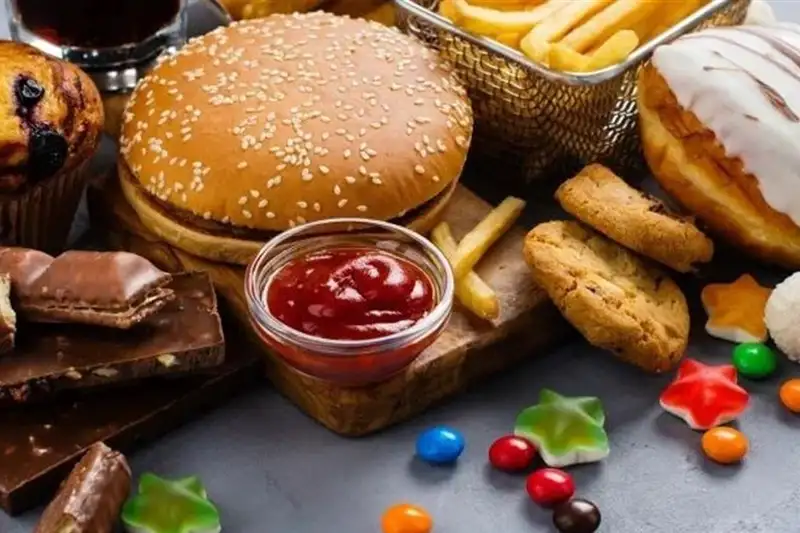
You’ve probably felt it before. A white bread roll with chocolate sprinkles leaves you feeling completely different than a bowl of oatmeal with fruit, even though the calories might be roughly similar.
That nagging feeling isn’t your imagination; it’s your body trying to tell you something. The difference isn’t about your willpower, but about what manufacturers do to our food: the good stuff gets stripped out and the wrong things get skillfully and deliberately (pun intended) added back in.
It’s a sobering thought, but more than 70% of what’s on offer in an average supermarket follows this same script. This food is often designed so it doesn’t satisfy your hunger, but instead subtly irritates your immune system and completely throws off the balance in your gut.
The 5 Key Takeaways
- You eat more without noticing: Your body gets no stop signal, while your immune system works overtime due to constant, mild inflammatory reactions.
- Your hunger gets hijacked: The mix of additives and artificial substances is often designed so that despite the calories, you get hungry again faster.
- Your gut bacteria starve: The fiber your gut bacteria need to survive has been removed from the food.
- The consequences of depleted gut flora: Without a diverse team of bacteria, smoldering inflammation develops, your thinking becomes cloudy, and you’re more likely to reach for that fatty, quick reward.
- It’s a reversible process: This whole story shows up in your blood work, on the scale, and even in your mood. And the good news? You can turn the tide.
What You’re Really Eating: A Look Behind the Label
A white bread roll seems harmless until you decipher the ingredient list. Beyond the basic wheat flour, you’ll stumble upon a series of emulsifiers, dough improvers, and various aliases for sugar, like dextrin or glucose syrup. A simple packaged snack might contain 20 or 30 ingredients, when you could actually make it with just five basic products.
To bring clarity to this, professionals use the NOVA classification system. This system ranks food from unprocessed (like an apple) to ultra-processed (like ready-made meals and soda). The common thread in that last category? Essential fiber has been removed and artificial compounds have been added that your body registers as calories but doesn’t actually recognize as real food.
The Silent Saboteur: The Lack of Fiber
Something fascinating happens here. Say you eat a substantial burger that might be 200 calories above your normal intake. Your body doesn’t afterward shout: “I’m full!” In fact, chances are you’ll think 20 minutes later: “I’m hungry again.” That’s because the fiber, which normally provides that satisfied feeling, is virtually absent.
Meanwhile, a tragedy unfolds in your gut. That fiber was supposed to feed your billions of bacterial allies. Now that they’re getting nothing, crucial species die off. The bacteria that do survive are precisely the types that thrive on the simple sugars from that same processed meal. You’re essentially creating an internal ecosystem that permanently screams for more sugar. It’s a vicious cycle.
Your Body’s Response: A Fire That Keeps Smoldering
Let’s make this practical. The moment you eat that white bread roll, your blood sugar shoots up. This triggers a sharp insulin spike and causes a mini-inflammatory reaction. If this happened just once, it wouldn’t be a problem. But if you do it tomorrow, and the day after that, the effect builds up. People with a diet rich in ultra-processed food unknowingly maintain a constantly smoldering fire of low-grade inflammation.
Research from Stanford Medicine confirms this: the number of additives is a much better predictor of the impact on your body than the number of calories. A massive review study in the BMJ makes the link even clearer: high intake of this type of food is directly linked to an increased risk of chronic disease. The cause isn’t so much the energy density, but the fact that your immune system is constantly on high alert.
Pros and Cons of Ultra-Processed Food
Pros
- Significantly cheaper than fresh food, which is financially advantageous for households with tight budgets
- Lasts for months without spoiling, convenient for those who can’t shop frequently
- Available everywhere, no question about accessibility
- Takes 17 minutes to prepare instead of two hours — a huge time savings for those who don’t enjoy cooking
Cons
- Continuous low-grade inflammation from additives your body doesn’t expect
- You don’t feel full sooner, so you eat more and consume more calories
- Your gut bacteria change because they get nothing from the food — that diversity drops
- Increased risk of type 2 diabetes, digestive issues, possibly depression long-term
The Clever Marketing Tricks That Deceive You
A brown bread roll feels instinctively healthier, but the ingredient list often reveals it contains just as many additives as its white counterpart. The moment you see words like “dough improver” or “dextrin,” you know you’re looking at essentially the same product. You see the same strategy with breakfast cereals: the claim “whole grain” on the box is no guarantee the product isn’t stuffed with sugar.
Margarine might be the textbook example: once promoted as a healthier alternative to butter, but essentially a completely artificial fabricated product. Consumer organizations like Foodwatch have been warning for years that marketing claims often far exceed scientific reality. Terms like “organic,” “low fat,” or “for adults” say absolutely nothing about the degree of processing or the number of additives.
Learn to Read Labels Like a Pro
You don’t need to become a food chemist to see through this. Use one simple question as a filter: “Could I make this myself in my own kitchen?” Take a jar of peanut butter. Peanuts, maybe a pinch of salt. That’s two ingredients. If the label lists ten — including sugar, palm oil, and an emulsifier you can’t pronounce — then that product is designed with a different goal: to get you to eat mindlessly.
The rule of thumb is simple: a longer ingredient list almost always means more processing. These are substances your body has no evolutionary answer for. Fiber, on the other hand, you’ll never see listed as “artificially added” on a label. It should be there naturally.
What’s Really Happening in Your Gut
Picture your gut as a thriving garden, full with billions of bacteria working for you. A great diversity of types equals robust health. Ultra-processed food is like poison for this garden. It provides no nutrition for the good bacteria — no fiber, no complex carbohydrates. The result is predictable: useful types die out, while a few opportunistic types take over. Biodiversity collapses.
This is exactly the picture researchers see in people with conditions like type 2 diabetes or chronic inflammatory bowel disease: an impoverished, almost ‘flat’ gut microbiome. And as scientists from Johns Hopkins Medicine emphasize, this isn’t a side issue. Your gut is in direct contact with your brain. An unhealthy gut microbiome leads to more smoldering inflammation, which directly affects your mood, concentration, and even your hunger signals.
The Surprisingly Fast Recovery
And now for the hopeful part of the story. Your body is incredibly resilient. The moment you switch to more vegetables, legumes, and whole grain products, your gut microbiome starts to recover within a week. Studies show this isn’t a slow and laborious process; your body adapts remarkably quickly. The formula is simple: more fiber means more diverse bacteria, and that leads to less inflammation.
Even conditions like prediabetes and early-stage type 2 diabetes can become partially reversible under these circumstances. You don’t achieve this through ‘strict’ dieting, but simply by finally giving your body the building blocks it’s been asking for all along. Exercise and stress reduction absolutely help, but nutrition remains the foundation.
Why Your Supermarket Is Stocked With This Stuff
In the 1960s, the average Dutch household spent 2.5 hours a day preparing food. Today, it’s barely 28 minutes. That freed-up time has been filled by the food industry. Manufacturers became masters at optimizing for what they call the ‘bliss point’: the perfect balance of sweet, salty, and fatty that maximizes brain stimulation, without giving you that satisfied feeling.
This is no accident; it’s a business model. Additives are cheap, they extend shelf life, and the engineered formula ensures you keep buying. The system is designed for profit, not for your wellbeing. But the moment you see through this, you gain the power to make different choices.
Glossary
- NOVA Classification: A classification system that ranks food based on the degree of industrial processing.
- Bliss Point: The manufacturer-engineered perfect mix of sweet, salty, and fatty that delivers maximum satisfaction without satiation.
- Low-Grade Inflammation: A chronic, smoldering inflammatory reaction in your body that you don’t feel directly, but is harmful over time.
- Microbiome Diversity: The variety of different bacterial species in your gut. High diversity is a strong indicator of good health.
What You Can Do Starting Today
Start small and forget rigid rules. This week, pick one meal and read the label. Do you normally eat white bread? Find a variant with five ingredients or less. A ready-made meal? Add a handful of fresh vegetables to it. That’s already a win. It’s about small, conscious choices, not a complete lifestyle revolution.
You’ll notice your body responds faster than you’d think. Some people feel a difference within three days: more energy, better sleep, less bloating. That’s not magic. It’s pure physiology. Your gut adapts, your inflammation markers drop, and you regain control.
To make the difference crystal clear, I’ve laid out the relationship between processing and satiation for you below.
| Food Type | Number of Additives (Estimate) | Satiation Feeling |
|---|---|---|
| Raisins (Minimally processed) | 0–1 | High |
| Whole grain bread (Lightly processed) | 3–5 | Good |
| Tomato soup from carton (Heavily processed) | 10–15 | Moderate |
| Snack package (Ultra-processed) | 20+ | Low |
The Perspective Shifts
The moment you understand that a package is designed to make you eat more, your entire outlook on food changes. You’re not ‘weak’ or ‘undisciplined’ if you’re hungry after a burger; the product was engineered with exactly that goal in mind. This insight is liberating, because it means you can approach it differently.
Journalistic analyses show that in an average supermarket, more than 40% of all products are ultra-processed. So this isn’t individual failure, but a systemic problem. Your plate, however, is still your domain.
Conclusion
Ultra-processed food does exactly what it’s made for: it delivers quick energy, bypasses your satiation signals, stimulates your appetite, and maintains a silent state of inflammation. The impact doesn’t stop at your waistline; it affects your gut, your brain, and your overall mood.
The way back begins with one small step. A different kind of bread. Some extra vegetables with your dinner. Give yourself three days to feel the difference. Think of it as a small experiment. Your body wants to be in balance by nature. All you have to do is give it the right tools.
Verified Sources
- Voedingscentrum – Processed Food – Definition, nuance, and positioning of (ultra)processed food within Dutch dietary guidelines.
- Pointer – What You Need to Know About Ultra-Processed Food – Journalistic analysis and scientific nuance on UPF and health.
- Foodwatch – What Ultra-Processed Food Does to Our Health – Explanation, impact, and consumer perspective on UPF.
- BMJ – Umbrella Review of UPF and Health – Systematic review reporting higher risks with higher UPF intake.
- Johns Hopkins Medicine – Ultra-Processed Foods Q&A – Clinical Q&A on health outcomes and practical advice.
- Stanford Medicine – Five Things to Know – Clear overview of definition, risks, and eating strategies.
Related Articles





Frequently Asked Questions
What exactly is ultra-processed food?
Think of it as products from a factory that you absolutely couldn’t recreate in your own kitchen. They often contain ingredients like emulsifiers, flavor enhancers, and colorants, and are designed for maximum convenience, long shelf life, and irresistible taste.
Is ultra-processed food automatically unhealthy?
High intake is indeed strongly linked to health risks. But context is everything. It’s about how often you eat it and what the rest of your diet looks like. An exception is no problem; a daily habit is.
Can you give a few examples of ultra-processed food?
Think soda, most packaged cookies, candy and chips, but also ready-made meals, processed sausages, and many sweetened breakfast cereals. These are products where the original ingredient is barely recognizable anymore.
How can I easily recognize ultra-processed food?
The rule of thumb is the ingredient list. Is it long and full of names you don’t know or can’t pronounce? Then you almost certainly have an ultra-processed product in your hands. They’re often packaged in brightly colored plastic and scream for your attention.
Does bread count as ultra-processed food?
It completely depends. A simple whole grain bread from the bakery with just a few ingredients is lightly processed. But a supermarket bread with a long list of improvers and preservatives quickly slides toward ultra-processed. Again, the context of your total diet matters most.